

Vishnu Vardhan

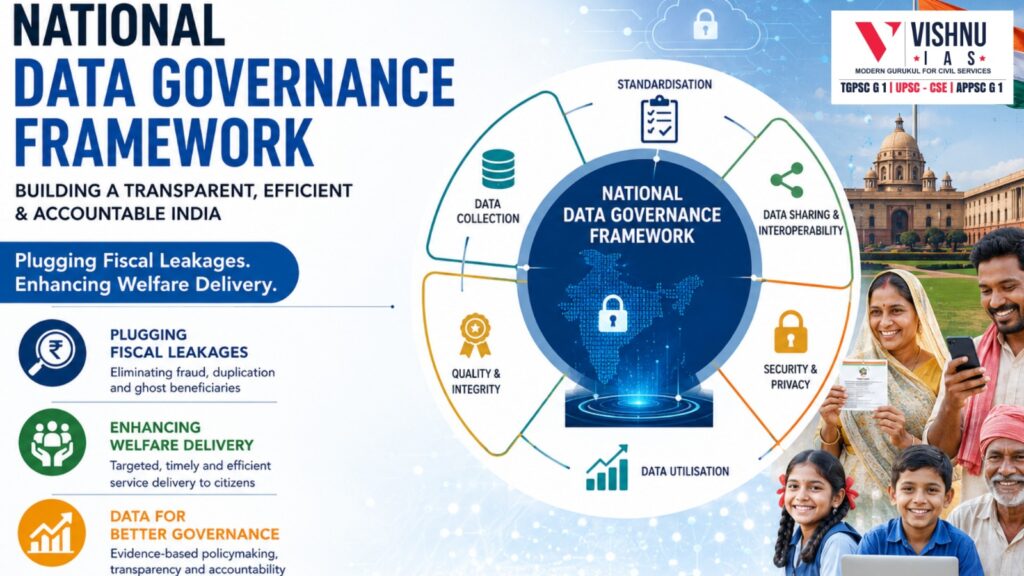
National Data Governance Framework in India: Role in Plugging Fiscal Leakages & Improving Welfare Delivery

Introduction: A National Data Governance Framework (NDGF) refers to the institutional, legal, technological and administrative architecture that governs the collection, standardisation, sharing, interoperability, security and utilisation of public data for evidence-based policymaking and service delivery. In a welfare state where nearly ₹30 lakh crore+ is annually spent on social and developmental programmes, the quality of […]

National Data Governance Framework in India: Role in Plugging Fiscal Leakages & Improving Welfare Delivery Read More »

Poor urban planning and access issues significantly increase fire accident casualties in Indian cities. Learn how congestion, unsafe buildings, weak infrastructure, and poor emergency access worsen urban fire disasters.

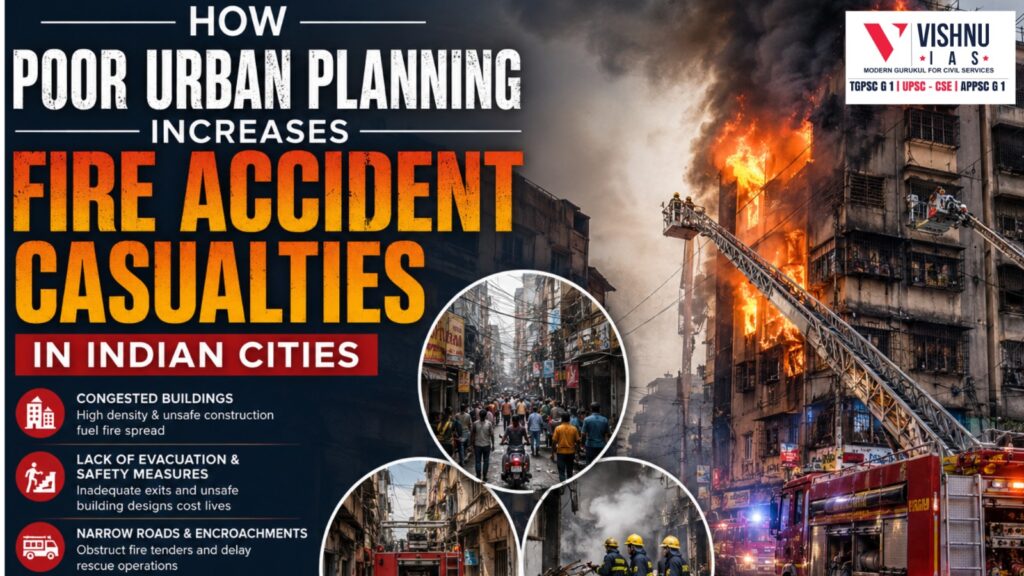
How Poor Urban Planning Increases Fire Accident Casualties in Indian Cities

Introduction: Urban fire accidents refer to incidents of uncontrolled fire outbreaks in densely populated settlements causing loss of life, property and critical infrastructure. Rapid urbanisation, unregulated construction, mixed land use, narrow access routes and weak enforcement of safety norms have made Indian cities increasingly vulnerable to such disasters. According to data from the National Crime

How Poor Urban Planning Increases Fire Accident Casualties in Indian Cities Read More »

Urban Inequality in India is rapidly increasing due to urban-centric growth, informal labour markets, unequal access to education, and widening urban-rural disparities. Explore the major causes, socio-economic impacts, and policy challenges shaping inequality in modern India.

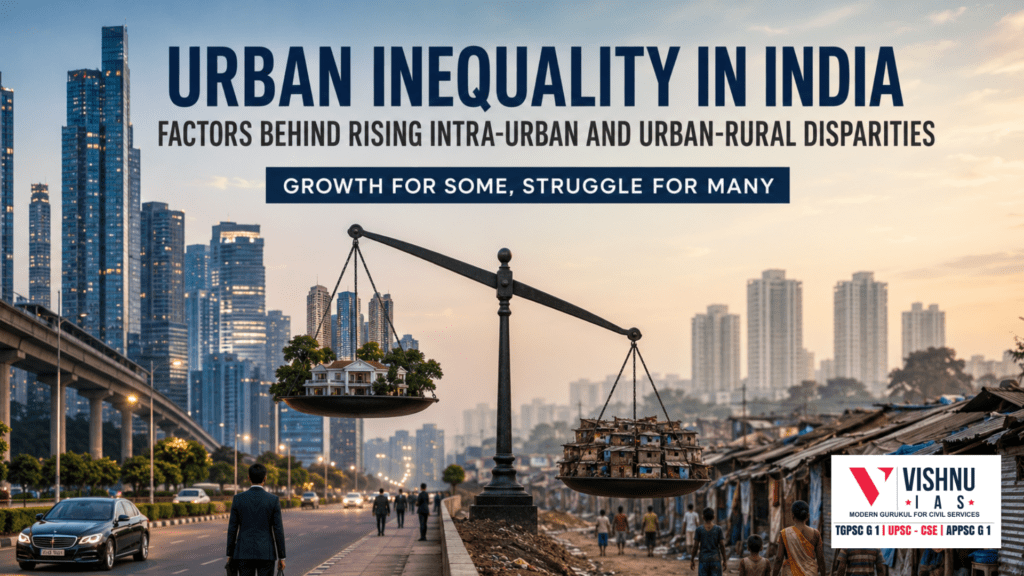
Urban Inequality in India: Factors Behind Rising Intra-Urban and Urban-Rural Disparities

Introduction: Inequality refers to the unequal distribution of income, wealth, consumption opportunities, assets, employment security, and access to public services among individuals and social groups. In India, the debate on inequality has gained renewed significance amid rapid urbanisation, changing labour structures, and evolving welfare policies. The Household Consumer Expenditure Survey (HCES) 2023-24 estimates India’s consumption

Urban Inequality in India: Factors Behind Rising Intra-Urban and Urban-Rural Disparities Read More »

degree cum ias hyderabad

Degree Cum IAS Hyderabad | Integrated Program After 12th | Start Early IAS Preparation

Becoming an IAS officer is one of the most prestigious career goals in India. If you’ve just completed your 12th and are dreaming of serving the nation, this guide will help you understand the exact roadmap. In this blog, we’ll also explore the best approach through a Degree cum IAS in Hyderabad, which is becoming

Degree Cum IAS Hyderabad | Integrated Program After 12th | Start Early IAS Preparation Read More »

FCRA Amendment Bill 2026 introduces major changes in foreign funding regulation. Examine key provisions, asset control rules, and its impact on civil society organisations in India.

FCRA Amendment Bill 2026: Key Provisions and Impact on Civil Society Organisations

FCRA Amendment Bill 2026: Key Provisions and Impact on Civil Society Organisations FCRA Amendment Bill 2026 marks a significant shift in India’s regulatory framework governing foreign contributions and civil society organisations. It raises critical questions regarding autonomy, transparency, and constitutional safeguards. Introduction The Foreign Contribution (Regulation) Act (FCRA) is a legislative framework governing the acceptance

FCRA Amendment Bill 2026: Key Provisions and Impact on Civil Society Organisations Read More »

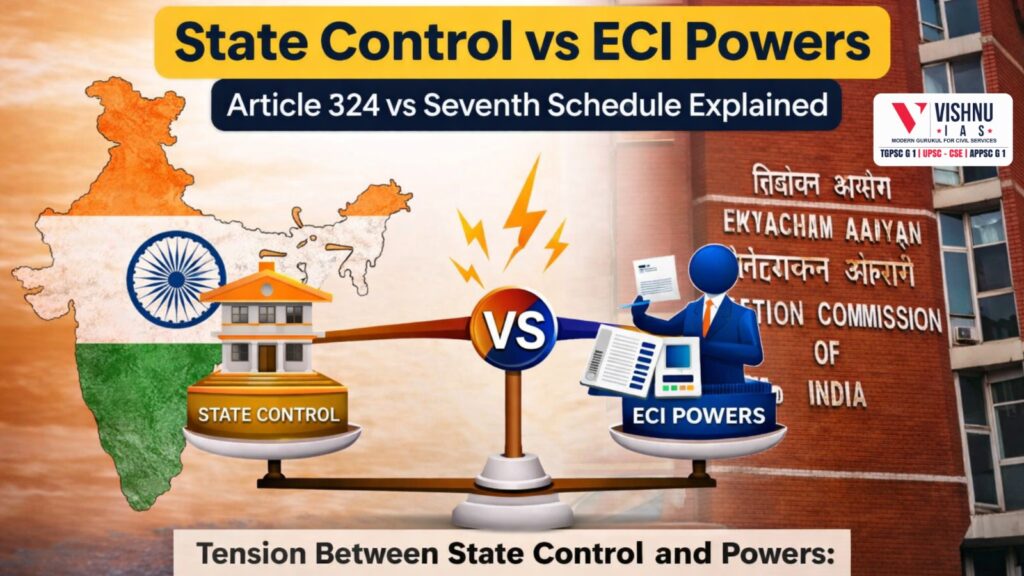
Explore the tension between State control and ECI powers under Article 324 and the Seventh Schedule. Understand constitutional conflicts, legal interpretations, and federal challenges in Indian elections.

Tension Between State Control and ECI Powers: Article 324 vs Seventh Schedule Explained

Tension Between State Control and ECI Powers: Article 324 vs Seventh Schedule Explained ECI powers vs State control is a critical constitutional issue in India that highlights the delicate balance between federal autonomy and institutional independence. The conduct of elections in India rests on a delicate constitutional balance between federal autonomy and institutional independence. While

Tension Between State Control and ECI Powers: Article 324 vs Seventh Schedule Explained Read More »

Tughlaqabad Fort Delhi

Tughlaqabad Fort Delhi: History, Architecture, Reasons for Abandonment | UPSC Notes

Tughlaqabad Fort The Delhi High Court recently pulled up the Archaeological Survey of India for delays in surveying encroachments at the historic Tughlaqabad Fort. About the Thughlaqabad Fort: Built in 1321 CE by Ghiyasuddin Tughlaq Located in New Delhi along the Aravalli Hills Considered the 3rd city of Delhi (after Lal Kot & Siri) Purpose:

Tughlaqabad Fort Delhi: History, Architecture, Reasons for Abandonment | UPSC Notes Read More »

Sarhul Festival

Sarhul Festival: Meaning, Rituals, Significance & Tribal Celebrations in India

Sarhul Festival The President of India recently extended greetings on the occasion of Sarhul, one of the most sacred Adivasi festivals of eastern India. What is Sarhul? Literally means “Worship of the Sal Tree” Celebrates the union of Sun & Earth → symbol of life and fertility The Sal tree is revered as the abode

Sarhul Festival: Meaning, Rituals, Significance & Tribal Celebrations in India Read More »

Guru Hargobind Sahib Ji

Guru Hargobind Sahib Ji: History, Miri-Piri Doctrine & Legacy on Jyoti Jyot Diwas

Guru Hargobind Sahib Ji The nation paid tribute to the 6th Sikh Guru, Guru Hargobind Sahib Ji, on his Jyoti-Jyot Diwas (22 March) — commemorating his eternal legacy of courage, faith, and justice. Who was Guru Hargobind Sahib Ji? Born in 1595, Punjab Became Guru in 1606 after martyrdom of Guru Arjan Dev Ji Key

Guru Hargobind Sahib Ji: History, Miri-Piri Doctrine & Legacy on Jyoti Jyot Diwas Read More »

Bharat Electricity Summit 2026

Bharat Electricity Summit 2026: India’s Power Sector Transformation to Renewable-Led Surplus

Bharat Electricity Summit 2026 Held in New Delhi, the Bharat Electricity Summit 2026 highlighted India’s journey from power deficit → renewable-led surplus, with a massive ₹50 lakh crore investment potential by 2032. Why It Matters: ·         25,000+ participants | 80+ countries ·         Positions India as a global energy transition leader ·         Focus on low-carbon, resilient

Bharat Electricity Summit 2026: India’s Power Sector Transformation to Renewable-Led Surplus Read More »

Scroll to Top