

Introduction:
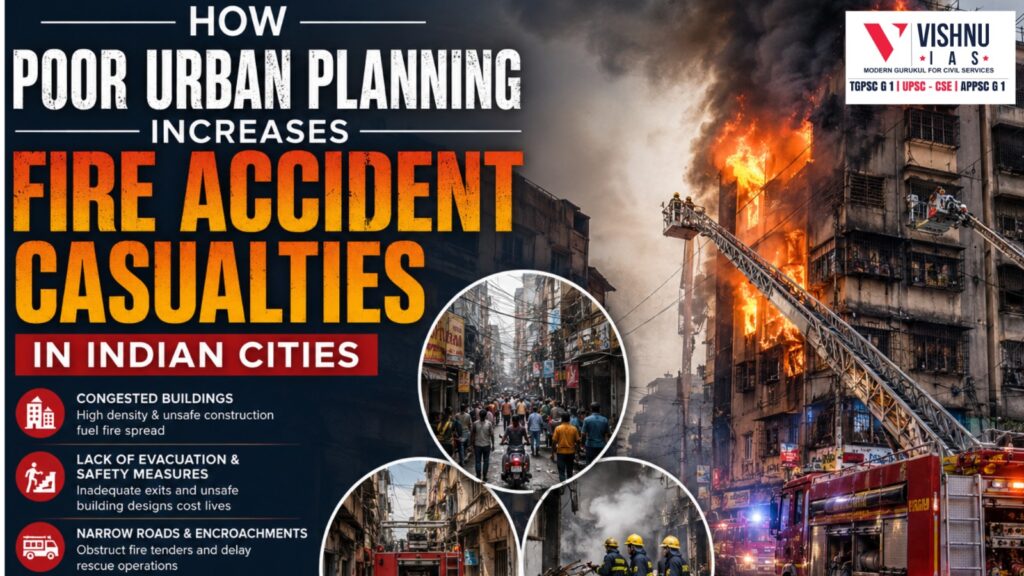
- Urban fire accidents refer to incidents of uncontrolled fire outbreaks in densely populated settlements causing loss of life, property and critical infrastructure. Rapid urbanisation, unregulated construction, mixed land use, narrow access routes and weak enforcement of safety norms have made Indian cities increasingly vulnerable to such disasters.
- According to data from the National Crime Records Bureau, thousands of fire accidents are reported annually in India, with electrical short circuits emerging as one of the leading causes. The National Disaster Management Authority (NDMA) has repeatedly highlighted that nearly 60% of fire-related deaths occur in residential buildings, particularly in congested urban settlements where evacuation and emergency access remain inadequate.
- Recent incidents across Delhi, Mumbai, Surat and Kolkata demonstrate that poor urban planning and access constraints significantly amplify casualties during fire emergencies.
Body:
1. How poor urban planning aggravates fire disasters
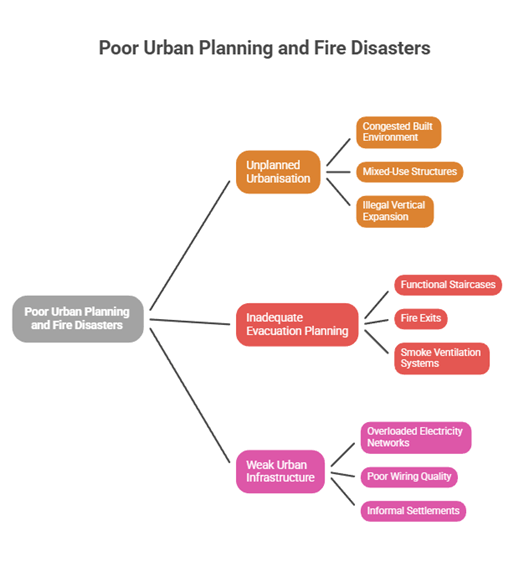
A. Unplanned urbanisation and congested built environment
- Rapid expansion of cities without adequate compliance to master plans, zoning regulations and building bye-laws has led to highly congested neighbourhoods with inadequate ventilation and unsafe construction patterns.
- Mixed-use structures combining residential, commercial and storage activities increase the concentration of combustible materials, thereby accelerating fire spread and complicating rescue operations.
- Illegal vertical expansion beyond sanctioned floors often overloads electrical systems and obstructs evacuation pathways.
- Example – Surat Coaching Centre Fire (2019): Illegal rooftop construction with inadequate exits trapped students during the fire, leading to multiple fatalities and exposing failures in urban regulation enforcement.
- Government Initiative: The Model Building Bye-Laws, 2016 mandate fire clearances, emergency exits and occupancy standards for urban buildings, but implementation remains inconsistent across municipal bodies.
B. Inadequate evacuation planning and unsafe building design
- Many urban buildings lack functional staircases, fire exits, smoke ventilation systems, and accessible terraces essential for emergency evacuation.
- Security-oriented modifications such as metal grills, sealed balconies, electronically locked doors and restricted terrace access often convert buildings into entrapment zones during emergencies.
- High-rise residential complexes frequently ignore standards relating to refuge areas, fire-resistant materials and emergency alarms.
- Case Study – East Delhi Residential Fire: Metallic grills, inaccessible terraces and electronic locking systems delayed rescue efforts and increased fatalities despite timely arrival of emergency personnel.
- Relevant Provision: The National Building Code (NBC) 2016 prescribes compartmentalisation, multiple escape routes and fire-resistant construction materials, especially for high-rise structures.
C. Weak urban infrastructure and hazardous electrical systems
- Overloaded electricity networks in densely populated areas become highly vulnerable during summer months due to excessive air-conditioner and appliance usage.
- Poor wiring quality, illegal electricity connections and absence of properly calibrated circuit breakers increase the probability of electrical short circuits.
- Informal settlements and older residential colonies often lack periodic electrical audits and fire safety inspections.
- Example – Mumbai Kamala Mills Fire (2017): Electrical and infrastructural violations in a commercial complex contributed to rapid fire spread, causing heavy casualties.
- Government Initiative: The Revamped Distribution Sector Scheme (RDSS) seeks modernisation of urban electricity infrastructure, including safer distribution systems and smart load management.
2. How access-related issues increase casualties during fire accidents
A. Narrow roads and encroachments obstruct emergency response
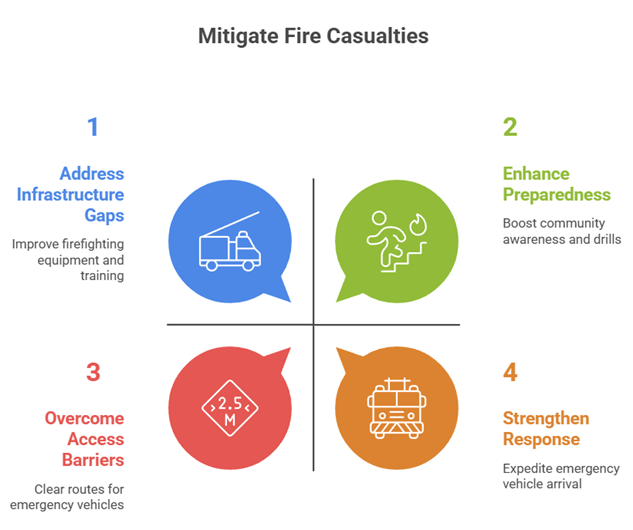
- Congested lanes, roadside parking and unauthorised encroachments prevent fire tenders and hydraulic platforms from reaching accident sites on time.
- Older city areas developed without scientific planning lack turning radius and road width necessary for emergency vehicles.
- Delayed response significantly reduces the “golden rescue window” during smoke inhalation and structural collapse.
- Example – Delhi Residential Fires: Multiple incidents in dense colonies witnessed delays because fire engines could not enter narrow streets or gated societies.
- Case Study – Kolkata Burrabazar Fires: Dense market structures and narrow lanes repeatedly hindered firefighting operations, allowing fires to spread across adjoining buildings.
B. Deficiency of firefighting infrastructure and equipment
- Urban local bodies often face shortages of trained firefighters, functional hydraulic lifts, breathing apparatus and modern rescue technology.
- Many cities fail to meet international norms relating to fire station density and emergency response time.
- Poor maintenance of firefighting equipment further reduces operational effectiveness during emergencies.
- Example – Palam Fire Incident: Eyewitnesses reported malfunctioning hydraulic lifts during rescue operations, highlighting infrastructural deficiencies in urban fire services.
- Government Initiative: The 15th Finance Commission recommended grants for strengthening fire services and integrating them with urban disaster management systems.
C. Lack of emergency preparedness and community awareness
- Residents in urban areas often remain unaware of evacuation drills, emergency assembly points and safe electrical practices.
- Commercial establishments and residential societies rarely conduct mock drills or maintain functional extinguishers and alarms.
- Panic, stampedes and delayed reporting during emergencies increase mortality rates.
- Example – Uphaar Cinema Fire (1997): Blocked exits, poor crowd management and absence of emergency preparedness resulted in large-scale casualties despite a relatively contained fire.
- Government Initiative: The NDMA Guidelines on Managing Urban Fires emphasise community participation, mock drills and mandatory fire safety certification for high-risk structures.
3. Measures required to reduce casualties from urban fire accidents
A. Strengthening urban governance and regulatory enforcement
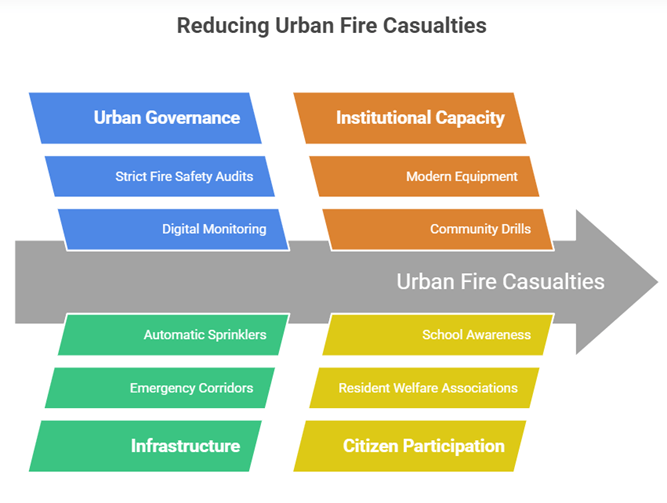
- Municipal authorities must ensure strict implementation of fire safety audits, occupancy regulations and periodic inspection mechanisms.
- Digital monitoring of building permissions and integration of GIS-based urban planning can help identify vulnerable structures and access bottlenecks.
- Illegal constructions and unsafe modifications should attract stringent penalties and demolition provisions.
- Example – Ahmedabad Urban Reforms: Increased use of digital building approval systems and compliance tracking has improved regulatory oversight in several urban zones.
- Relevant Reform: Integration of fire safety compliance within Smart Cities Mission frameworks can improve accountability and real-time monitoring.
B. Building resilient and accessible urban infrastructure
- Cities must redesign roads, parking norms and emergency corridors to ensure unhindered movement of rescue vehicles.
- Installation of automatic sprinklers, smoke detectors and smart alarm systems should be made mandatory even in medium-sized residential buildings.
- Electrical infrastructure should be upgraded with proper load distribution systems and certified safety mechanisms.
- Case Study – Tokyo Fire Resilience Model: Strict zoning laws, earthquake-fire integration planning and universal fire drills have substantially reduced urban fire mortality despite high population density.
- Government Initiative: The AMRUT Mission promotes improvement of urban infrastructure, including safer public utilities and planned urban expansion.
C. Enhancing institutional capacity and citizen participation
- Fire departments require modern equipment such as drones, thermal imaging cameras and robotic firefighting systems, but these must complement rather than replace basic preventive mechanisms.
- Regular community-level fire drills, resident welfare association training and school awareness programmes can improve emergency response behaviour.
- Integration of urban fire safety into disaster management planning can create a multi-agency coordinated response system.
- Example – Odisha Disaster Preparedness Model: Community-based disaster awareness and decentralised emergency response mechanisms have significantly improved evacuation efficiency during disasters.
- Relevant Initiative: The National Disaster Management Plan advocates strengthening local disaster response capacities and integrating fire hazards into urban resilience planning.
Conclusion:
- Rising urban density, unsafe construction practices and inadequate emergency access have transformed fire accidents from isolated incidents into recurring urban governance failures. India’s urban population is projected to exceed 600 million in the coming decades, making resilient city planning and fire-safe infrastructure an urgent developmental necessity.
- Reducing casualties requires a shift from reactive firefighting to a preventive urban safety framework centred on scientific planning, strict enforcement, reliable electrical systems and community preparedness. A combination of resilient infrastructure, accountable governance and citizen awareness can transform Indian cities into safer and more disaster-resilient urban spaces.