
Vishnu IAS Academy

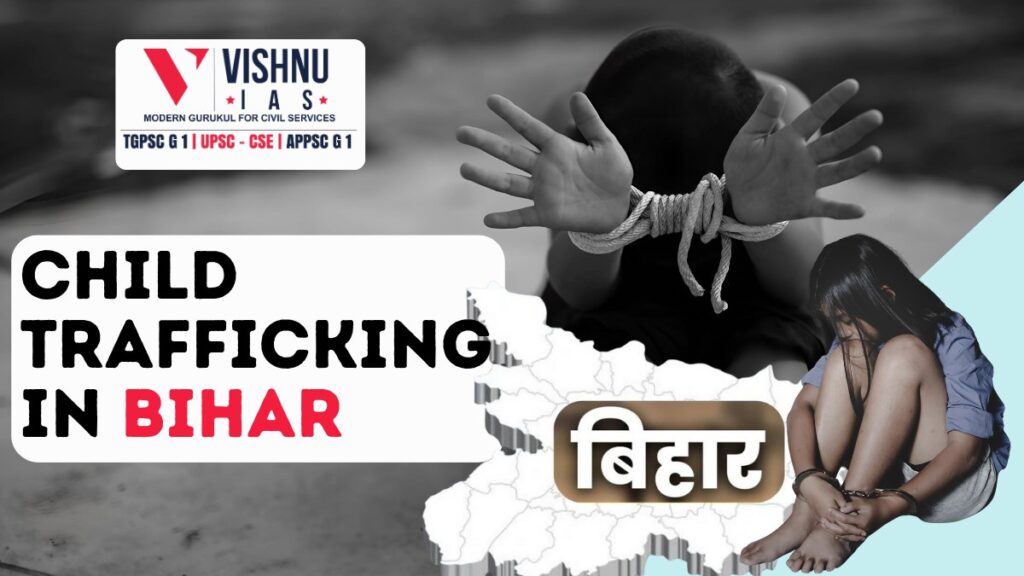
Child trafficking in Bihar remains a major human rights crisis, driven by poverty, porous borders, and weak enforcement. Learn about the causes, current challenges, and effective policy solutions to combat this issue.

Child Trafficking in Bihar: Causes, Challenges & Effective Policy Measures

Child Trafficking in Bihar: Causes, Challenges & Effective Policy Measures (GS Paper II – Governance, Social Justice and Social Welfare) Context: Child trafficking in Bihar is one of the gravest violations of human rights, inflicting physical, psychological and economic harm on its victims. In Bihar, this crime has surged, with thousands of girls coerced into

Child Trafficking in Bihar: Causes, Challenges & Effective Policy Measures Read More »

The rise of contractualization in India's formal manufacturing sector has doubled in two decades, impacting labour productivity and worker welfare. This analysis explores its causes, challenges, and policy implications within India's economic framework.

Contractualization in India’s Formal Manufacturing Sector: Implications for Labour Productivity and Worker Welfare

Contractualization in India’s Formal Manufacturing Sector: Implications for Labour Productivity and Worker Welfare Introduction: Contractualization refers to the increasing reliance on temporary or contract-based workers, often hired through third-party contractors, in place of permanent workers within the formal sector. In recent decades, India’s formal manufacturing sector has witnessed a significant surge in the use of

Contractualization in India’s Formal Manufacturing Sector: Implications for Labour Productivity and Worker Welfare Read More »

Explore the scope of medical activities for AYUSH practitioners in India, focusing on their legal rights, clinical boundaries, and the ongoing AYUSH vs Allopathy debate under Indian health regulations.

Scope of Medical Activities for AYUSH Practitioners in India: Legal and Policy Insights

Scope of Medical Activities for AYUSH Practitioners in India: Legal and Policy Insights GS Paper II – Governance and Social Sector (Health Policy and Regulation) Context: The debate over the scope of medical activities for AYUSH practitioners—particularly regarding their right to use the title “doctor” and prescribe modern medicines—has intensified in India. This growing controversy

Scope of Medical Activities for AYUSH Practitioners in India: Legal and Policy Insights Read More »

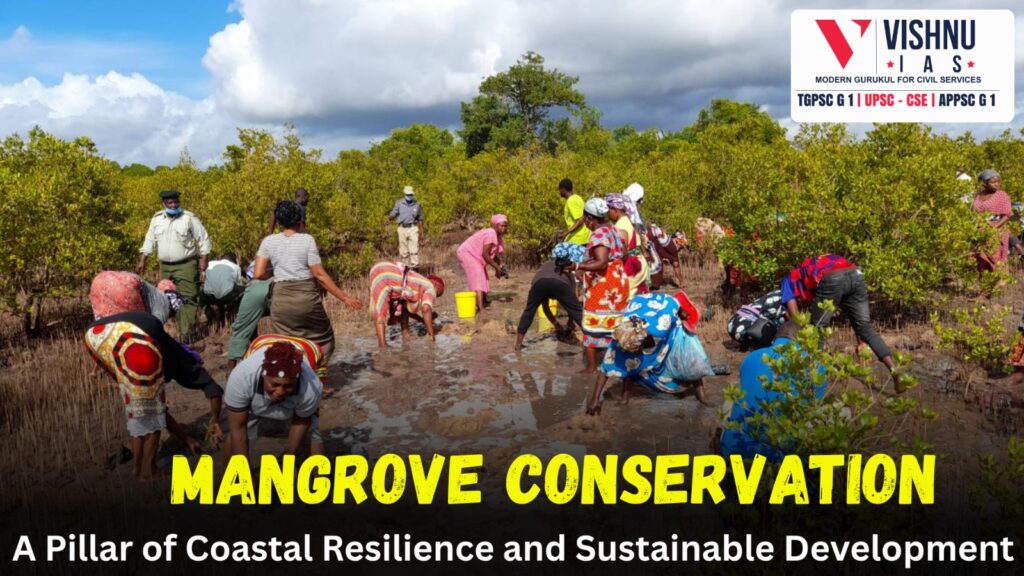
M.S. Swaminathan championed global mangrove conservation, transforming them into vital tools for climate resilience and biodiversity protection. Discover his legacy in shoreline sustainability.

M.S. Swaminathan’s Vision for Mangrove Conservation and Climate Resilience

M.S. Swaminathan’s Vision for Mangrove Conservation and Climate Resilience M.S. Swaminathan played a pivotal role in placing mangrove conservation at the heart of global climate resilience strategies. Until the late 1980s, mangroves were valued mostly by coastal communities for local uses. But Swaminathan’s visionary leadership reshaped their identity into powerful ecological buffers for biodiversity, disaster

M.S. Swaminathan’s Vision for Mangrove Conservation and Climate Resilience Read More »

Explore how Buddhism and spiritual soft power have become strategic tools in the India-China Himalayan rivalry. Understand the religious geopolitics shaping regional stability and diplomacy.

Faith as a Strategic Frontier in the India-China Rivalry over the Himalayas

Faith as a Strategic Frontier in the India-China Rivalry over the Himalayas In the 21st century, geopolitical competition between India and China has expanded beyond traditional military and economic domains into more subtle instruments of soft power—with faith and spiritual influence emerging as pivotal tools. Nowhere is this more evident than in the India-China Himalayan

Faith as a Strategic Frontier in the India-China Rivalry over the Himalayas Read More »

The UK-India Free Trade Agreement (FTA) is set to transform India’s Global Capability Centres (GCCs) by boosting innovation, investment, and talent mobility. Explore how this landmark deal reshapes digital trade, job creation, and R&D partnerships.

How the UK-India Free Trade Agreement is Reshaping India’s Global Capability Centres Ecosystem

How the UK-India Free Trade Agreement is Reshaping India’s Global Capability Centres Ecosystem The UK-India Free Trade Agreement (FTA), under negotiation since January 2022, is poised to become a milestone in bilateral economic relations between two of the world’s most prominent service-driven economies. According to the UK’s Department for Business and Trade, bilateral trade stood

How the UK-India Free Trade Agreement is Reshaping India’s Global Capability Centres Ecosystem Read More »

Discover how Global Capability Centres (GCCs) in India can strengthen UK–India economic ties through a Free Trade Agreement by enhancing regulatory ease, talent mobility, and digital innovation.

Leveraging Global Capability Centres in India to Boost UK–India Economic Ties via Free Trade Agreement

Leveraging Global Capability Centres in India to Boost UK–India Economic Ties via Free Trade Agreement Meta Description: Discover how Global Capability Centres (GCCs) in India can strengthen UK–India economic ties through a Free Trade Agreement by enhancing regulatory ease, talent mobility, and digital innovation. Global Capability Centres (GCCs) have emerged as strategic hubs for R&D,

Leveraging Global Capability Centres in India to Boost UK–India Economic Ties via Free Trade Agreement Read More »

India has the opportunity to champion inclusive AI governance at the 2026 AI Impact Summit by leveraging its digital legacy and offering a balanced alternative to fragmented global approaches.

How India Can Lead Inclusive AI Governance at the 2026 AI Impact Summit

How India Can Lead Inclusive AI Governance at the 2026 AI Impact Summit Inclusive AI Governance is no longer just a theoretical framework—it is a pressing global necessity. As AI rapidly advances, India has a unique opportunity to drive global collaboration and equity at the 2026 AI Impact Summit, backed by its digital legacy in

How India Can Lead Inclusive AI Governance at the 2026 AI Impact Summit Read More »

Explore how income and consumption-based data create divergent narratives of inequality in India. Understand recent trends, debates, and data frameworks shaping public policy.

Inequality in India: Contrasting Narratives from Income vs Consumption-Based Measurements

Inequality in India: Contrasting Narratives from Income vs Consumption-Based Measurements Inequality in India—the unequal distribution of income, wealth, and consumption—is a deeply entrenched structural challenge in democracies. In India, where socio-economic stratification intersects with caste, region, and gender, measuring inequality becomes a contentious exercise. The World Bank’s April 2025 “India Poverty and Equity Brief”, which

Inequality in India: Contrasting Narratives from Income vs Consumption-Based Measurements Read More »

Explore Anthropology Current Affairs for May 2025 in this comprehensive magazine covering tribal case studies, genetic research, and cultural transitions. Ideal for UPSC and anthropology enthusiasts.

Anthropology Current Affairs May 2025: Tribal Case Studies, Genetic Discoveries & Cultural Insights

Anthropology Current Affairs May 2025: Tribal Case Studies, Genetic Discoveries & Cultural Insights         MAY 2025 MONTHLY MAGAZINE – TOTEM MAY ASI study on DIGITAL LITERACY AND IT’S IMPACT ON CULTURAL HERITAGE PRESERVATION- GARO CASE STUDY(Paper 2 Unit 6.1)Case study on : Garo tribe of Meghalaya It details how cultural heritage ensures

Anthropology Current Affairs May 2025: Tribal Case Studies, Genetic Discoveries & Cultural Insights Read More »

Scroll to Top