Vishnu IAS Academy

covers key updates on the Great Nicobar Project and tribal rights dispute, ADR report on Chief Ministers with criminal cases, OpenAI’s first India office in New Delhi, ban on real money gaming platforms, and the UN-declared famine in Gaza. Perfect for UPSC, current affairs, and exam preparation.

Great Nicobar Project, ADR Report, OpenAI India Office, Gaming Ban & Gaza Famine

Today Current Affairs 23/08/2025 Great Nicobar Project and Tribal Rights Dispute The ₹72,000-crore Great Nicobar Project, involving a port, airport, power plant, and township, faces controversy over alleged violations of the Forest Rights Act (FRA), 2006. The Andaman & Nicobar Administration claimed tribal rights were “identified and settled,” securing forest clearances for diversion of 13,075 […]

Great Nicobar Project, ADR Report, OpenAI India Office, Gaming Ban & Gaza Famine Read More »
Today Current Affairs 11/07/2025 covers the Centre’s proposed two-rate GST structure, Assam tightening Aadhaar rules to curb illegal immigration, and new bills raising political accountability concerns.

GST Two-Rate Proposal, Assam Aadhaar Rules & Centre’s New Bills

Today Current Affairs 11/07/2025 | GST, Aadhaar Rules & Centre’s New Bills Today Current Affairs 22/08/2025 Centre Proposes Two-Rate GST Structure, States Flag Revenue Concerns The Group of Ministers (GoM) on Rate Rationalisation has endorsed the Centre’s proposal to simplify GST into a two-rate structure, pending approval by the GST Council. The plan seeks to

GST Two-Rate Proposal, Assam Aadhaar Rules & Centre’s New Bills Read More »

Today Current Affairs 11/07/2025 covers custodial violence in India, the Manipur High Court order on transgender rights, Indo-Bangladesh border fencing updates, Agni-5 missile test, and the Online Gaming Regulation Bill 2025.

Custodial Violence in India, Transgender Rights, Border Fencing, Agni-5 Test & Online Gaming Bill

Today Current Affairs 11/07/2025 | Custodial Violence in India & Key Updates Today Current Affairs 21/08/2025 Manipur HC Order: A Step Forward for Transgender Rights The Manipur High Court’s directive to issue fresh academic certificates to Dr. Beoncy Laishram underscores both the progress and persistent hurdles in transgender rights. Despite clear legal safeguards under the

Custodial Violence in India, Transgender Rights, Border Fencing, Agni-5 Test & Online Gaming Bill Read More »

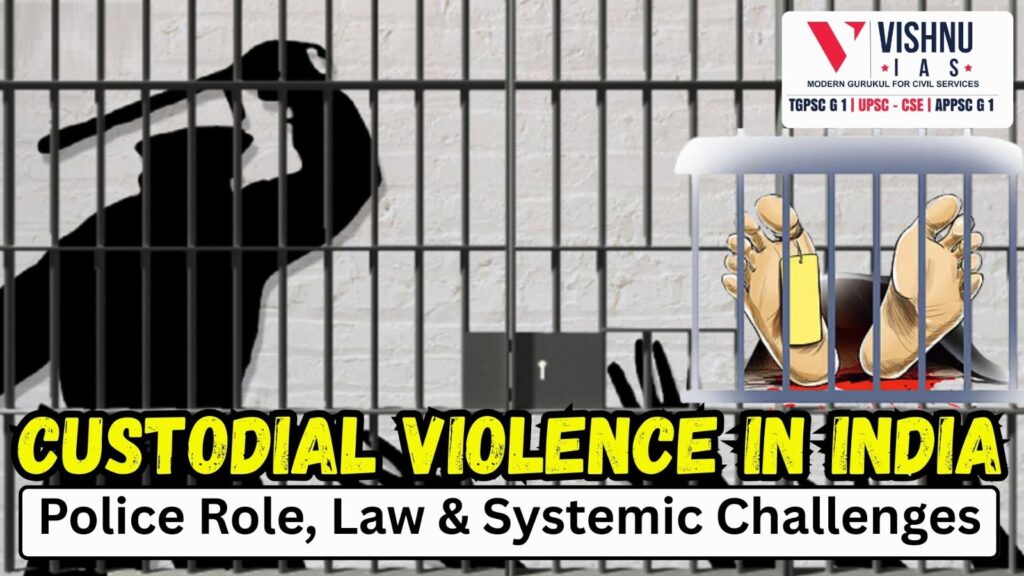
Custodial violence in India continues to raise serious human rights concerns despite the police being constitutional functionaries bound by law. This blog explores the constitutional role of police, systemic weaknesses, and reforms needed to end custodial torture.

Custodial Violence in India: Constitutional Role of Police and Systemic Challenges*

The Police and Custodial Violence in India: Constitutional Role vs Coercion Introduction The Indian Constitution, under Articles 21 and 22, guarantees the right to life, dignity, and procedural safeguards against arbitrary detention. In this framework, the police are envisioned as constitutional functionaries bound by law, not as instruments of coercion. Yet, custodial violence in India

Custodial Violence in India: Constitutional Role of Police and Systemic Challenges* Read More »

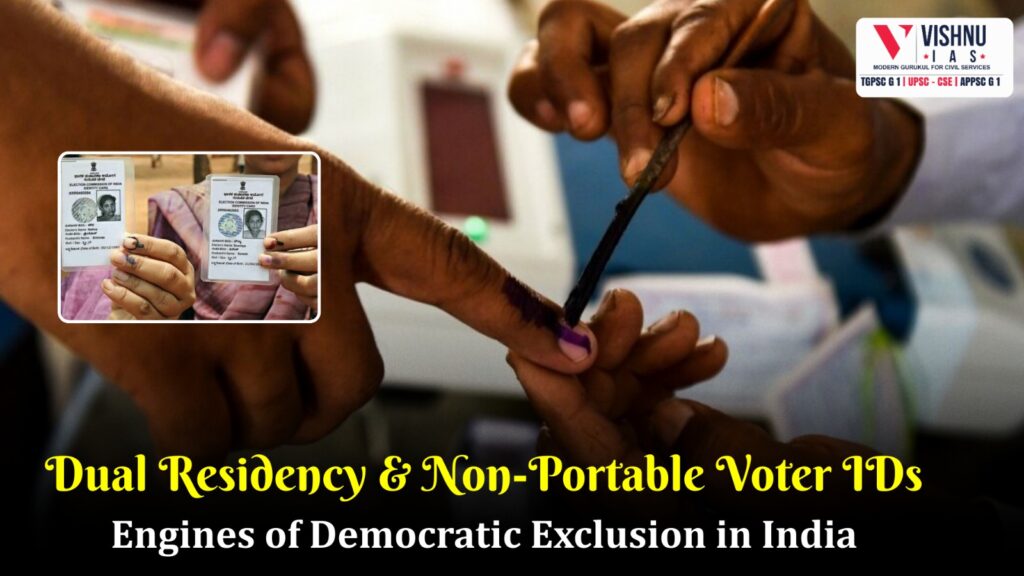
Explore how dual residency and lack of portability in voter identity systems contribute to democratic exclusion in India. Includes case studies, migration data, and policy gaps for UPSC GS2 mains preparation.

Dual Residency and Lack of Portability in Voter Identity: Causes of Democratic Exclusion in India

Dual Residency and Lack of Portability in Voter Identity: Democratic Exclusion in India In a democracy as vast as India, with 1.4 billion citizens and over 96 crore registered voters (ECI, 2024), the principle of universal adult franchise (Article 326 of the Constitution) is foundational. Yet, millions of internal migrants face structural exclusion due to

Dual Residency and Lack of Portability in Voter Identity: Causes of Democratic Exclusion in India Read More »

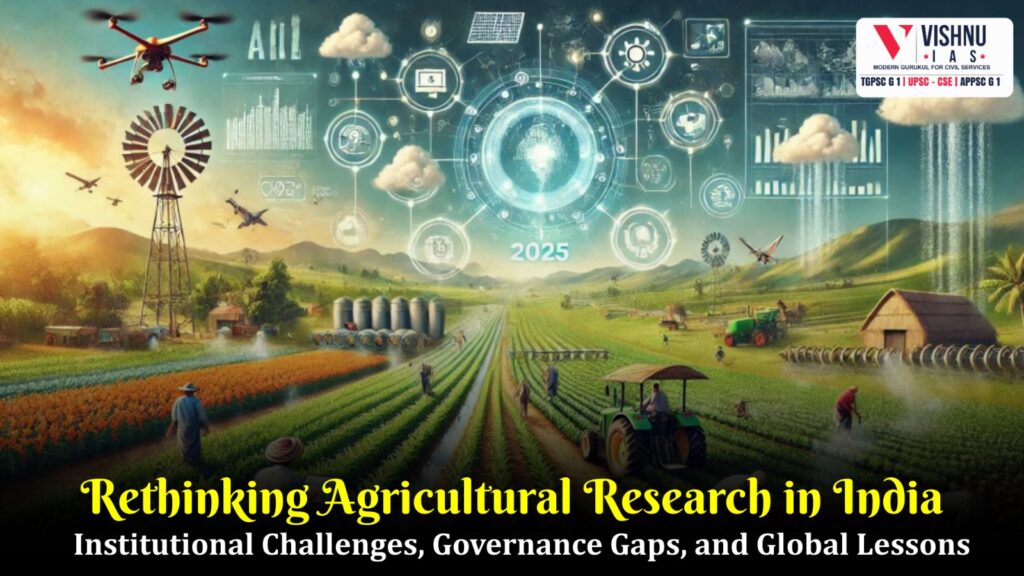
Explore the key institutional and governance challenges in agricultural research in India. Understand global comparisons, historical successes, and strategies to strengthen India’s agricultural research ecosystem.

Institutional and Governance Challenges in Agricultural Research in India

Institutional and Governance Challenges in Agricultural Research in India | Vishnu IAS Institutional and Governance Challenges in Agricultural Research in India Agricultural research in India has historically been the cornerstone of the country’s food security and rural transformation. The Green Revolution of the 1960s, led by pioneers like M.S. Swaminathan, Norman Borlaug, and C. Subramaniam,

Institutional and Governance Challenges in Agricultural Research in India Read More »

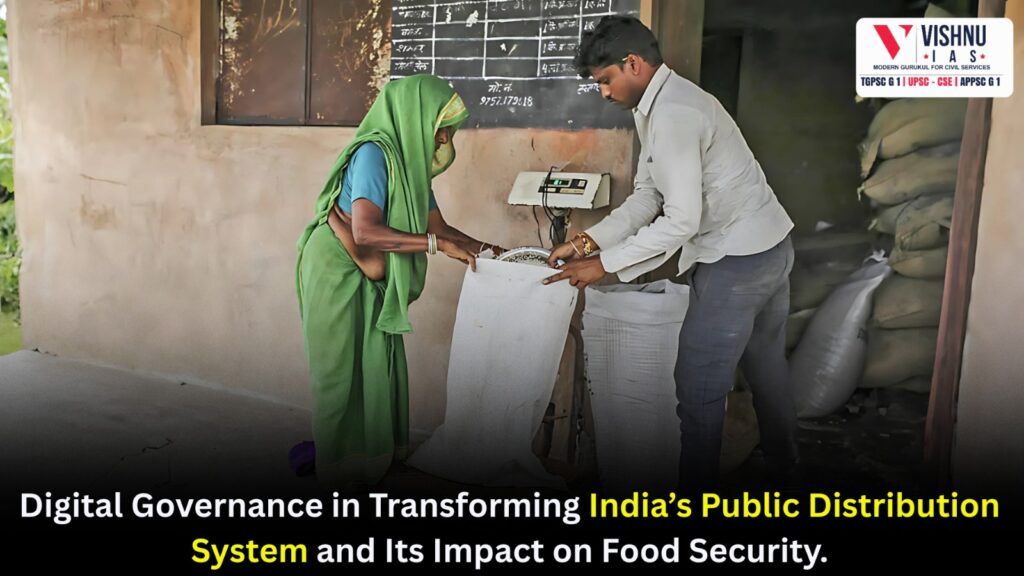
Discover how digital governance in India’s Public Distribution System (PDS) is transforming food delivery, reducing leakages, and strengthening food security through Aadhaar-enabled authentication, ONORC, and real-time monitoring.

Digital Governance in India’s Public Distribution System: Impact on Food Security

Digital Governance in Public Distribution System: Transforming Food Security in India Digital Governance in Public Distribution System: Transforming Food Security in India Digital governance in Public Distribution System has become a transformative tool for ensuring food security in India. By using Aadhaar-enabled authentication, e-PoS devices, ONORC portability, and real-time monitoring, the PDS is evolving into

Digital Governance in India’s Public Distribution System: Impact on Food Security Read More »

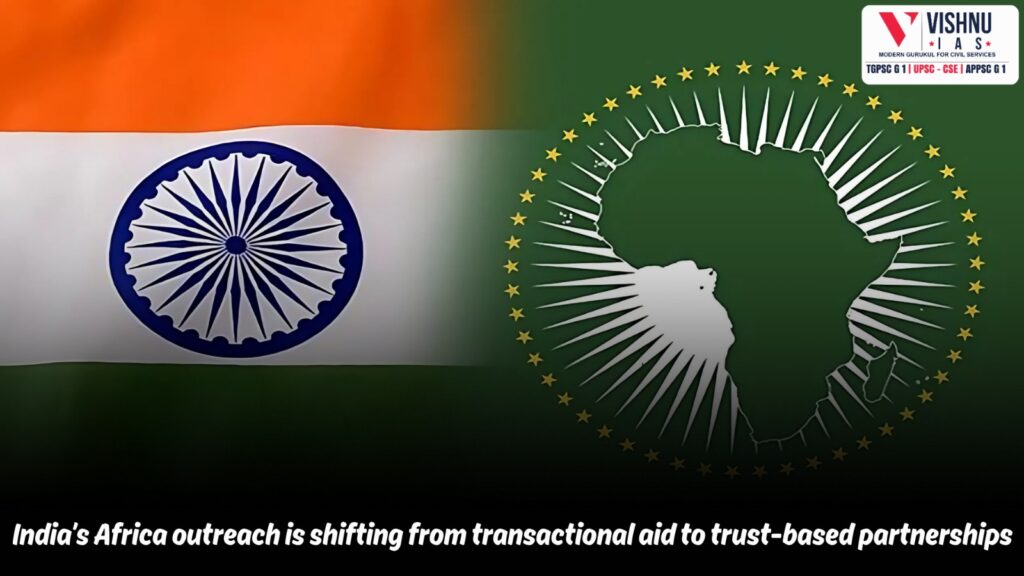
India’s Africa outreach is evolving from transactional aid to trust-based partnerships. Learn how India’s engagement with Africa has shifted towards trade, digital diplomacy, capacity-building, and sustainable development, making it a model for Global South cooperation.

India’s Africa Outreach: From Transactional Aid to Trust-Based Partnerships

India’s Africa Outreach: From Transactional Aid to Trust-Based Partnerships Introduction: India’s engagement with Africa has undergone a strategic transformation in the past two decades. While earlier relations were often confined to aid-driven, episodic interventions, today they are increasingly shaped by shared historical solidarities, pragmatic cooperation, and future-oriented knowledge partnerships. According to the MEA (2024), India’s

India’s Africa Outreach: From Transactional Aid to Trust-Based Partnerships Read More »

India’s security and political approach to Left-Wing Extremism (LWE) has been marked by a balance of security operations and development policies. This blog evaluates the effectiveness of India’s counter-insurgency strategy against Maoists while comparing it with global models such as Colombia’s fight against FARC, Sri Lanka’s anti-LTTE campaign, and U.S. interventions in Iraq-Afghanistan.

India’s Security and Political Approach to Left-Wing Extremism | A Comparison with Global Counter-Insurgency Models

India’s Security and Political Approach to Left-Wing Extremism | Comparison with Global Counter-Insurgency Models india-security-political-approach-left-wing-extremism-global-counter-insurgency India’s Security and Political Approach to Left-Wing Extremism | Comparison with Global Counter-Insurgency Models Introduction Left-Wing Extremism (LWE), popularly known as the Naxalite/Maoist movement, is defined as an armed insurgency seeking to overthrow the Indian state through armed revolution, drawing

India’s Security and Political Approach to Left-Wing Extremism | A Comparison with Global Counter-Insurgency Models Read More »

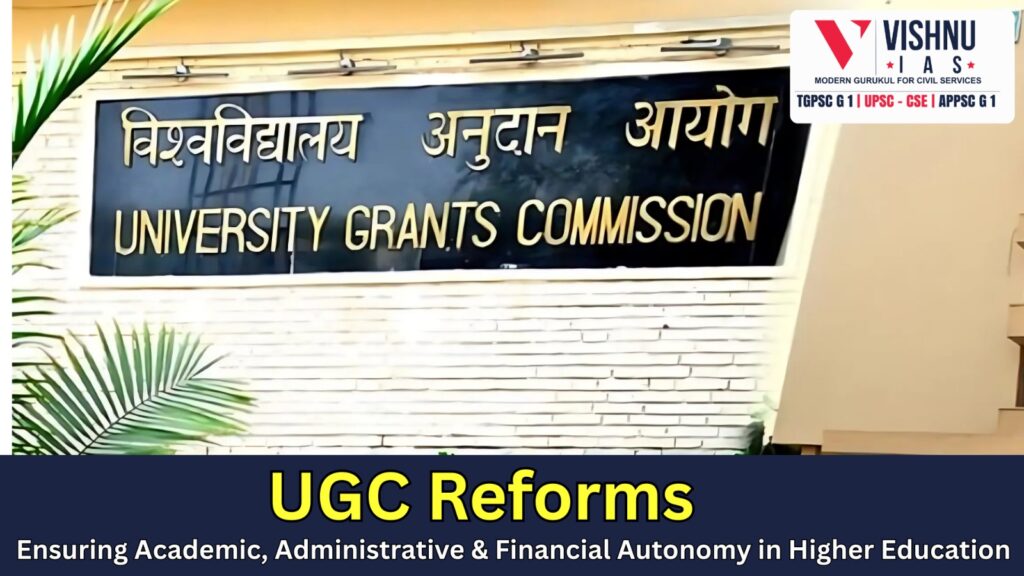
Explore why reforming regulatory structures like the University Grants Commission (UGC) is crucial for granting academic, administrative, and financial autonomy to India’s higher education institutions, in line with NEP 2020’s vision for global competitiveness.

Reforming UGC for Academic, Administrative & Financial Autonomy in Higher Education

Reforming UGC for Academic, Administrative & Financial Autonomy in Higher Education Academic freedom is the cornerstone of higher education, enabling universities to foster critical thinking, innovation, and societal progress by allowing unfettered exploration of ideas. The University Grants Commission (UGC), established under the UGC Act of 1956, serves as India’s apex regulatory body for higher

Reforming UGC for Academic, Administrative & Financial Autonomy in Higher Education Read More »

Scroll to Top