Kargil Vijay Diwas

Kargil Vijay Diwas

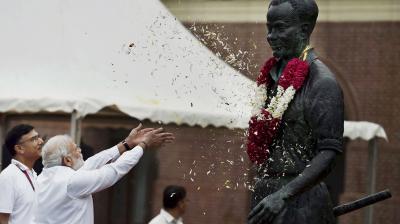
Kargil Vijay Diwas Why in News The 22nd anniversary of Kargil Vijay Diwas was observed on the 26th of July 2021. The day is dedicated to the martyred soldiers of the Kargil war.  Key Points About: After the Indo-Pak war of 1971, there had been many military conflicts. Both the countries conducted nuclear tests in […]

Kargil Vijay Diwas Read More »

Exercise INDRA-21

Exercise INDRA-21

Exercise INDRA-21 Why in News The 12th Edition of Indo-Russia joint military Exercise INDRA will be held at Volgograd, Russia in August 2021. Key Points About Exercise INDRA: The exercise will entail conduct of counter terror operations under the United Nations mandate by a joint force against international terror groups.  The INDRA series of exercises

Exercise INDRA-21 Read More »

73%-rise-in-healthcare-facilities-in-tribal-areas-between-2005-and-upsc-anthropology-vishnuias

73% rise in healthcare facilities in tribal areas between 2005 and 2020: GoI data

73% rise in healthcare facilities in tribal areas between 2005 and 2020: GoI data The number of SHC’s in tribal areas reportedly increased by 78% in 2020There has been a 73 per cent increase in healthcare facilities in tribal areas between 2005 and 2020 as compared to a 10 per cent increase across the country,

73% rise in healthcare facilities in tribal areas between 2005 and 2020: GoI data Read More »

Foreign Contribution (Regulation) Act (FCRA), 2010-upsc-vishnu ias

Foreign Contribution (Regulation) Act (FCRA), 2010

Foreign Contribution (Regulation) Act (FCRA), 2010 Foreign funding of voluntary organizations in India is regulated under FCRA act and is implemented by the Ministry of Home Affairs. Under the Act, organisations require to register themselves every five years. As per the amended FCRA rules, all NGOs registered or granted prior permission under FCRA are now required to upload details of foreign contributions received and utilized by them every three months on their website or the FCRA website. NGO snow need to file their annual returns online, with the hard copy version dispensed  The

Foreign Contribution (Regulation) Act (FCRA), 2010 Read More »

Monkeypox Virus-upsc-vishnu ias

Monkeypox Virus

Monkeypox Virus Singapore recently reported the first-ever case of the Monkeypox Virus, a rare virus similar to the human smallpox. About Monkeypox Virus: What Is It? Monkeypox virus (MPXV) is an orthopoxvirus that causes a viral disease with symptoms in humans similar, but milder, to those seen in smallpox  Smallpox was declared eradicated in 1980, whereas human monkeypox is endemic in villages of Central and West Africa. The occurrence of cases is often found close to tropical rainforests where there is frequent contact with infected animals. There is no evidence to date that person-to-person transmission alone can sustain monkeypox in the human population. Transmission:

Monkeypox Virus Read More »

Forest Rights Act is quite clear on genuine forest dwellers, but states are letting it down  India cannot save her forests, but for the active involvement of the forest dwelling scheduled tribes. The Scheduled Tribes and Forest Dwellers Recognition of Forest Rights Act, 2006 as well as the Rules, 2007, are quite clear and unambiguous on the right of habitatation and other forest rights. But the problem begins when it comes to the implementation of the law by the states. To blame the Supreme Court’s recent judgment for the probable eviction of over one million tribal people — as the media and others are doing — is wrong and it is perhaps due to misrepresentation of both law and fact. The law as it stands automatically vests rights of residence/habitation to genuine forest right holders especially scheduled tribes. The rejection, if at all, largely relates to extent of cultivation. The court directed the states to evict people who were not able to establish their claims as forest dwellers under the Forest Rights Act. The law or the order isn’t the problem here, the states are. By making the burden of proof so heavy, the states have risked the eviction of genuine forest dwellers. The right to habitation While the framework of the Forest Rights Act was rather simple, too many complicated procedures and forms were introduced through state clarifications and office directions. The law, as it stands, automatically recognised and vested the forest rights to the ‘forest dwelling schedule tribes as well as other traditional forest dwellers’. It gave them two basic rights: habitation and self-cultivation, something they enjoyed before the law was passed as well. The law also makes a distinction between forest rights for scheduled tribes and forest rights for dwellers other than scheduled tribes in terms of their eligibility. The right to habitation has been automatically vested in the act, provided the scheduled tribe family proves that they existed on that location before 13 December 2005 and were cultivating on an extent piece of forest land. Any genuine tribal family residing in that area would not have any problem in proving that. It would be more difficult for ‘other traditional forest dwellers’ because they have to prove that they were residents of that area for three generations — generations being 25 years each. However, when it came to the verification, the states introduced complex processes for both. Genuine forest dwellers Verifying the extent of cultivation on such forest land and habitation would have to be done through a three-level scrutiny process by the gram sabha, the sub-division level committee and the district level committee. It was supposed to be facilitated by a forest rights committee, a subset of the gram sabha, with the technical help of other related departments including the forest, tribal, revenue and the Panchayats. It is no body’s case that fresh encroachments should be regularised in a forest area. But for the states to make the process so complicated for scheduled tribes who existed as on 13 December 2005, which can be proved quite easily through a large menu of evidence envisaged under the Rule 14 of the Forest Rights Rules, is unfair. It risks throwing the baby out with the bathwater. The Supreme Court needs to caution the states and dig a little deeper to understand the complexity of this historic legislation on at least two counts. First, questioning the number of rejections that have been produced by the states and whether there is solid evidence to that effect or not. Often in a target-oriented and scheme-oriented country, numbers play a huge role. The god is in the details, and so is the devil. Second, probing the number of appeals that are pending on both bogus claims as well as genuine claims at the appellate authorities under the Forest Rights Act. It is necessary that a powerful and equipped monitoring body is established as a special purpose vehicle under the aegis of the Supreme Court itself since the states have failed in doing so. This role was supposed to be performed by the state level monitoring committees, which are by and large defunct and dysfunctional, and clearly not doing its statutory duty. Treading cautiously It must be understood that a rejection of claim to a forest right over cultivation of an extent piece of forest land, or rejection due to technicalities of the form itself, or wrong interpretation by the sub-division level committee or the district level committee, or a non-proactive state-level monitoring committee should not lead to genuine tribal families being deprived of their rightful homes as guaranteed by the act. Because that would perhaps lead to another big ‘historical injustice’ that we won’t be able to amend. So, the judiciary, the states and the petitioners must tread cautiously because India won’t be able to save her forests without the active involvement of the forest dwelling scheduled tribes. An appeal to the PM Narendra Modi government is that let it remain the forest rights act and not a forest frights act.-anthropology-vishnu ias

Forest Rights Act is quite clear on genuine forest dwellers, but states are letting it down

Forest Rights Act is quite clear on genuine forest dwellers, but states are letting it down   India cannot save her forests, but for the active involvement of the forest dwelling scheduled tribes. The Scheduled Tribes and Forest Dwellers Recognition of Forest Rights Act, 2006 as well as the Rules, 2007, are quite clear and

Forest Rights Act is quite clear on genuine forest dwellers, but states are letting it down Read More »

Scroll to Top