APPSC Group 1 Complete guide

APPSC Group 1 Complete guide

APPSC Group 1 Complete Guide- Notification,Posts,Eligibility,Exam Pattern,Syllabus About APPSC: The APPSC Group 1 exam is a state-level civil service examination that offers numerous prestigious positions in various government departments. The top most high cadre of the state is of Group 1 services. In Andhra Pradesh there is high demand for these services which include Deputy Collector, Deputy

APPSC Group 1 Complete guide Read More »
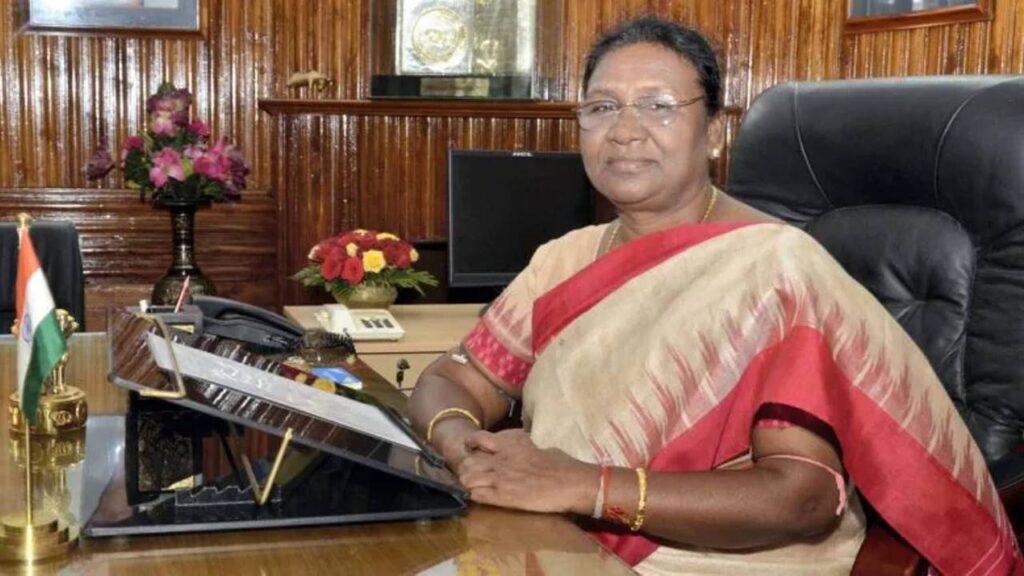
President Murmur

President Murmur’s journey from Rairangpur to Raisina Hill was possible due to constitutional reforms

A genuinely historic occasion, Droupadi Murmu was sworn in as India’s 15th president. She is the second woman and the first member of the Scheduled Tribes (ST) community to hold the nation’s top constitutional position. She is also the first person to be born in an independent India and the youngest person to be elected

President Murmur’s journey from Rairangpur to Raisina Hill was possible due to constitutional reforms Read More »

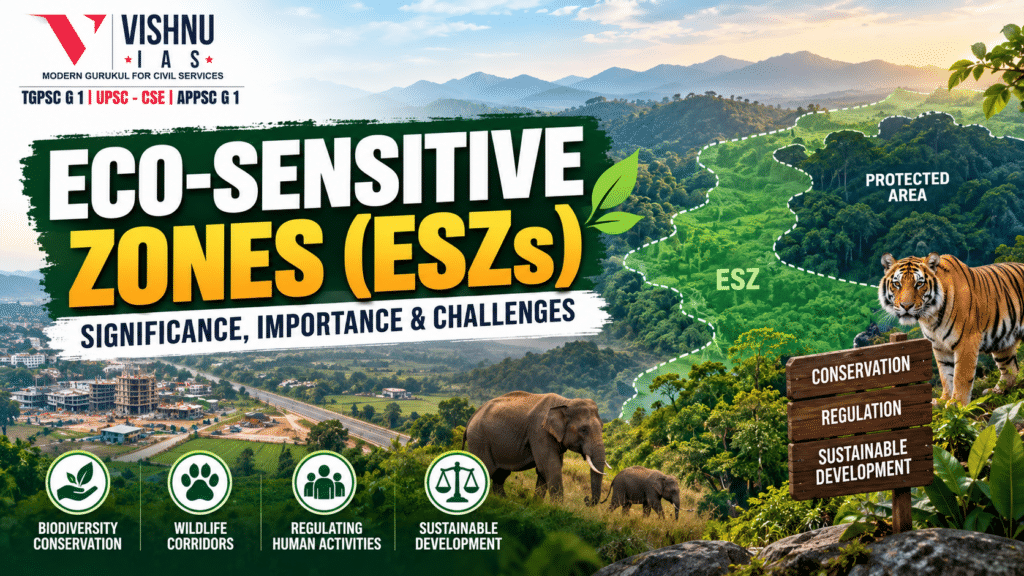
Eco-Sensitive Zones (ESZs): Significance, Importance & Challenges

Eco-Sensitive Zones (ESZs): Significance, Importance & Challenges Eco-Sensitive Zones (ESZs) are ecologically fragile areas notified around Protected Areas (PAs) such as National Parks and Wildlife Sanctuaries. They act as a buffer or “shock absorber” between protected ecosystems and areas of human activity. ESZs are notified by the Central Government under the Environment (Protection) Act, 1986.

Eco-Sensitive Zones (ESZs): Significance, Importance & Challenges Read More »

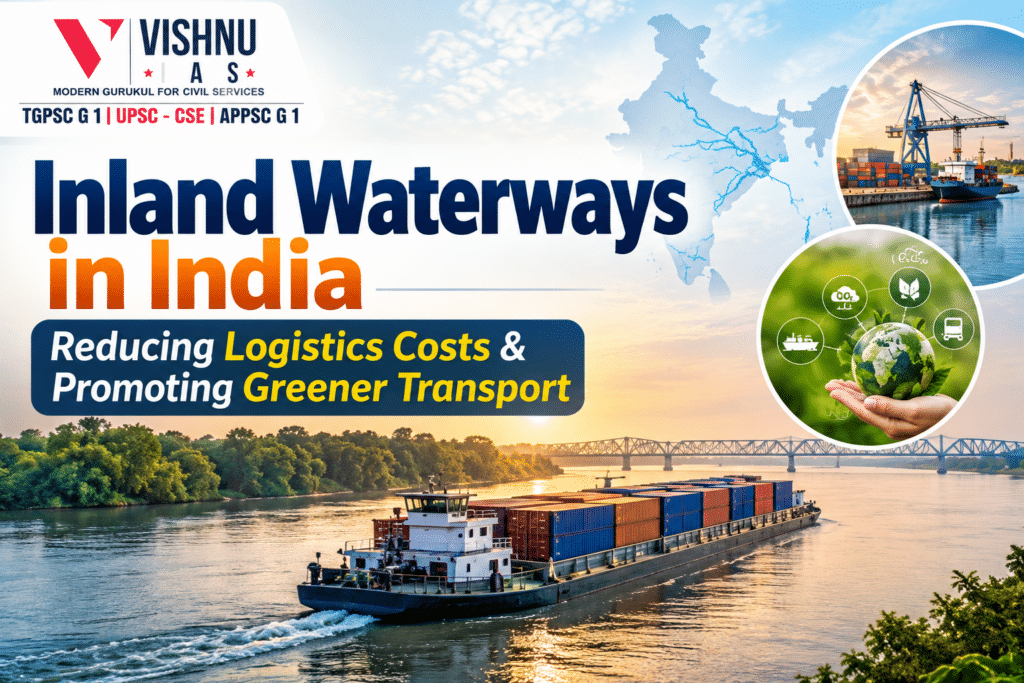
Inland Waterways in India: Reducing Logistics Costs & Promoting Green Transport

Inland Waterways in India: Reducing Logistics Costs & Promoting Green Transport Inland Waterways in India – Introduction Inland Waterways in India refer to the movement of people and goods through navigable rivers, canals, lakes, backwaters and related inland water channels. India has 111 National Waterways (NWs) of which 32 are operational. Cargo movement on National

Inland Waterways in India: Reducing Logistics Costs & Promoting Green Transport Read More »

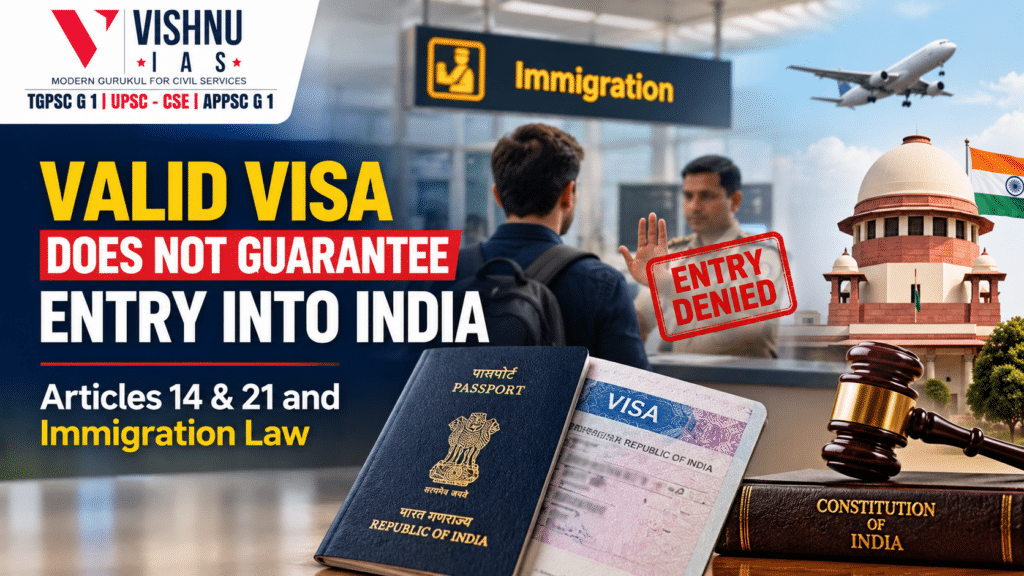
Valid Visa Does Not Guarantee Entry into India: Articles 14 & 21 and Immigration Law

Valid Visa Does Not Guarantee Entry into India: Articles 14 & 21 and Immigration Law Body I. Constitutional Position of Foreign Nationals Article 14 – Equality Before Law Article 14 uses the expression “any person” and therefore its protection extends to foreigners as well as citizens. However, equality does not require identical treatment where there

Valid Visa Does Not Guarantee Entry into India: Articles 14 & 21 and Immigration Law Read More »

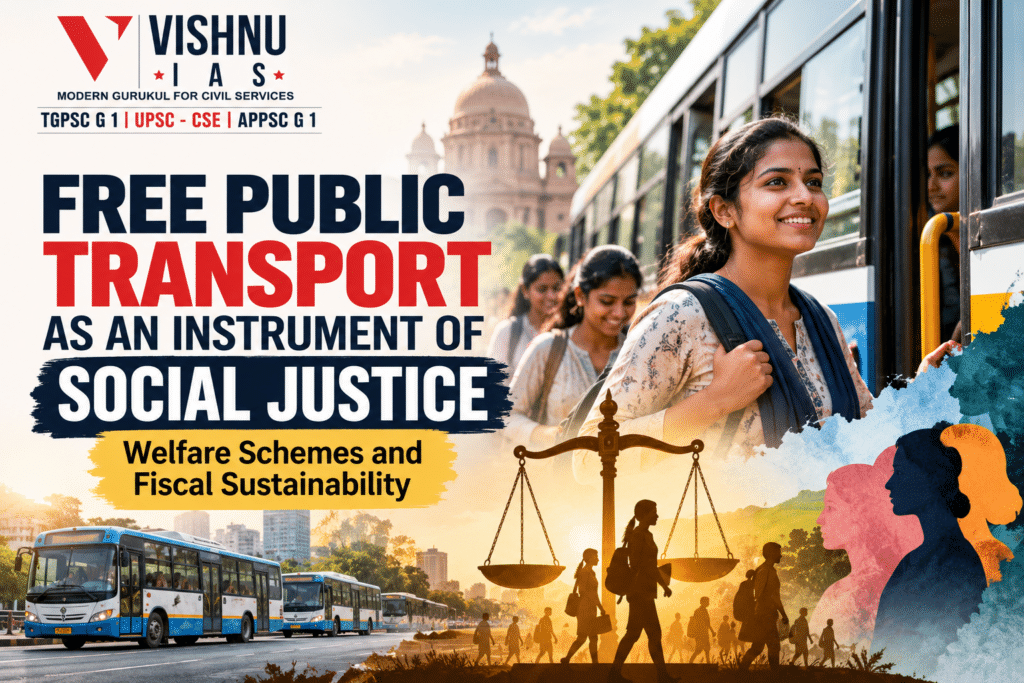
Free Public Transport as an Instrument of Social Justice | Welfare Schemes & Fiscal Sustainability

Free Public Transport as an Instrument of Social Justice: Welfare Schemes and Fiscal Sustainability Free Public Transport as an Instrument of Social Justice can reduce mobility constraints faced by economically weaker sections, particularly women. States such as Tamil Nadu and Karnataka have introduced free bus travel for women, demonstrating how transport policy can also function

Free Public Transport as an Instrument of Social Justice | Welfare Schemes & Fiscal Sustainability Read More »

Gandhi’s Struggle Truce Struggle Strategy: Discuss the S-T-S Approach

Gandhi’s Struggle Truce Struggle Strategy: Discuss the S-T-S Approach Mahatma Gandhi’s Struggle Truce Struggle Strategy was a method of nationalist mobilisation that combined mass struggle with temporary political settlements, followed by renewed mobilisation when negotiations failed to secure the larger nationalist objective. This approach is often described as the Struggle–Truce–Struggle (S-T-S) strategy, particularly visible during

Gandhi’s Struggle Truce Struggle Strategy: Discuss the S-T-S Approach Read More »

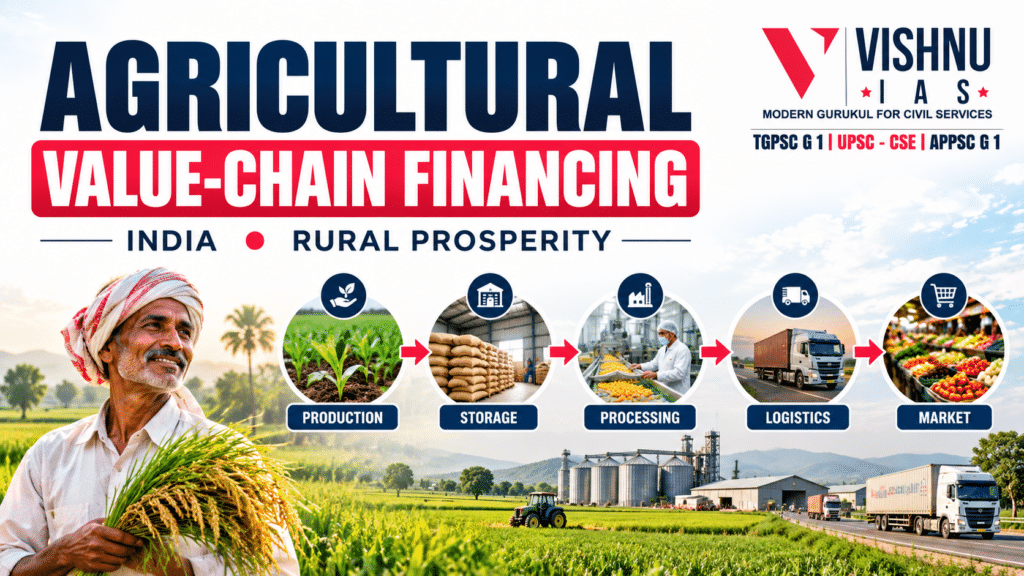
Agricultural Value-Chain Financing in India: Rationale & Rural Prosperity

Agricultural Value-Chain Financing in India: Rationale & Rural Prosperity Agricultural value-chain financing can play a crucial role in transforming India’s rural economy by moving beyond production finance towards financing the entire agricultural value chain. India has built a strong institutional framework for financing agricultural production through Kisan Credit Cards, cooperative credit institutions, Regional Rural Banks

Agricultural Value-Chain Financing in India: Rationale & Rural Prosperity Read More »

AFSPA 1958: Meaning, Circumstances, Powers & Safeguards

AFSPA 1958: Meaning, Circumstances, Powers & Safeguards The Armed Forces (Special Powers) Act (AFSPA), 1958 was enacted to enable the armed forces to assist civil authorities in areas facing serious insurgency or armed violence. It operates only after an area is declared a “disturbed area” under Section 3. The Act was originally enacted in the

AFSPA 1958: Meaning, Circumstances, Powers & Safeguards Read More »

Right to Information Act 2005: Significance, Challenges & Way Forward

Right to Information Act 2005: Significance, Challenges & Way Forward After two decades of enacting significant legislation on access to information, challenges still persist in its effective implementation. Discuss. Introduction The Right to Information Act 2005 transformed access to government information from a administrative privilege into a statutory right available to every citizen. Its constitutional

Right to Information Act 2005: Significance, Challenges & Way Forward Read More »

Right to Vote in India: Supreme Court Judgments & Legal Status

Right to Vote in India: Supreme Court Judgments & Legal Status The Right to Vote in India is the foundation of representative democracy, but its precise legal status in India has evolved through judicial interpretation. Article 326 provides for elections to the Lok Sabha and State Legislative Assemblies on the basis of adult suffrage, while

Right to Vote in India: Supreme Court Judgments & Legal Status Read More »

Need to Regulate Veto Power in UNSC | UN Security Council Reform

Need to Regulate Veto Power in UNSC | UN Security Council Reform Introduction The UNSC Veto Power Reform debate is closely linked to the broader reform of the United Nations Security Council (UNSC), which is the principal organ responsible for maintaining international peace and security. Its five permanent members, China, France, Russia, the United Kingdom

Need to Regulate Veto Power in UNSC | UN Security Council Reform Read More »

Scroll to Top