
Small Modular Reactors in India: Role in Nuclear Energy Roadmap & Industrial Power
Small Modular Reactors in India are emerging as a transformative solution in the country’s nuclear energy roadmap, offering low-carbon, reliable, and scalable power. As India aims to expand its nuclear capacity and achieve net-zero targets, SMRs play a crucial role in providing sustainable energy, especially for industrial captive power generation.
Introduction
Small Modular Reactors (SMRs) are advanced nuclear reactors with a capacity typically below 300 MW, designed for modular construction, enhanced safety, and flexible deployment. In the context of India’s long-term energy transition, SMRs are emerging as a critical pillar to achieve the dual goals of energy security and decarbonisation.
With India aiming to expand nuclear capacity from about 8 GW to 100 GW by 2047, and given that thermal power still contributes nearly three-fourths of electricity generation, SMRs offer a scalable solution to provide low-carbon baseload power while complementing intermittent renewables. Their relevance is further amplified by the need to decarbonise hard-to-abate industrial sectors where reliable round-the-clock energy is essential.
1. Strategic Significance of SMRs in India’s Nuclear Energy Roadmap
1.1 Enabling Low-Carbon Baseload Power
SMRs provide continuous and stable electricity, unlike solar and wind, which depend on climatic conditions. This ensures grid stability and supports India’s net-zero commitments by 2070 while enabling inclusive economic growth.
1.2 Cost Efficiency through Modularisation
SMRs are designed for factory fabrication and on-site assembly, reducing construction time, cost overruns, and financial risks. India’s experience with PHWR reactors provides a strong foundation for developing cost-effective SMRs.
1.3 Private Sector Participation
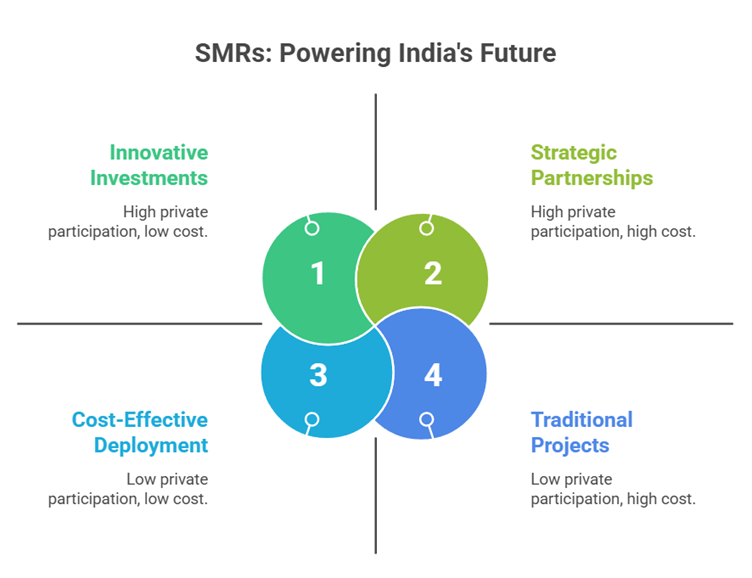
With recent reforms allowing private participation, SMRs offer opportunities for public-private partnerships and innovation due to their smaller size and lower capital requirements.
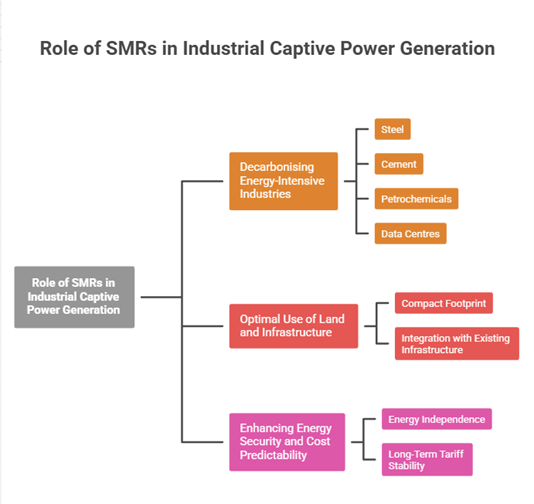
2. Role of SMRs in Industrial Captive Power Generation
2.1 Decarbonising Industries
Industries such as steel, cement, and data centres require uninterrupted power. SMRs provide clean energy alternatives, helping reduce carbon emissions and meet ESG goals.
2.2 Efficient Land Use
SMRs require less land compared to renewable energy sources, making them suitable for industrial clusters with space constraints.
2.3 Energy Security and Cost Stability
SMRs ensure long-term tariff stability and reduce dependence on fossil fuels, protecting industries from price volatility.
3. Challenges and Ecosystem Requirements
3.1 Regulatory Challenges
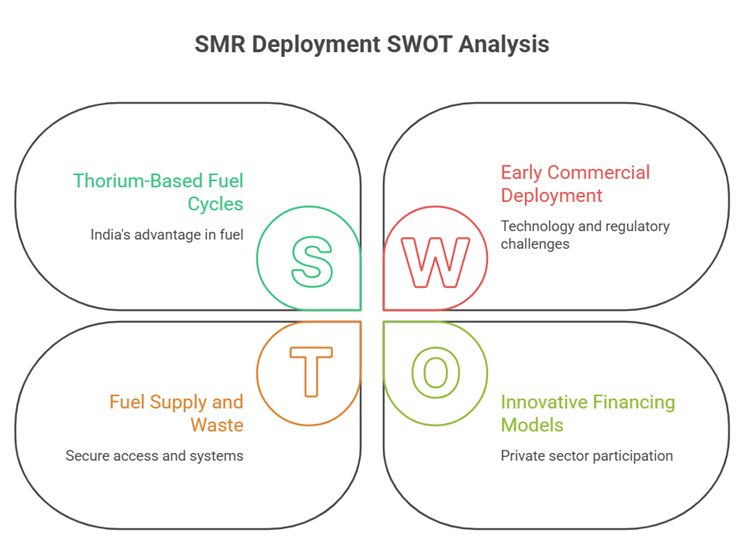
SMRs are still in early stages globally. India needs robust regulatory frameworks to ensure safety while promoting innovation.
3.2 Financing Issues
Innovative financing models like public-private partnerships and green finance are essential for large-scale SMR deployment.
3.3 Fuel and Waste Management
Ensuring fuel supply and waste management systems is critical. India’s thorium-based program provides long-term advantages.
Conclusion
Small Modular Reactors represent a transformative opportunity in India’s energy transition by bridging the gap between clean energy and industrial growth. Their ability to provide reliable, low-carbon power makes them ideal for industrial use.
However, achieving large-scale deployment requires strong policy support, technological innovation, and sustainable financing. With rising energy demand and renewable limitations, SMRs can become a cornerstone of India’s future energy mix.
Recap: