

Introduction:
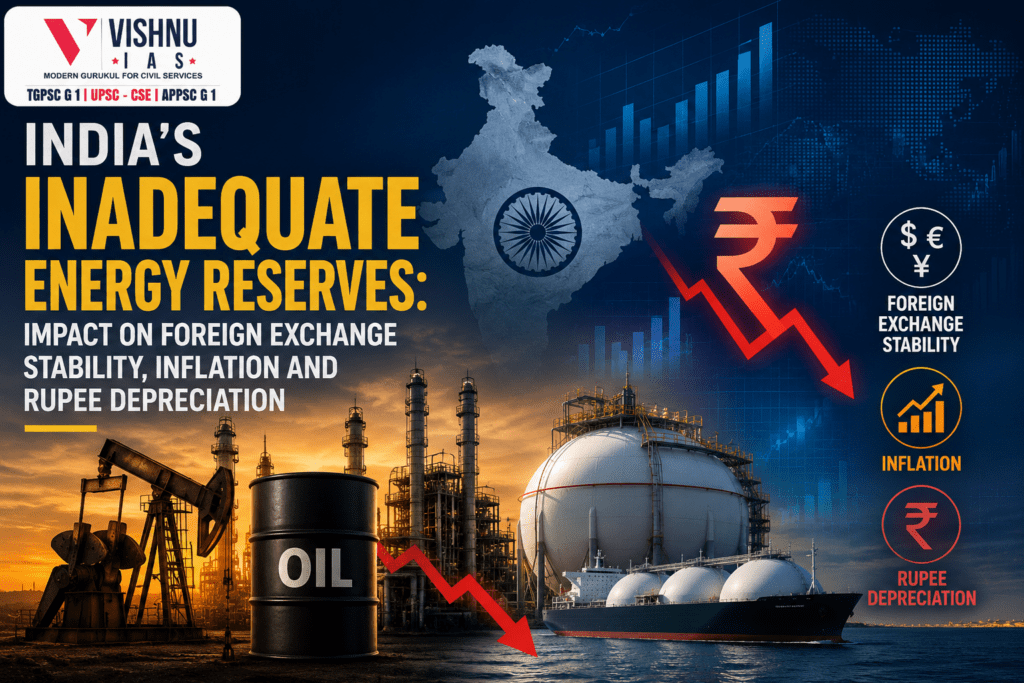
- Energy reserves refer to strategically maintained stocks of critical fuels such as crude oil, petroleum products, LPG and natural gas, designed to insulate an economy from external supply disruptions and price volatility. For an import-dependent economy like India, where nearly 85% of crude oil demand and around 50% of natural gas demand are met through imports, energy security is directly linked with macroeconomic stability. Despite being the world’s third-largest oil importer and consumer, India’s strategic petroleum reserve currently covers only around 9–10 days of crude demand, far below the 90-day benchmark followed by advanced economies, exposing the economy to external shocks and creating vulnerabilities in foreign exchange reserves, inflation management, and currency stability.
Body:
1. Implications for Foreign Exchange Stability
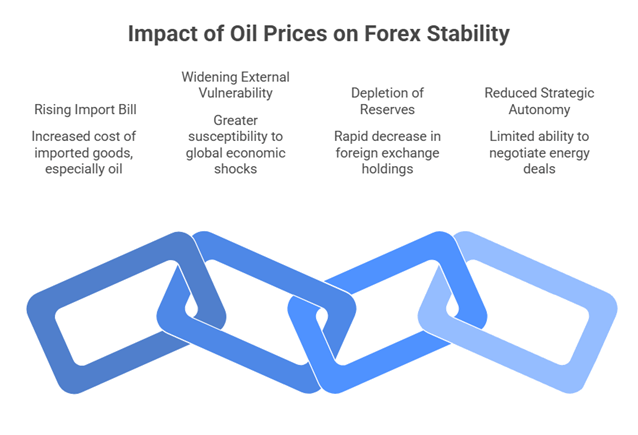
(a) Rising import bill and widening external vulnerability
- Heavy dependence on imported crude makes India highly vulnerable to global oil price spikes, directly increasing the oil import bill, which crossed significant levels during the 2022 global energy shock.
- Higher energy imports widen the Current Account Deficit (CAD), increasing pressure on the Balance of Payments (BoP).
- Example: During the Russia–Ukraine conflict, elevated Brent crude prices sharply raised India’s energy import expenditure, straining external balances.
(b) Rapid depletion of foreign exchange reserves
- In the absence of adequate strategic reserves, India must resort to spot-market purchases during crises, often at premium prices, leading to accelerated drawdown of forex reserves.
- This weakens the country’s ability to finance essential imports and maintain macroeconomic confidence.
- Example: India’s forex reserves declined significantly in 2022 partly due to imported energy pressures and exchange rate interventions.
(c) Reduced strategic autonomy in energy diplomacy
- Limited reserves weaken India’s bargaining power in negotiating long-term contracts and force short-term market dependence.
- Strategic reserves act as a buffer allowing nations to delay purchases until prices normalize.
- Case Study: China used its large strategic reserves and diversified contracts to secure discounted Russian crude, cushioning domestic shocks more effectively.
2. Implications for Inflation and Domestic Price Stability
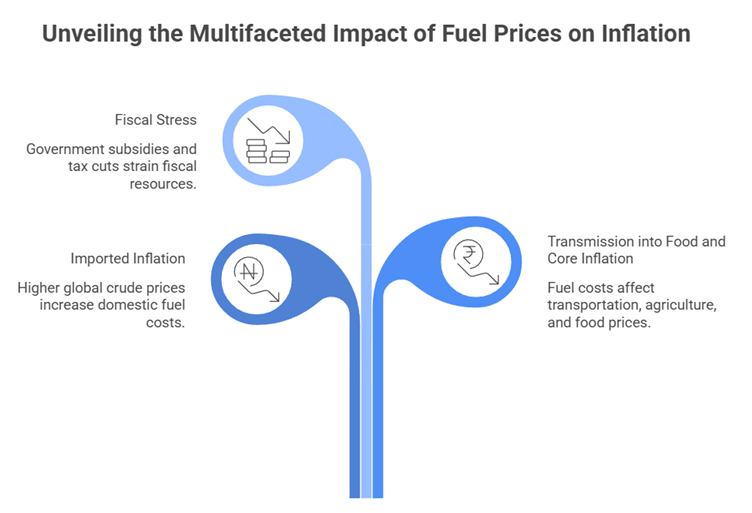
(a) Imported inflation through fuel pass-through
- Higher global crude prices transmit directly into domestic prices of petrol, diesel, LPG and ATF, raising household and industrial costs.
- This leads to cost-push inflation, especially when public sector oil companies cannot indefinitely absorb under-recoveries.
- Example: Retail fuel price hikes after prolonged freezes often trigger broader inflationary effects across sectors.
(b) Transmission into food and core inflation
- Fuel is a universal intermediate input affecting transportation, irrigation, fertilizers, warehousing and logistics, thereby increasing food prices.
- Natural gas shortages also raise fertilizer production costs, worsening agricultural input inflation.
- Case Study: Fertilizer sector—India’s dependence on LNG imports directly affects urea subsidy burdens and food prices.
(c) Fiscal stress through subsidy expansion
- Governments often respond through fuel subsidies, excise duty cuts, or compensation to oil marketing companies, increasing fiscal pressure.
- Larger fiscal deficits can further fuel inflation through demand-side pressures.
- Example: Repeated excise duty reductions on petrol and diesel reduced government revenues while only partially cushioning consumers.
3. Implications for Rupee Depreciation and Currency Stability
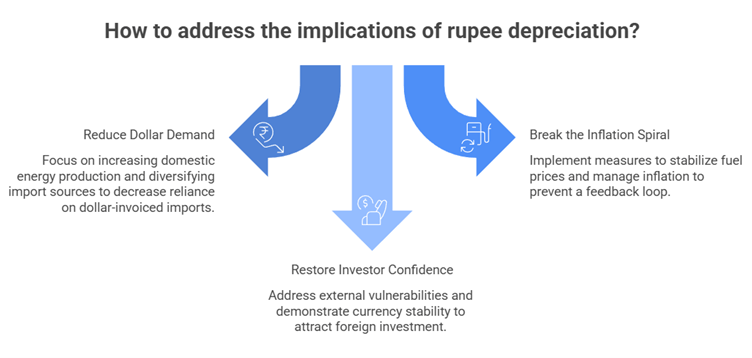
(a) Higher dollar demand weakens the rupee
- Since crude imports are largely invoiced in US dollars, rising oil imports increase demand for dollars, exerting downward pressure on the rupee.
- Persistent energy deficits structurally weaken exchange-rate resilience.
- Example: Periods of elevated crude prices have historically coincided with sharp rupee depreciation episodes.
(b) Imported inflation creates a depreciation-inflation spiral
- A weaker rupee makes future imports costlier, further increasing fuel prices and creating a feedback loop between inflation and currency weakness.
- This reduces consumer purchasing power and corporate profitability.
- Case Study: 2013 “Taper Tantrum”—high oil dependence amplified rupee volatility amid global capital outflows.
(c) Erosion of investor confidence
- Persistent external vulnerabilities deter foreign investors, especially when currency depreciation appears structural rather than temporary.
- Lower portfolio inflows further weaken the rupee and raise sovereign borrowing costs.
- Example: Rating agencies often monitor energy import dependence as a key macro-risk indicator.
Conclusion:
- India’s inadequate energy reserves represent not merely an energy security challenge but a broader macroeconomic vulnerability, affecting external stability, inflation control, and currency resilience.
- Building larger strategic petroleum and gas reserves, accelerating renewable energy deployment, expanding ethanol blending, strengthening green hydrogen initiatives, and diversifying import sources through platforms like the International Solar Alliance and long-term energy partnerships can significantly reduce exposure.
- With India targeting 500 GW of non-fossil fuel capacity by 2030, transforming from an import-dependent consumer to a resilient energy-secure economy will be central to sustaining long-term growth and macroeconomic sovereignty.