
Graded Response Action Plan (GRAP) in Delhi-NCR: Role, Challenges and Air Pollution Control
Introduction
The Graded Response Action Plan (GRAP) in Delhi-NCR plays an important role in controlling recurring air pollution, particularly during winter, due to vehicular emissions, industrial activities, construction dust, waste burning, stubble burning and unfavourable meteorological conditions. GRAP is an emergency framework designed to implement progressively stricter pollution-control measures according to the severity of air pollution. Following directions of the Supreme Court in M.C. Mehta v. Union of India (2016), GRAP was notified in 2017 and is currently implemented under the supervision of the Commission for Air Quality Management (CAQM).
Body
I. Role of GRAP in Controlling Air Pollution
1. Graded and Preventive Response
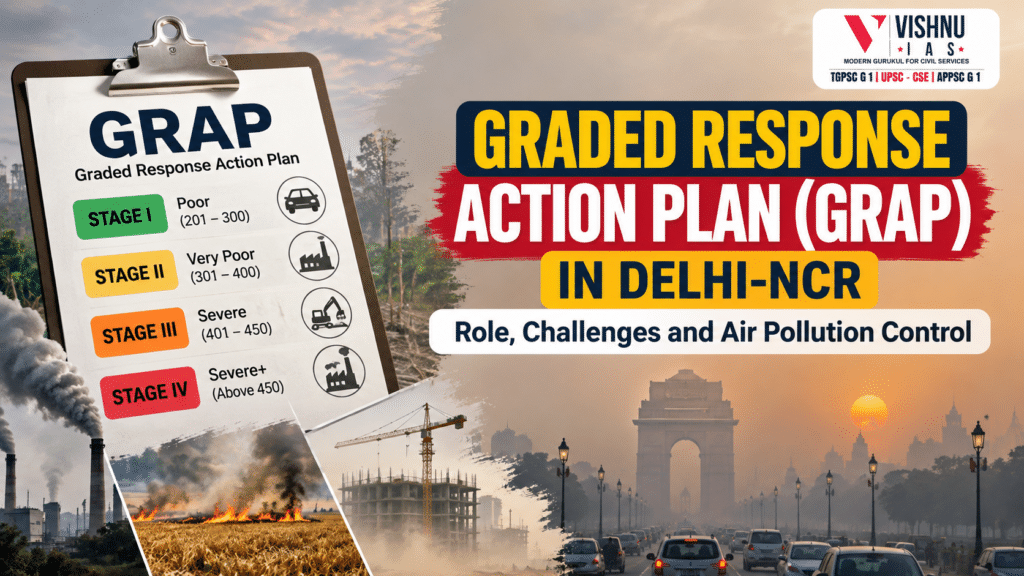
- GRAP classifies pollution levels into four stages based on Delhi's Air Quality Index (AQI). Stage I applies to poor air quality (201–300), Stage II to very poor (301–400), Stage III to severe (401–450) and Stage IV to severe+ (above 450).
- It enables authorities to intensify interventions as pollution worsens, with earlier-stage measures continuing as higher stages are invoked.
2. Control of Vehicular Emissions
- Restrictions on polluting and overage vehicles, enforcement of Pollution Under Control (PUC) norms and the entry of eligible cleaner-fuel buses help reduce transport-related emissions. Diverting non-destined trucks through the Eastern and Western Peripheral Expressways further reduces unnecessary traffic within Delhi.
3. Dust and Construction Management
- Mechanised road sweeping, water sprinkling, anti-smog guns and stricter dust-control requirements at construction sites help control particulate matter. Construction sites that fail to meet prescribed registration and dust-monitoring requirements face operational restrictions.
4. Waste and Industrial Pollution Control
- GRAP mandates strict enforcement against open burning of municipal solid waste and biomass, illegal waste dumping and the use of coal and firewood in restaurant tandoors. Regular removal of construction, industrial and municipal waste also helps prevent secondary sources of pollution.
5. Cleaner Transport and Traffic Management
- Additional CNG and electric buses, increased Metro and Regional Rapid Transit System (RRTS) services, synchronised traffic signals and better traffic management encourage public transport use and reduce congestion-related emissions.
6. Institutional Coordination
- CAQM coordinates with pollution-control boards, municipal bodies, traffic police and transport departments across the NCR. Weather forecasts from the India Meteorological Department (IMD) and the Indian Institute of Tropical Meteorology (IITM) support timely decisions on invoking appropriate GRAP stages.
II. Challenges in Ensuring Effective and Sustained Improvement
1. Seasonal and Transboundary Nature of Pollution
- Stubble burning in neighbouring States, combined with low wind speeds and temperature inversion during winter, aggravates pollution.
- Bypassing monitoring of stubble burning by farmers in Punjab in the evening (ISRO study).
2. Predominantly Reactive Approach
- GRAP is primarily an emergency response mechanism. Temporary restrictions may reduce emissions during pollution episodes but cannot independently address the structural causes of pollution, such as dependence on private vehicles, fossil fuels and inadequate waste management.
3. Coordination and Accountability Gaps
- Multiple implementing agencies across Delhi, Haryana, Uttar Pradesh and Rajasthan complicate enforcement.
- Overlapping responsibilities and inconsistent implementation can weaken collective action.
4. Developmental and Livelihood Concerns
- Restrictions on construction, transport and industrial activities can affect workers, businesses and economic activity. Inadequate affordable public transport and cleaner technological alternatives may also limit compliance.
Conclusion
GRAP represents an important step towards coordinated, graded and forecast-based pollution management. However, sustained improvement requires a shift from emergency restrictions to year-round, source-specific pollution control.