
Blogs

Find the best resources and blogs written by our fine content writers. You can find this useful to crack UPSC. We had fabricated our blog part in a way which is comprehensive and elaborate.

Multi-Domain Deterrence (MDD) is reshaping modern warfare in the Indo-Pacific by addressing grey-zone warfare and asymmetric threats through integrated land, air, sea, cyber, and space strategies. Explore its concept, relevance, and strategic importance.

Multi-Domain Deterrence (MDD): Countering Grey-Zone Warfare in the Indo-Pacific

Multi-Domain Deterrence (MDD) in Indo-Pacific: Grey-Zone Warfare & Asymmetric Threats Explained Multi-Domain Deterrence (MDD) refers to the integration of capabilities across land, air, sea, space, cyber, and electromagnetic domains to create a credible deterrent posture that can impose unacceptable costs on an adversary across multiple fronts simultaneously. In an era where the nature of conflict […]

Multi-Domain Deterrence (MDD): Countering Grey-Zone Warfare in the Indo-Pacific Read More »

Transgender Persons Amendment Bill 2026 challenges the NALSA judgment by removing self perceived gender identity and introducing medical board certification, raising concerns on rights, dignity, and privacy in India.

Transgender Persons Amendment Bill 2026: How It Undermines the NALSA Judgment

Transgender Persons Amendment Bill 2026: How It Undermines the NALSA Judgment Transgender Persons Amendment Bill 2026 has sparked significant debate as it removes self perceived gender identity and introduces a medical board authority, raising serious concerns about its impact on the landmark NALSA judgment and constitutional rights in India. Introduction The recognition of gender identity

Transgender Persons Amendment Bill 2026: How It Undermines the NALSA Judgment Read More »

TB Mukt Bharat can be achieved faster through opportunistic screening and microplanning at the primary care level. Discover how these strategies improve early TB detection, reduce transmission, and strengthen TB elimination efforts in India.

TB Mukt Bharat: Role of Opportunistic Screening and Microplanning in Accelerating TB Elimination in India

TB Mukt Bharat: How Opportunistic Screening and Microplanning Can Accelerate TB Elimination in India Introduction TB Mukt Bharat remains a key national goal as Tuberculosis (TB) continues to be one of India’s most pressing public health challenges, accounting for nearly one-fourth of the global TB burden, with over 25 lakh cases notified annually. Despite sustained
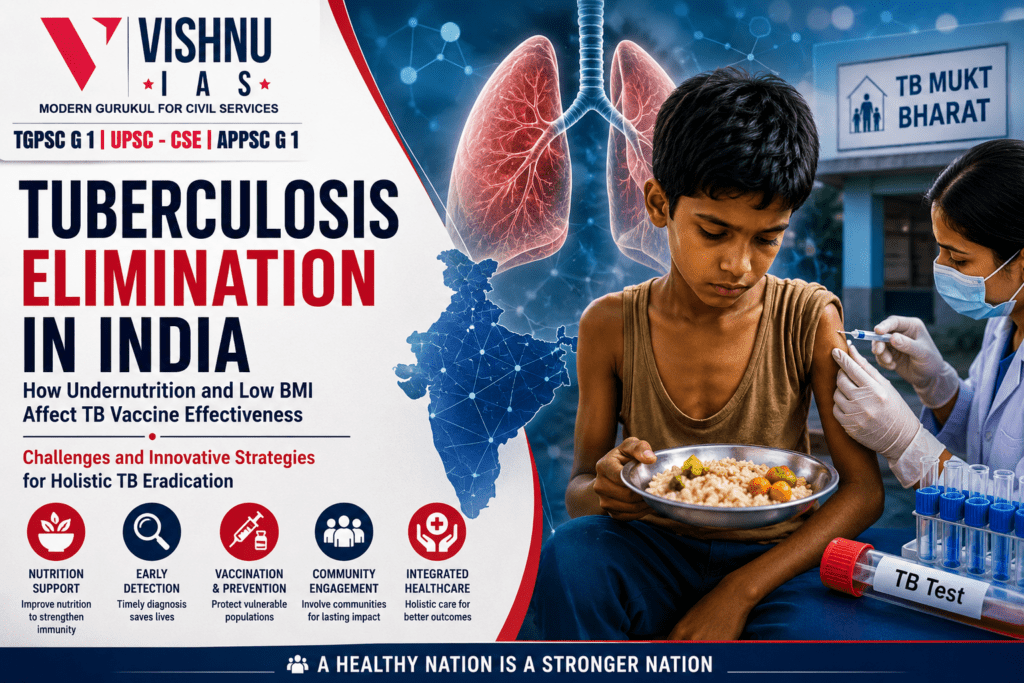
TB Mukt Bharat: Role of Opportunistic Screening and Microplanning in Accelerating TB Elimination in India Read More »

India Strategy to Counter Unilateral Trade Sanctions and Coalition Building

India Strategy to Counter Unilateral Trade Sanctions: Coalition-Building and Global Trade Power Balance

  India Strategy to Counter Unilateral Trade Sanctions: Coalition-Building and Global Trade Power Balance India strategy to counter unilateral trade sanctions involves a mix of legal measures, economic diversification, and coalition-building with other nations to reduce dependence and balance global trade power asymmetry. Introduction Unilateral trade sanctions refer to measures such as tariffs, import restrictions,

India Strategy to Counter Unilateral Trade Sanctions: Coalition-Building and Global Trade Power Balance Read More »

The Great Nicobar case highlights the growing conflict between national security imperatives and indigenous rights, focusing on the Great Nicobar project, Shompen tribe, and development vs displacement in India.

Great Nicobar Case: National Security vs Indigenous Rights in India’s Strategic Development

Great Nicobar Case: Balancing National Security Imperatives and Indigenous Rights Introduction: The Great Nicobar case highlights the tension between national security imperatives and indigenous rights, representing a classic governance dilemma where strategic development goals intersect with constitutional protections for vulnerable communities. The proposed mega-infrastructure project in Great Nicobar Island—including a transshipment port, international airport, power

Great Nicobar Case: National Security vs Indigenous Rights in India’s Strategic Development Read More »

Nominal GDP Revision India under the new GDP series has reduced GDP estimates by 3–4%, impacting fiscal deficit, debt ratios, and policy planning. Understand its implications on India’s fiscal health and governance.

Nominal GDP Revision India: Impact on Fiscal Ratios and Policy Planning

Nominal GDP Revision India: Impact on Fiscal Ratios and Policy Planning Nominal GDP Revision India has emerged as a critical macroeconomic development with the introduction of the new GDP series (base year 2022–23), leading to a downward revision of GDP estimates by around 3–4%. This recalibration has important implications for fiscal ratios, macroeconomic indicators, and

Nominal GDP Revision India: Impact on Fiscal Ratios and Policy Planning Read More »

Explore the impact of EU CBAM on India’s carbon market design, focusing on energy-intensive industries, carbon pricing, competitiveness, and policy transformation.

Impact of EU CBAM on India’s Carbon Market Design for Energy-Intensive Industries

Impact of EU CBAM on India’s Carbon Market Design for Energy-Intensive Industries EU CBAM impact on India carbon market has become a critical policy issue as global climate regulations reshape trade dynamics. The Carbon Border Adjustment Mechanism (CBAM) is a trade-linked climate policy tool introduced by the European Union (EU) to impose a carbon price

Impact of EU CBAM on India’s Carbon Market Design for Energy-Intensive Industries Read More »

Strait of Hormuz weaponization challenges for India affect maritime trade, energy security, Chabahar port, and IMEC corridor. Analyze strategic, economic, and geopolitical implications.

Strait of Hormuz Weaponization Challenges for India: Impact on Trade, Chabahar & IMEC

Weaponization of Strait of Hormuz: Challenges to India’s Maritime Trade, Chabahar and IMEC Weaponization of Strait of Hormuz has emerged as a major geopolitical concern affecting global energy flows and maritime trade. The Strait of Hormuz connects the Persian Gulf to the Gulf of Oman and serves as one of the most vital maritime chokepoints

Strait of Hormuz Weaponization Challenges for India: Impact on Trade, Chabahar & IMEC Read More »

Digital Public Infrastructure (DPI) in Hydrological and Meteorological Planning in India

Digital Public Infrastructure in Hydrological and Meteorological Planning in India Digital Public Infrastructure in Hydrological and Meteorological Planning plays a crucial role in addressing India’s growing climate challenges by integrating fragmented data systems related to water, weather and disaster management. As India faces increasing climate variability, the need for unified digital platforms that connect hydrological

Digital Public Infrastructure (DPI) in Hydrological and Meteorological Planning in India Read More »

UPSC Economy Analysis: Weakening Rupee and Rising Input Costs Impact on Inflation and Growth

UPSC Economy Analysis: Weakening Rupee and Rising Input Costs Impact on Inflation and Growth Weakening Rupee and Rising Input Costs have emerged as significant challenges for India’s macroeconomic stability. These factors complicate the government’s efforts to balance economic growth while controlling inflation. A depreciating currency increases import costs, while rising industrial input prices generate supply-side

UPSC Economy Analysis: Weakening Rupee and Rising Input Costs Impact on Inflation and Growth Read More »

Scroll to Top