Blogs

Find the best resources and blogs written by our fine content writers. You can find this useful to crack UPSC. We had fabricated our blog part in a way which is comprehensive and elaborate.

Critically examine the effectiveness of India’s Neighbourhood First Policy in the context of political transitions in Bangladesh and Nepal, and explore how these shifts influence India’s diplomacy, regional stability, and long-term security environment in South Asia.

Critically Examining India’s Neighbourhood First Policy Amid Political Transitions in Bangladesh and Nepal

  Critically Examining India’s Neighbourhood First Policy Amid Political Transitions in Bangladesh and Nepal India’s Neighbourhood First Policy seeks to prioritise political trust, economic integration, development partnership and security cooperation with South Asian neighbours as a foundation for India’s rise as a regional and global power. The approach aligns with India’s constitutional vision of peaceful […]
Critically Examining India’s Neighbourhood First Policy Amid Political Transitions in Bangladesh and Nepal Read More »

The VB-G RAM G Act 2025 introduces structural reforms to eliminate ghost entries, ensure wage accountability, and enable durable rural asset creation in India.

VB-G RAM G Act 2025: Structural Reforms to End Ghost Entries and Fragmented Rural Asset Creation

VB-G RAM G Act 2025: Structural Reforms to End Ghost Entries and Fragmented Rural Asset Creation <strong Introduction The VB-G RAM G Act 2025 marks a decisive shift in India’s rural employment architecture, addressing long-standing weaknesses of rural wage employment programmes such as ghost job cards, fragmented asset creation and weak enforceability of worker rights.

VB-G RAM G Act 2025: Structural Reforms to End Ghost Entries and Fragmented Rural Asset Creation Read More »

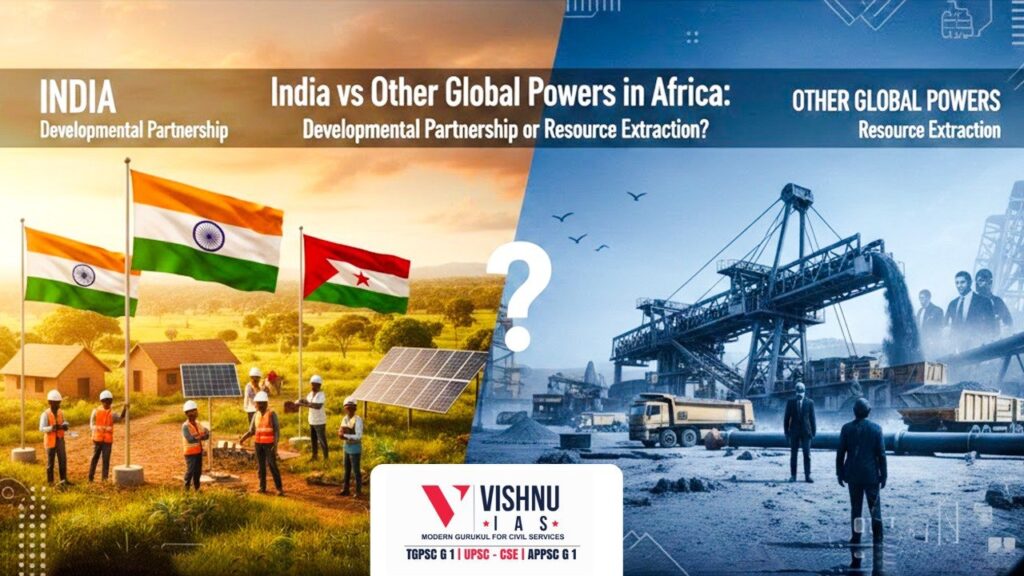
The India Model of developmental partnership with Africa focuses on capacity building, demand-driven cooperation and sustainable growth, offering a clear contrast to extractive investment models followed by other global powers.

India Model of Developmental Partnership with Africa: A Sustainable Alternative to Extractive Investment Models

India Model of Developmental Partnership with Africa: A Sustainable Alternative to Extractive Investment Models The India Model of developmental partnership with Africa refers to a cooperative, demand-driven and capacity-building approach that prioritises mutual benefit, local ownership, and long-term sustainability, rather than short-term profit extraction. Rooted in shared anti-colonial solidarity and South-South Cooperation, India’s engagement with

India Model of Developmental Partnership with Africa: A Sustainable Alternative to Extractive Investment Models Read More »

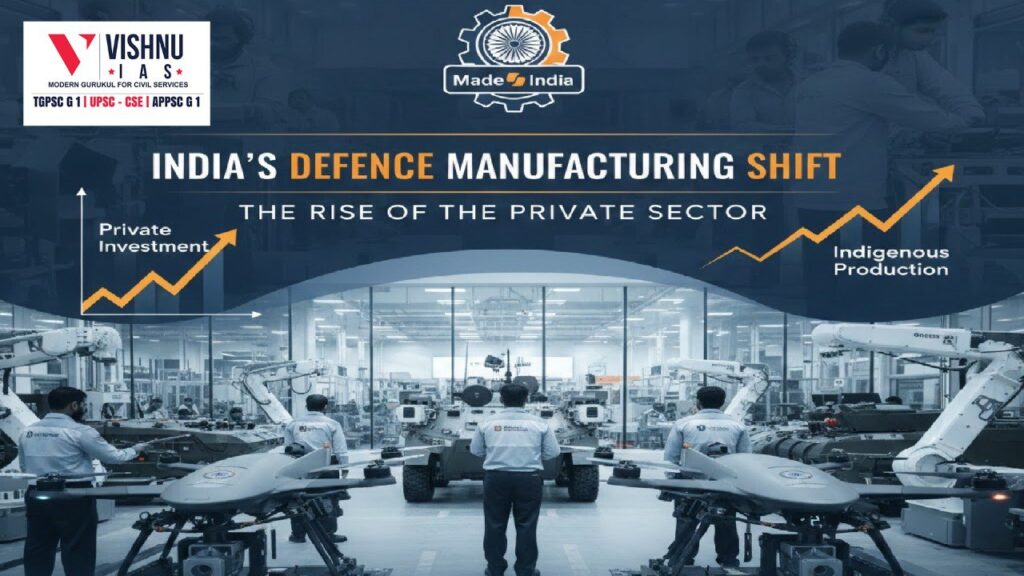
India’s defence manufacturing ecosystem is being reshaped by the domestic private sector. This blog examines how private firms are transforming India from a major arms importer into a global defence manufacturing hub, while analysing persistent regulatory hurdles that still constrain exports, innovation, and scale.

Role of Domestic Private Sector in Transforming India into a Global Defence Manufacturing Hub

Role of Domestic Private Sector in Transforming India into a Global Defence Manufacturing Hub The domestic private sector in India’s defence manufacturing has emerged as a central force in the country’s strategic shift from being one of the world’s largest arms importers to a credible global defence manufacturing hub. This transformation aligns with India’s broader

Role of Domestic Private Sector in Transforming India into a Global Defence Manufacturing Hub Read More »

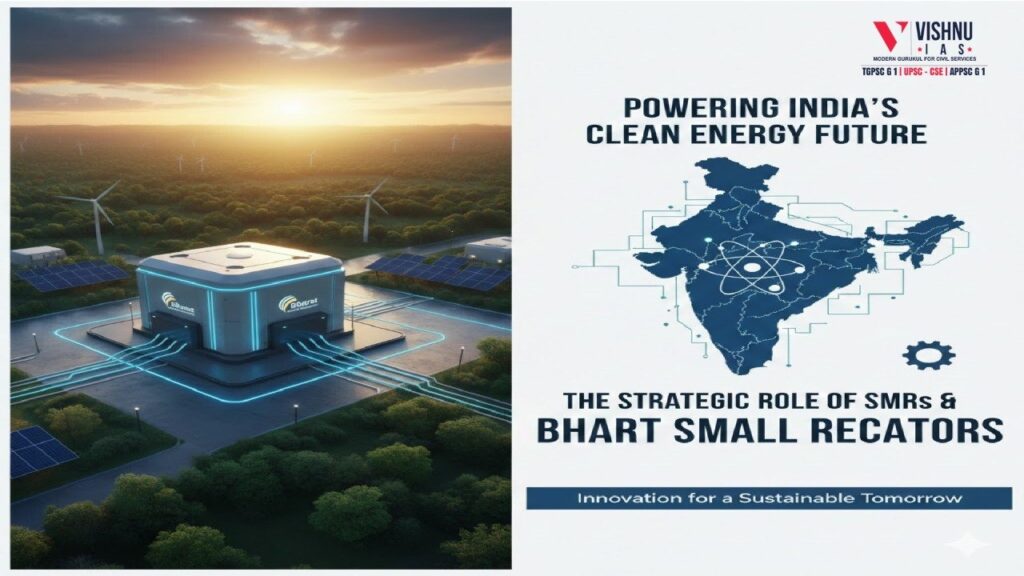
Small Modular Reactors in India and Bharat Small Reactors are reshaping India’s clean energy transition through decentralised, low-carbon nuclear power and new legislation.

Small Modular Reactors (SMRs) and Bharat Small Reactors (BSRs): Strategic Role in India’s Clean Energy Transition

Small Modular Reactors (SMRs) and Bharat Small Reactors (BSRs): Strategic Role in India’s Clean Energy Transition Small Modular Reactors in India are emerging as a critical pillar of the country’s clean energy transition, offering reliable, low-carbon baseload power while enabling decentralised and regionally balanced development. Introduction Human development has historically moved in lockstep with rising

Small Modular Reactors (SMRs) and Bharat Small Reactors (BSRs): Strategic Role in India’s Clean Energy Transition Read More »

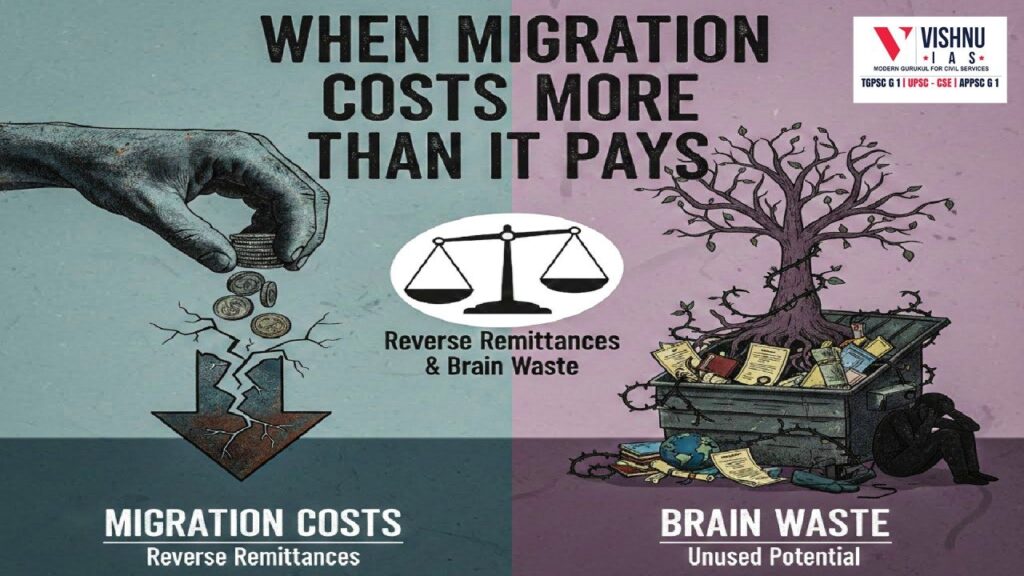
Reverse remittances and brain waste in Indian student migration are reshaping the idea of migration as national wealth creation. This blog examines how self-financed overseas education challenges traditional remittance-led development narratives.

Reverse Remittances and Brain Waste in Indian Student Migration: Rethinking Migration as National Wealth Creation

Reverse Remittances and Brain Waste in Indian Student Migration: Rethinking Migration as National Wealth Creation Reverse remittances and brain waste in Indian student migration have emerged as defining features of India’s contemporary mobility landscape, challenging the long-held assumption that migration automatically contributes to national wealth creation. Introduction Student migration from India has undergone a structural

Reverse Remittances and Brain Waste in Indian Student Migration: Rethinking Migration as National Wealth Creation Read More »

India’s nuclear governance needs regulatory independence to build public trust and investor confidence as the country targets 100 GW nuclear capacity by 2047. Explore why autonomous regulation is critical for safety, investment, and global credibility.

India’s Nuclear Governance Needs Regulatory Independence to Build Public Trust and Investor Confidence

India’s Nuclear Governance Needs Regulatory Independence to Build Public Trust and Investor Confidence India’s Nuclear Governance Needs Regulatory Independence to Build Public Trust and Investor Confidence India’s nuclear governance regulatory independence has emerged as a critical prerequisite for scaling nuclear power safely and sustainably. Nuclear governance refers to the institutional, legal and regulatory framework that

India’s Nuclear Governance Needs Regulatory Independence to Build Public Trust and Investor Confidence Read More »

Checks and balances vs legislative supremacy has emerged as a core constitutional debate after the Supreme Court’s advisory opinion on gubernatorial powers. This blog analyses the tension between democratic mandate, executive discretion, and judicial oversight in India’s federal structure.

Checks and Balances vs Legislative Supremacy: Supreme Court Advisory Opinion on Gubernatorial Powers

Checks and Balances vs Legislative Supremacy: Supreme Court Advisory Opinion on Gubernatorial Powers Checks and balances vs legislative supremacy has emerged as a defining constitutional debate in India following the Supreme Court’s advisory opinion on gubernatorial powers. The issue raises fundamental questions about democratic mandate, executive discretion, and judicial intervention within India’s federal framework. Introduction

Checks and Balances vs Legislative Supremacy: Supreme Court Advisory Opinion on Gubernatorial Powers Read More »

Explore how India’s maritime strategy is shifting towards security through sustainability in the Indian Ocean, with the SAGAR Doctrine anchoring cooperative and climate-resilient security.

Security through Sustainability in the Indian Ocean: Evaluating India’s Maritime Shift and the SAGAR Doctrine

Security through Sustainability in the Indian Ocean: Evaluating India’s Maritime Shift and the SAGAR Doctrine Security through sustainability in the Indian Ocean represents a fundamental reorientation of India’s maritime strategy. India’s maritime approach is undergoing a calibrated transition from a narrow focus on naval power, sea-lane control and balance of forces towards “security through sustainability”,

Security through Sustainability in the Indian Ocean: Evaluating India’s Maritime Shift and the SAGAR Doctrine Read More »

Scroll to Top