Blogs and Articles

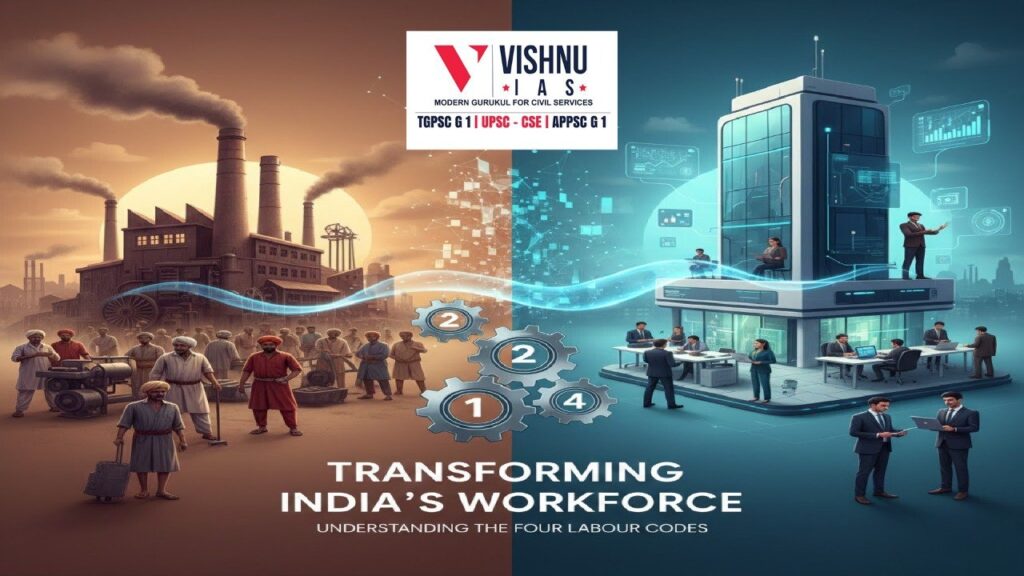
The Four Labour Codes represent India’s most significant structural reform after GST. Understand their impact on labour law simplification, worker protection, and economic growth in this detailed analysis.

Four Labour Codes: Transforming India’s Labour Landscape After GST

Four Labour Codes: India’s Biggest Structural Reform After GST The Four Labour Codes represent one of India’s most important structural reforms after GST, aiming to modernise labour governance, simplify laws, and strengthen worker protection. India’s labour regulatory architecture has historically been fragmented, consisting of more than 40 Central laws and about 100 State laws, leading […]

Four Labour Codes: Transforming India’s Labour Landscape After GST Read More »
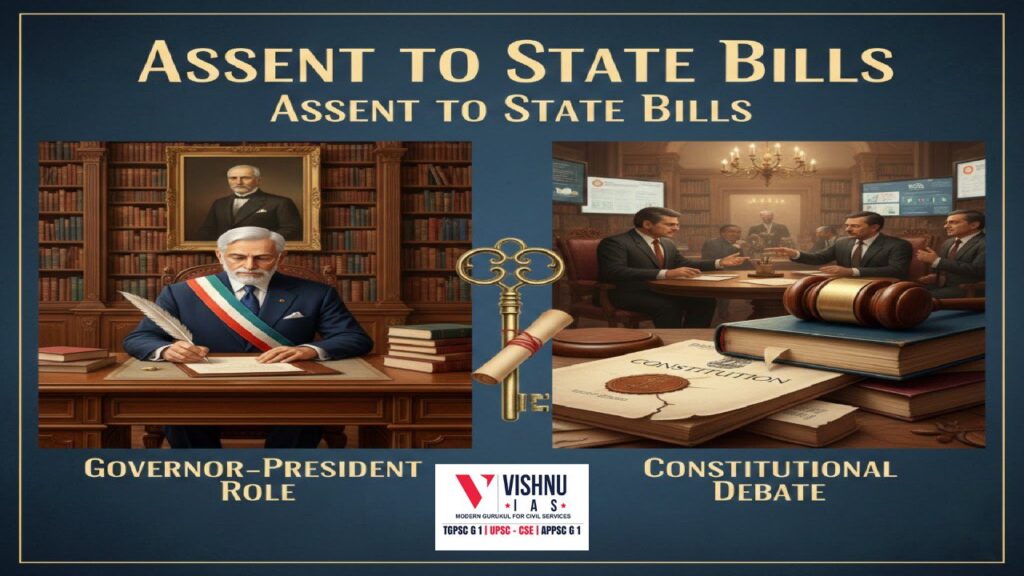
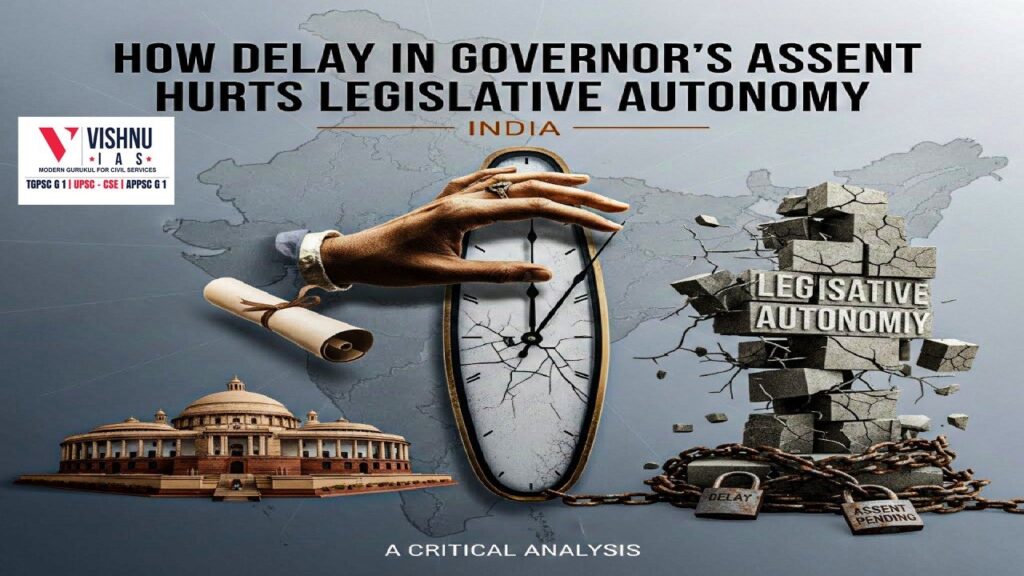
The absence of timelines for gubernatorial assent undermines legislative autonomy and strains cooperative federalism in India. Explore constitutional issues, federal tensions, and governance consequences.

How the Absence of Timelines for Gubernatorial Assent Impacts Legislative Autonomy & Cooperative Federalism in India

How the Absence of Timelines for Gubernatorial Assent Impacts Legislative Autonomy & Cooperative Federalism in India The absence of timelines for gubernatorial assent has become a major constitutional debate in India, significantly affecting legislative autonomy and cooperative federalism. This blog critically analyses how the lack of a fixed timeframe for Governors to act on Bills

How the Absence of Timelines for Gubernatorial Assent Impacts Legislative Autonomy & Cooperative Federalism in India Read More »

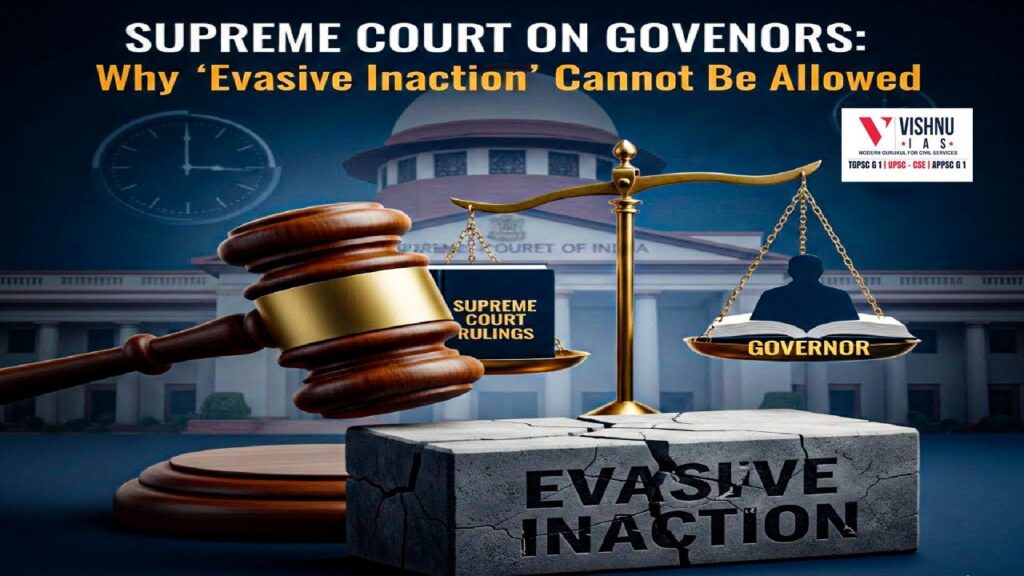
Explore the significance of the Supreme Court’s view that “evasive inaction by Governors” is impermissible while no fixed deadline can be imposed for assent to Bills.

Significance of the Supreme Court’s Stand on “Evasive Inaction by Governors” and No Fixed Deadline for Assent to Bills

Significance of the Supreme Court’s Stand on “Evasive Inaction by Governors” and No Fixed Deadline for Assent to Bills In India’s quasi-federal structure, the office of the Governor plays a critical constitutional role as a link between the Union and the States. The Supreme Court’s recent observation that while “evasive inaction by Governors” is impermissible,

Significance of the Supreme Court’s Stand on “Evasive Inaction by Governors” and No Fixed Deadline for Assent to Bills Read More »

Explore how the relaxation of green cover requirements in industrial units aligns with Nature-Based Solutions (NbS) and sustainable development principles. A detailed evaluation of ecological impacts, NbS alignment, and balanced industrial greening strategies.

How the Relaxation of Green Cover Requirements Aligns with Nature-Based Solutions (NbS) in Sustainable Development

How the Relaxation of Green Cover Requirements Aligns with Nature-Based Solutions (NbS) in Sustainable Development How the Relaxation of Green Cover Requirements Aligns with Nature-Based Solutions (NbS) in Sustainable Development

How the Relaxation of Green Cover Requirements Aligns with Nature-Based Solutions (NbS) in Sustainable Development Read More »

India Fisheries Eco-Labelling: Enhancing Global Competitiveness Through Value Addition

India Fisheries Eco-Labelling: Enhancing Global Competitiveness Through Value Addition

  India Fisheries Sector Competitiveness Enhanced Through Eco-Labelling and Value Addition India’s fisheries and aquaculture sector, contributing more than 17.5 million tonnes of aquatic food in 2022–23 and ranking as the second-largest aquaculture producer globally, has emerged as a critical pillar for nutrition, livelihoods, exports, and coastal development. Enhancing India fisheries sector competitiveness requires aligning

India Fisheries Eco-Labelling: Enhancing Global Competitiveness Through Value Addition Read More »

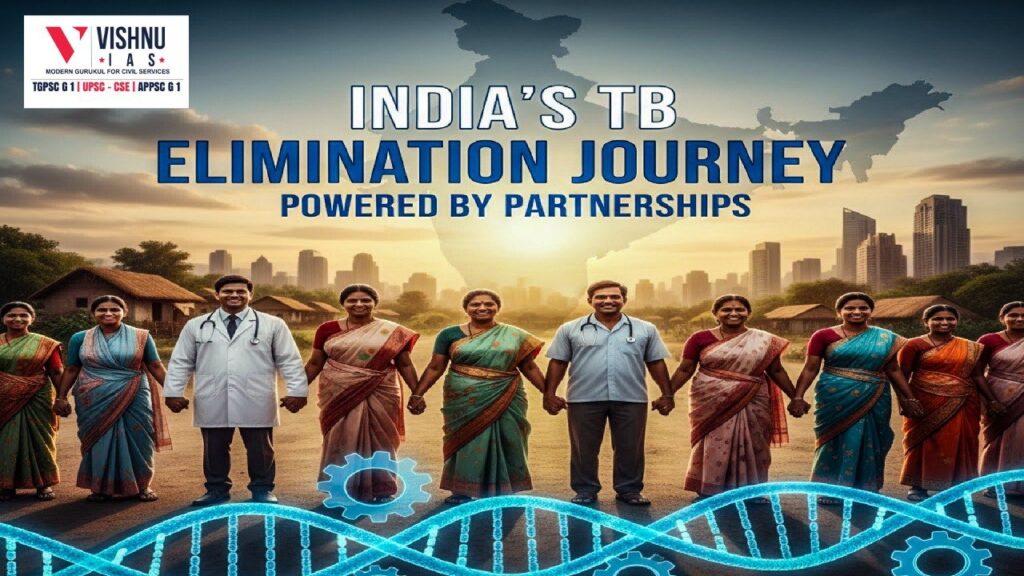
Explore how a collaborative model to eliminate TB in India—uniting government systems, private innovators, and community health workers—can accelerate early diagnosis, treatment adherence, and progress toward national TB elimination goals.

Collaborative Model to Eliminate TB in India: A Multi-Sector Strategy for Public Health Impact

Introduction • Tuberculosis remains one of India’s most persistent public health challenges, accounting for nearly one-fourth of the global TB burden. Despite decades of programme-based control, gaps in early diagnosis, drug-resistance management, nutritional vulnerability, and treatment adherence continue to impede India’s National TB Elimination Programme (NTEP) from reaching the target of Ending TB by 2025.

Collaborative Model to Eliminate TB in India: A Multi-Sector Strategy for Public Health Impact Read More »

Boosting Nutrition: How Crop Diversification Can Change India’s Diet

Crop Diversification in India: Challenges, Opportunities & the Path to Nutritional Security

  Crop Diversification in India: Challenges, Opportunities & the Path to Nutritional Security Crop diversification refers to the strategic shifting of agricultural land from dominance of a few cereal crops (particularly rice and wheat) toward a more diverse mix of pulses, oilseeds, horticulture, millets, and high-value crops. In India, this approach has gained urgency due

Crop Diversification in India: Challenges, Opportunities & the Path to Nutritional Security Read More »

Scroll to Top