Blogs and Articles

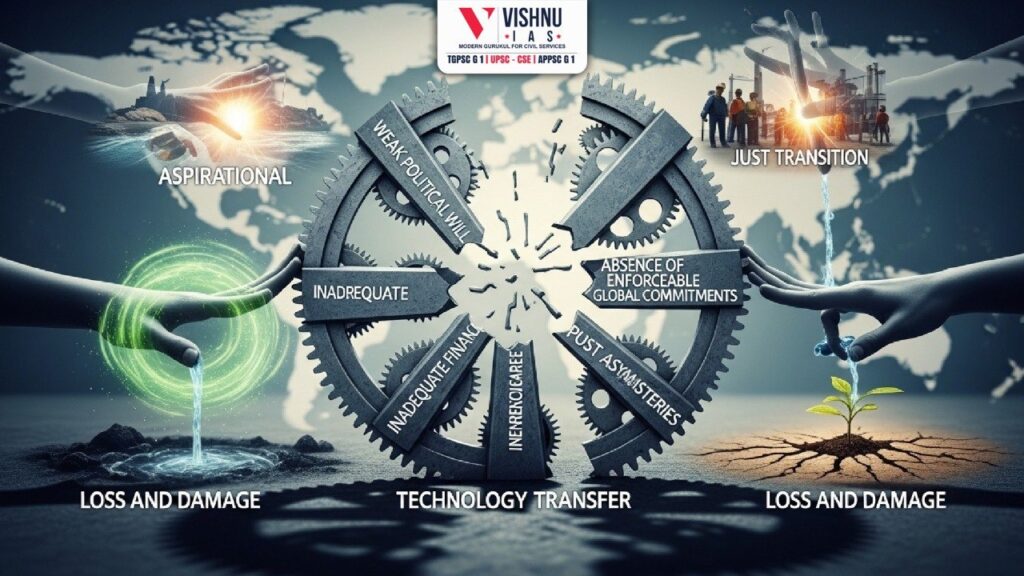
Loss and Damage, Technology Transfer and Just Transition in Climate Negotiations are central to equitable climate action, yet they remain largely aspirational due to political, financial and structural constraints. This blog analyses their role, limitations and the reasons behind weak implementation in global climate governance.

Loss and Damage, Technology Transfer and Just Transition in Climate Negotiations: Why They Remain Aspirational

Loss and Damage, Technology Transfer and Just Transition in Climate Negotiations: Why They Remain Aspirational Loss and Damage, Technology Transfer and Just Transition in Climate Negotiations have increasingly emerged as central pillars of equitable global climate action. These concepts were introduced to address the uneven distribution of climate impacts, technological capacities, and historical responsibilities between […]
Loss and Damage, Technology Transfer and Just Transition in Climate Negotiations: Why They Remain Aspirational Read More »

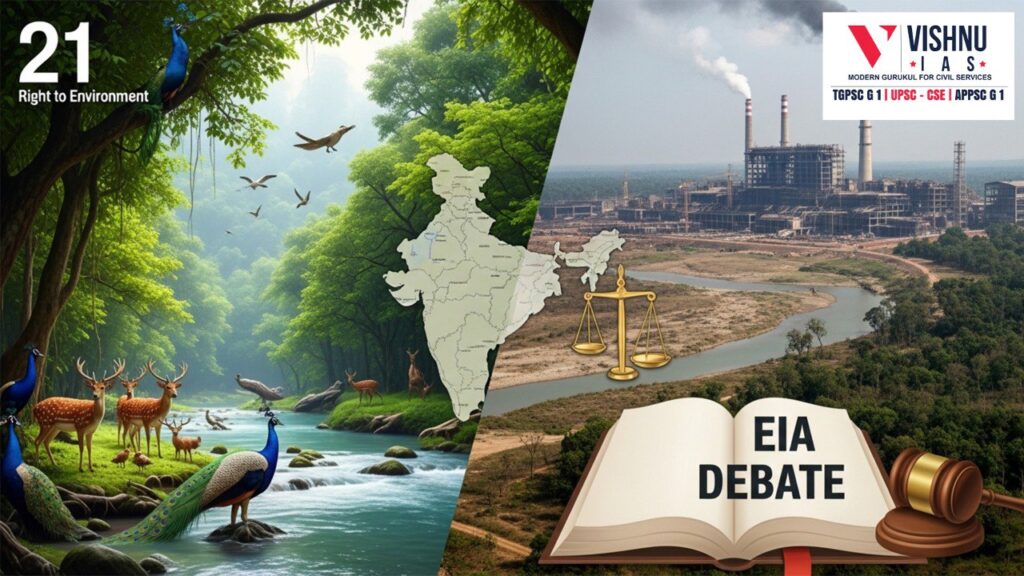
Land acquisition before EIA and Article 21 raises serious constitutional concerns as development priorities increasingly dilute the right to a clean and healthy environment in India.

Land Acquisition before EIA and Article 21: Is the Right to a Clean Environment Being Diluted?

Land Acquisition before EIA and Article 21: Dilution of Environmental Rights in India Environmental justice in India refers to the equitable protection of ecological systems while ensuring that developmental benefits and burdens are fairly distributed. Over the decades, the judiciary expanded Article 21 to include the right to a clean and healthy environment, reading it

Land Acquisition before EIA and Article 21: Is the Right to a Clean Environment Being Diluted? Read More »

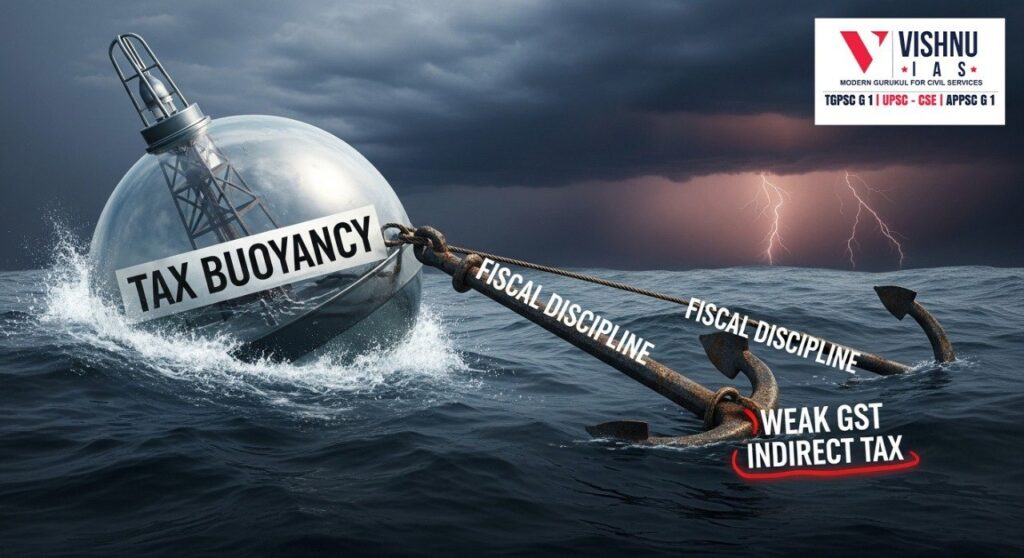
Tax Buoyancy and Fiscal Discipline: Why Indirect Tax Buoyancy Remains Weak Under GST

Tax Buoyancy and Fiscal Discipline: Why Indirect Tax Buoyancy Remains Weak Under GST Tax buoyancy plays a critical role in maintaining fiscal discipline by ensuring that government revenues grow in tandem with economic expansion. In India, while direct taxes have shown strong responsiveness to GDP growth, the persistently low indirect tax buoyancy—despite the maturation of

Tax Buoyancy and Fiscal Discipline: Why Indirect Tax Buoyancy Remains Weak Under GST Read More »

The India–U.S. trade deal aims to reduce tariff barriers and boost labour-intensive exports, improving competitiveness, employment and market access.

India–U.S. Trade Deal: Tariff Reduction and Its Impact on Labour-Intensive Exports

India–U.S. Trade Deal: Tariff Reduction and Its Impact on Labour-Intensive Exports The India–U.S. trade deal marks a significant development in India’s external trade policy by proposing a sharp reduction in U.S. tariff barriers on Indian goods. At a time of global trade uncertainty and supply-chain realignments, this understanding has important implications for export competitiveness, employment

India–U.S. Trade Deal: Tariff Reduction and Its Impact on Labour-Intensive Exports Read More »

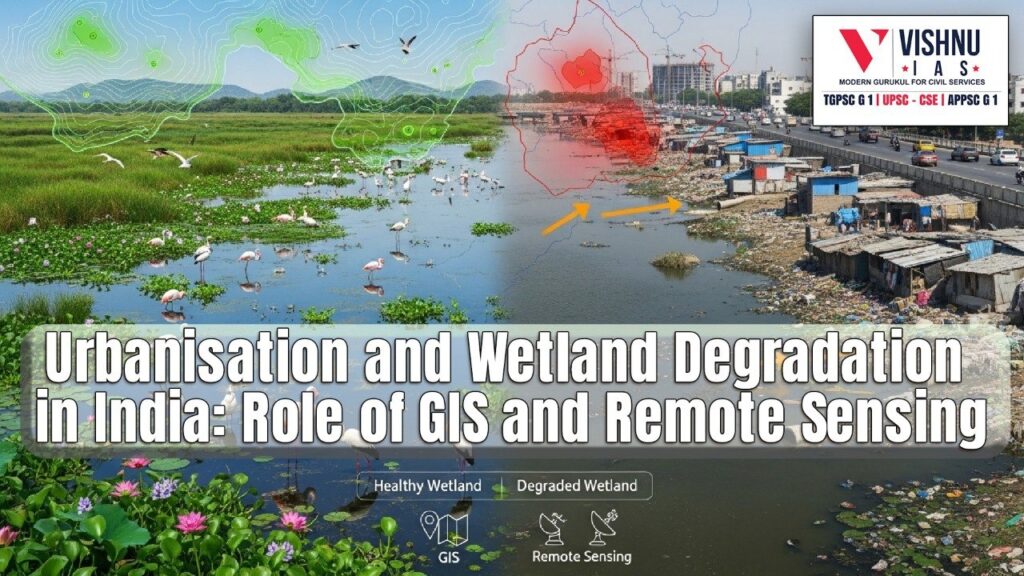
A critical analysis of hydrological connectivity of Indian wetlands, examining urbanization, administrative lapses, and the role of GIS and remote sensing in restoration.

Hydrological Connectivity of Indian Wetlands: Impact of Urbanization and Role of GIS & Remote Sensing

Hydrological Connectivity of Indian Wetlands: Impact of Urbanization and Role of GIS & Remote Sensing The hydrological connectivity of Indian wetlands is increasingly under stress due to rapid urbanization and persistent administrative lapses. Disruptions in natural water flows between wetlands, their catchments and downstream systems have intensified urban floods, groundwater decline and ecological degradation. In

Hydrological Connectivity of Indian Wetlands: Impact of Urbanization and Role of GIS & Remote Sensing Read More »

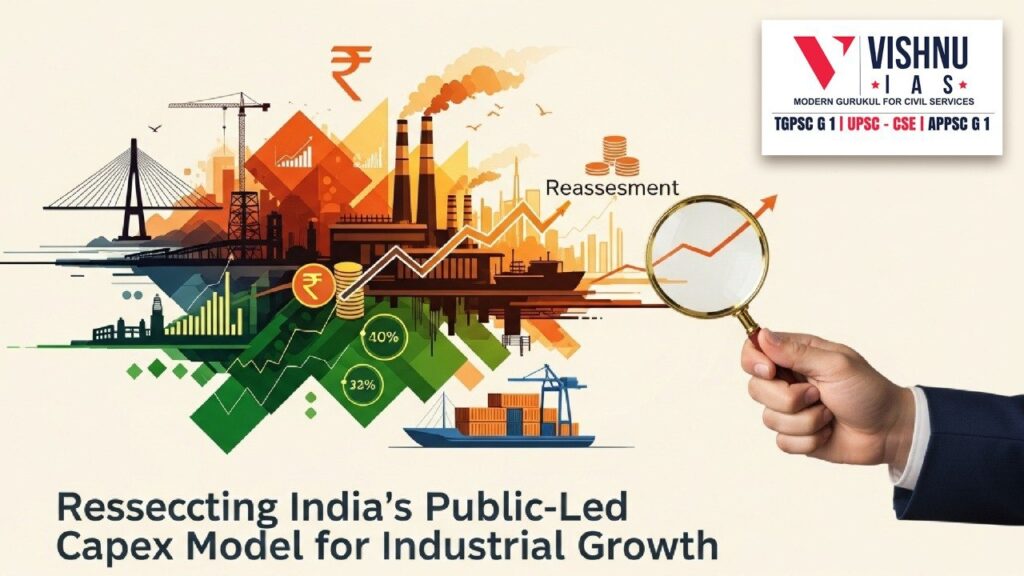
An in-depth analysis of the public-led Capex model in India, examining budgeted vs actual capital expenditure and its impact on industrial growth and long-term domestic demand.

Public-Led Capex Model in India: Implications for Industrial Growth and Domestic Demand

Public-Led Capex Model in India: Implications for Industrial Growth and Domestic Demand Introduction: Public-led capital expenditure refers to the State using budgetary resources to drive economic growth by investing directly in infrastructure, industrial capacity and strategic sectors, with the expectation that such spending crowds in private investment and stimulates demand through multiplier effects. Over the

Public-Led Capex Model in India: Implications for Industrial Growth and Domestic Demand Read More »

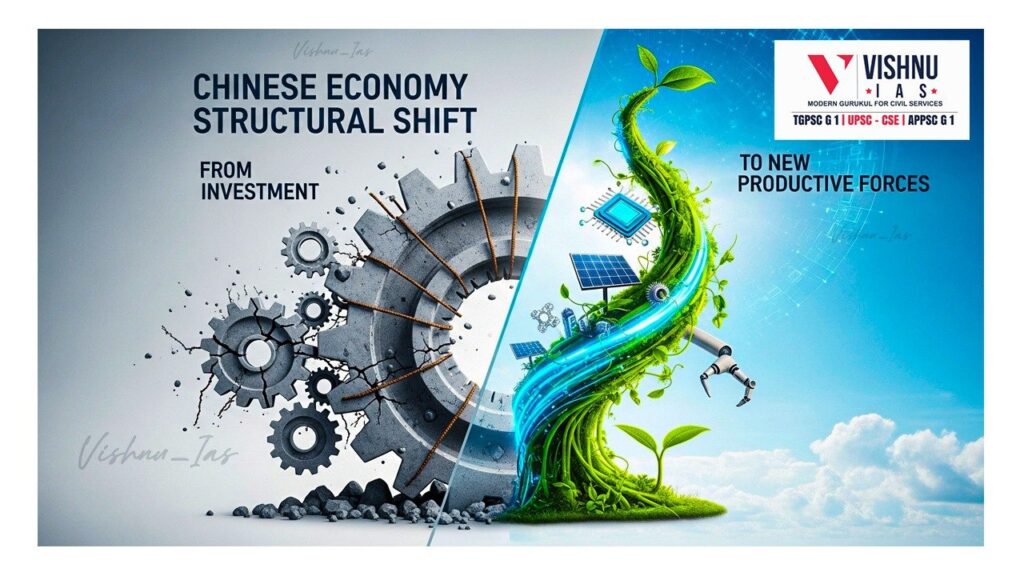
Chinese Economy Structural Shift: From Investment-Led Growth to New Productive Forces and Lessons for India

Chinese Economy Structural Shift: From Investment-Led Growth to New Productive Forces and Lessons for India

Chinese Economy Structural Shift: From Investment-Led Growth to New Productive Forces and Lessons for India The Chinese economy structural shift represents a long-term transformation in the composition of growth drivers, sectoral output, and sources of productivity. China’s recent economic trajectory illustrates such a shift—from a high-investment, export-heavy model to one increasingly driven by domestic consumption

Chinese Economy Structural Shift: From Investment-Led Growth to New Productive Forces and Lessons for India Read More »

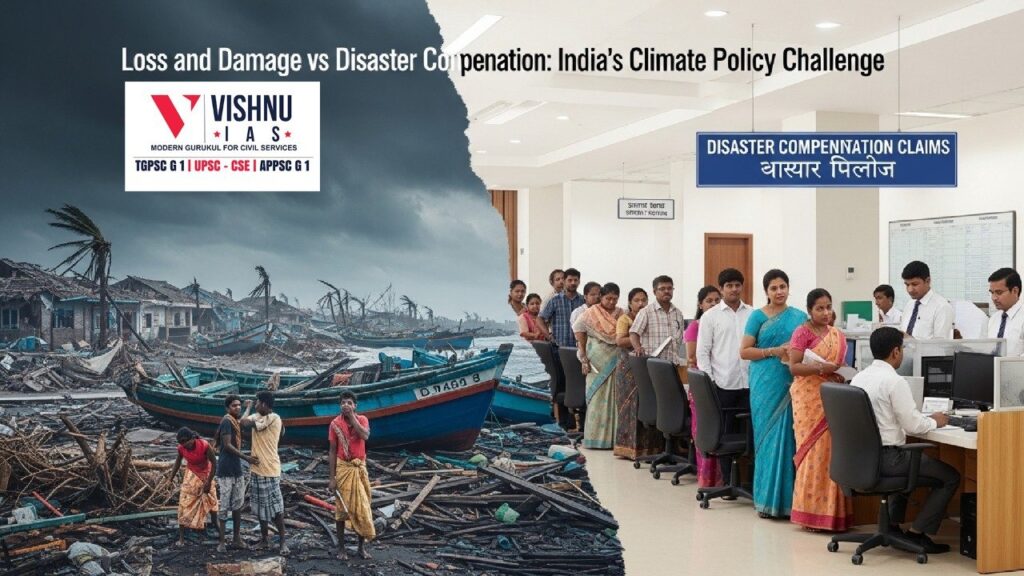
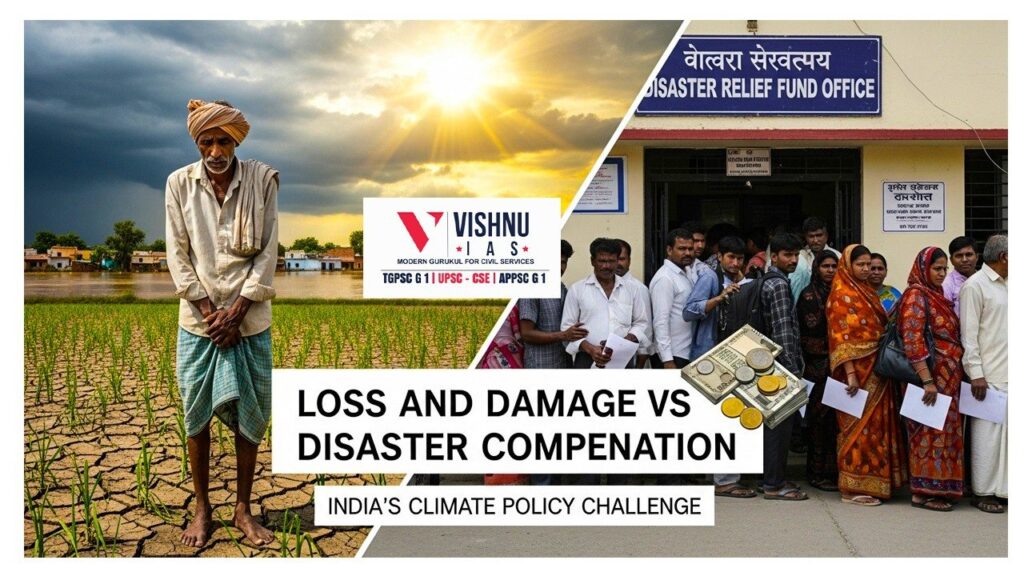
Loss and Damage is central to climate justice, but in India it is reduced to disaster compensation. This critical analysis explains how narrowing Loss and Damage weakens climate governance, planning, and resilience.

How Narrowing ‘Loss and Damage’ Hampers India’s Climate Policy Responses

How Narrowing ‘Loss and Damage’ Hampers India’s Climate Policy Responses Introduction Loss and Damage refers to the irreversible and residual impacts of climate change that occur beyond the limits of adaptation, encompassing not only physical destruction but also loss of lives, livelihoods, ecosystems, cultural heritage, identity, and social cohesion. Internationally, it has emerged as a

How Narrowing ‘Loss and Damage’ Hampers India’s Climate Policy Responses Read More »

Neo-colonialism explains how states remain sovereign in law but are controlled through economic dependence, sanctions, finance, and strategic coercion.

Neo-Colonialism: Independent in Theory, Directed from Outside

Neo-Colonialism: Independent in Theory, Directed from Outside Neo-colonialism refers to a condition where a formally sovereign state retains constitutional independence, international recognition, and domestic institutions, yet its economic structures, policy choices, and strategic autonomy are decisively shaped by external powers. The term gained prominence during the post-decolonisation phase of the mid-20th century, when political freedom

Neo-Colonialism: Independent in Theory, Directed from Outside Read More »

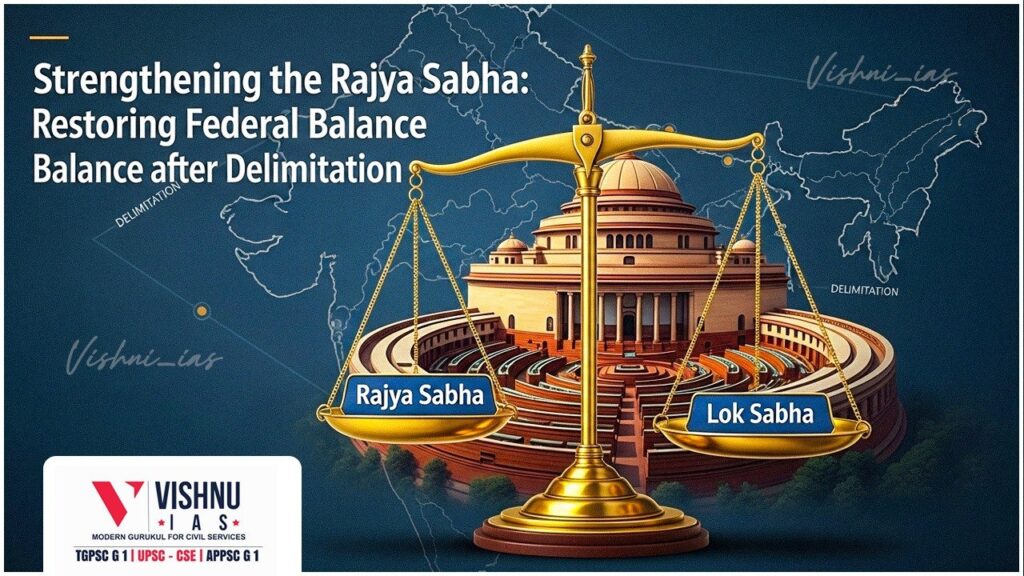
Strengthening the Rajya Sabha after delimitation can act as a corrective mechanism to balance federal representation, preserve cooperative federalism, and address population-based imbalances in the Lok Sabha.

Strengthening the Rajya Sabha after Delimitation: A Federal Corrective Mechanism

Introduction Strengthening the Rajya Sabha after delimitation has emerged as a crucial constitutional debate as India prepares for a major restructuring of political representation. Delimitation refers to the constitutional process of redrawing electoral boundaries and reallocating seats to reflect population changes. India’s inter-State allocation of Lok Sabha seats has been frozen since the 1971 Census,

Strengthening the Rajya Sabha after Delimitation: A Federal Corrective Mechanism Read More »

Scroll to Top