Vishnu Vardhan

Explore the tradition of polyandrous marriages in India, where one woman marries multiple men. Learn about the unique practices of tribes like the Hatti in Himachal Pradesh and how cultural, economic, and ecological factors shaped this custom.

Polyandrous Marriages in India: Tribal Traditions and Cultural Significance

Polyandrous Marriages in India: Tribal Traditions and Cultural Significance Polyandrous marriages—where one woman marries multiple men—remain a rare but culturally rich tradition in some tribal regions of India. While modern Indian society predominantly follows monogamous norms, these unique marriage systems reveal a fascinating blend of history, necessity, and cultural resilience. A Modern Example from Himachal […]

Polyandrous Marriages in India: Tribal Traditions and Cultural Significance Read More »
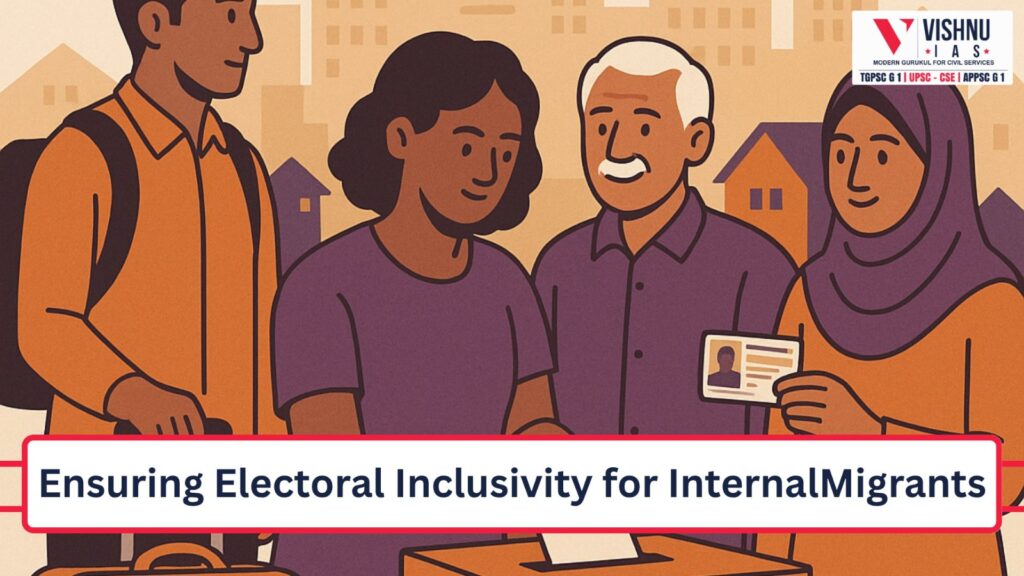
Ensuring Electoral Inclusivity for Internal Migrants in India: Reforming Voting Rights and Residency Laws

Ensuring Electoral Inclusivity for Internal Migrants in India Ensuring Electoral Inclusivity for Internal Migrants in India Electoral inclusivity for internal migrants in India is increasingly under threat as outdated legal frameworks and rigid administrative practices fail to accommodate the realities of internal migration. The electoral system, established under the Representation of the People Act of

Ensuring Electoral Inclusivity for Internal Migrants in India: Reforming Voting Rights and Residency Laws Read More »

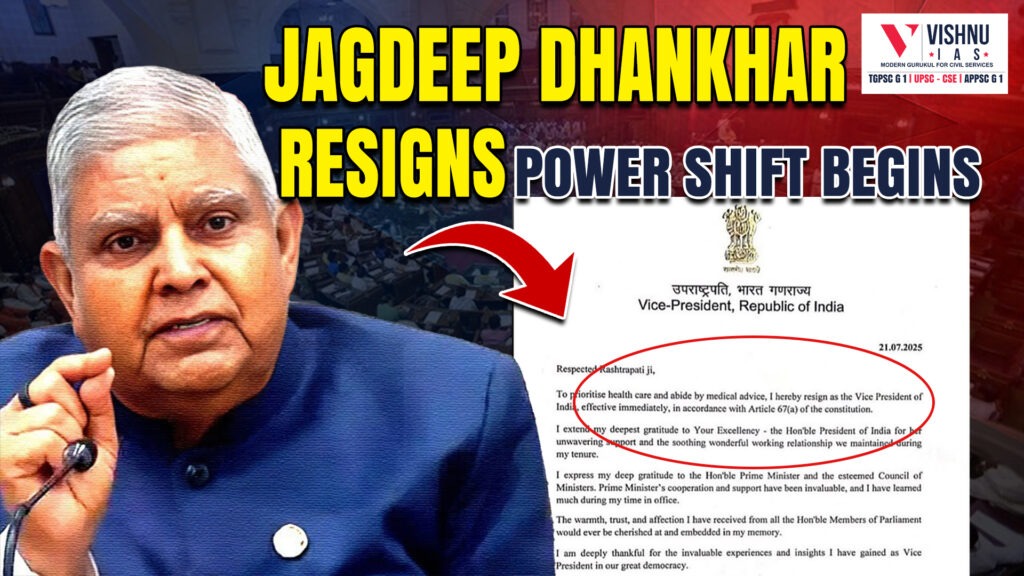
Jagdeep Dhankhar’s resignation as Vice President of India marks a historic turning point in executive–legislative relations, highlighting tensions over judicial accountability and constitutional autonomy. Explore its political and constitutional implications.

Jagdeep Dhankhar’s Resignation and Its Impact on Executive–Legislative Relations in India

Jagdeep Dhankhar’s Resignation: Impact on Executive–Legislative Relations and Constitutional Autonomy Jagdeep Dhankhar’s Resignation: A Turning Point in Executive–Legislative Relations and Constitutional Autonomy Jagdeep Dhankhar’s resignation marks a historic moment in India’s political landscape, revealing the growing tensions between the executive and legislature, and raising urgent questions about the autonomy of constitutional offices. The Vice-President of

Jagdeep Dhankhar’s Resignation and Its Impact on Executive–Legislative Relations in India Read More »

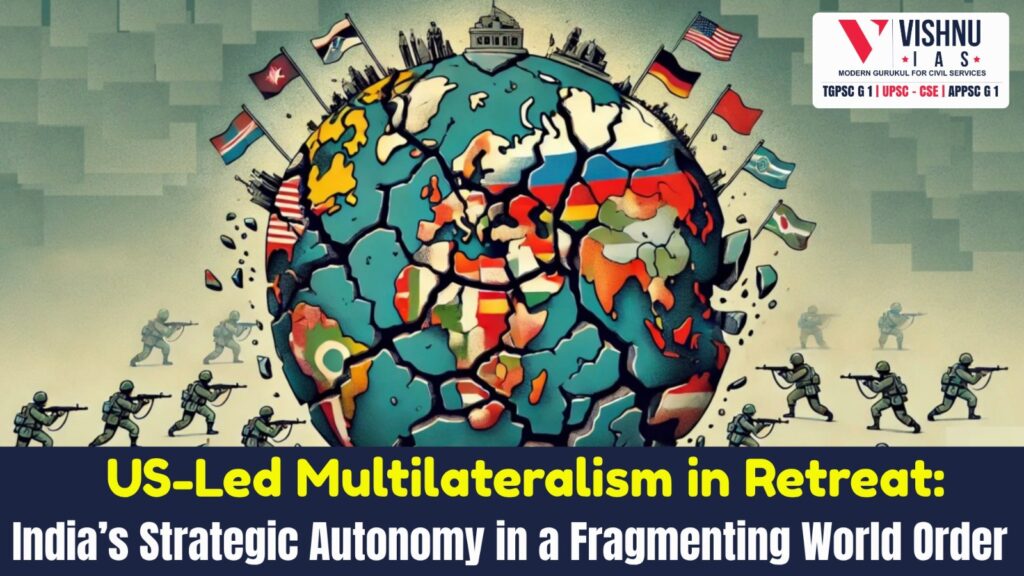
As multilateralism erodes due to the United States’ strategic retreat, India is redefining its strategic autonomy through regional diplomacy, digital leadership, and South-South cooperation.

India’s Strategic Autonomy in a Post-Multilateral World: US Retreat and Global Order Shifts

India’s Strategic Autonomy in a Post-Multilateral World: US Retreat and Global Order Shifts India’s Strategic Autonomy in a Post-Multilateral World: US Retreat and Global Order Shifts SYLLABUS: GS2 – INTERNATIONAL RELATIONS Strategic Autonomy has emerged as a key pillar of India’s foreign policy, especially in the backdrop of the declining multilateral order once shaped and

India’s Strategic Autonomy in a Post-Multilateral World: US Retreat and Global Order Shifts Read More »

Explore how the Supreme Court’s 2025 privacy verdict exposed the challenges of criminalising adolescent consensual relationships under the POCSO Act. Discover data, case law, and the urgent need for balanced reform.

Criminalising Adolescent Consensual Relationships: Supreme Court’s POCSO Verdict Calls for Reform

Criminalising Adolescent Consensual Relationships: Supreme Court’s POCSO Verdict Calls for Reform Criminalising adolescent consensual relationships under the POCSO Act has long sparked debate in India. The Supreme Court’s 2025 verdict in Re: Right to Privacy of Adolescents has brought the issue to the forefront, urging a rethinking of how child protection laws intersect with adolescent

Criminalising Adolescent Consensual Relationships: Supreme Court’s POCSO Verdict Calls for Reform Read More »

Is India’s Carbon Credit Trading Scheme effective for industrial decarbonisation? Explore its design, challenges, and role in meeting India’s 2070 net-zero goals.

Evaluating India’s Carbon Credit Trading Scheme: Decarbonisation Pathway to Net-Zero Targets

Evaluating India’s Carbon Credit Trading Scheme: Decarbonisation Pathway to Net-Zero Targets India’s Carbon Credit Trading Scheme (CCTS) represents a key market-based mechanism to accelerate industrial decarbonisation and help achieve the nation’s net-zero carbon emissions goal by 2070. With high-emission sectors in focus, the scheme aligns climate policy with economic growth, but its effectiveness requires evaluation

Evaluating India’s Carbon Credit Trading Scheme: Decarbonisation Pathway to Net-Zero Targets Read More »

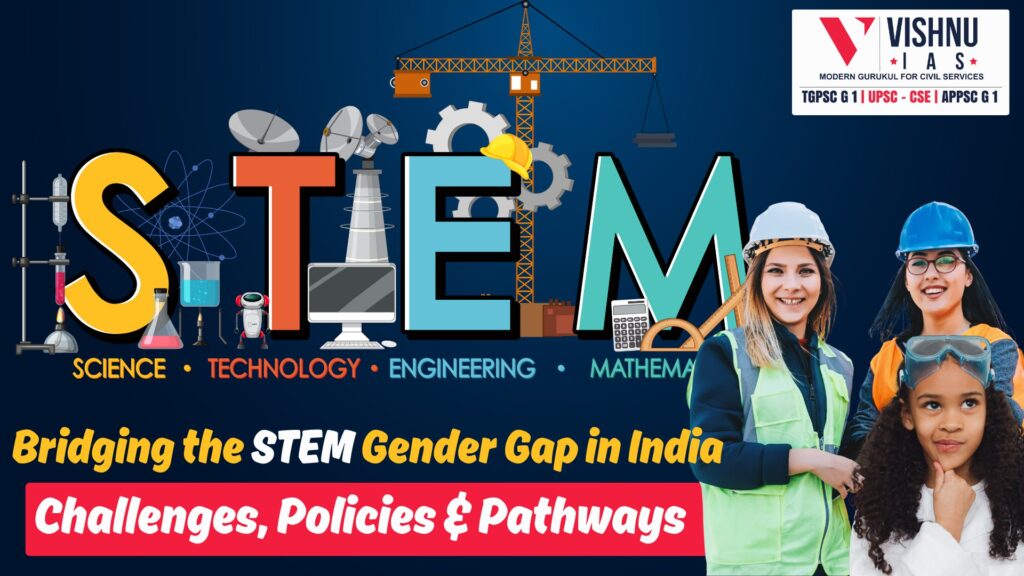
Illustration of STEM (Science, Technology, Engineering, Mathematics) with female engineers and students, promoting gender equality in STEM careers in India, by Vishnu IAS.

Strengthening Women in STEM Careers in India: Challenges, Strategies & Government Initiatives

Strengthening Women in STEM Careers in India: Challenges, Strategies & Government Initiatives Women in STEM careers in India face a stark mismatch between academic achievement and workforce participation. While 43% of STEM graduates are women, only 27% are employed in the STEM sector. Addressing this gap is vital for achieving gender equality in STEM and

Strengthening Women in STEM Careers in India: Challenges, Strategies & Government Initiatives Read More »

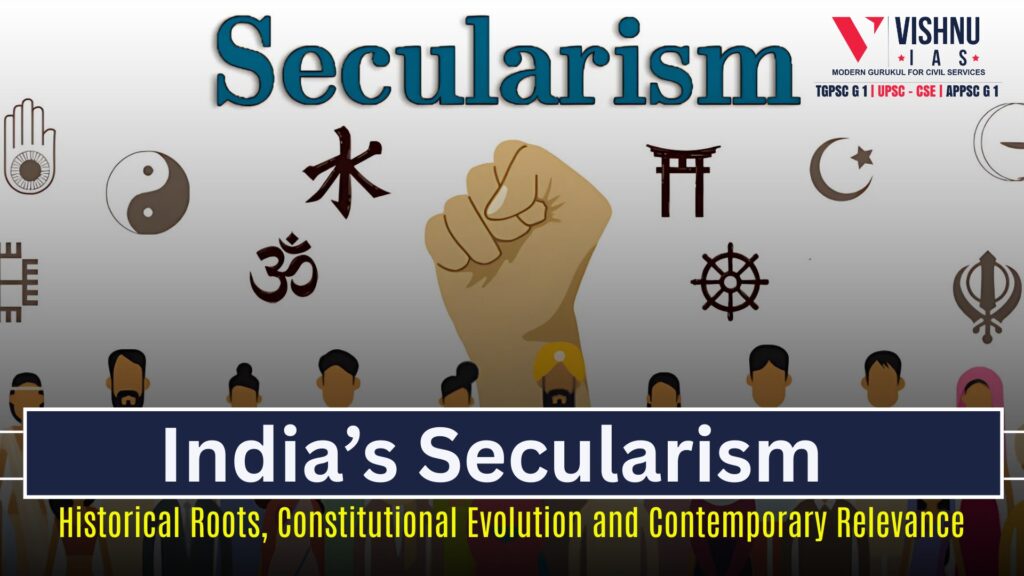
Illustration of a raised fist surrounded by various religious symbols and diverse people, representing India's secularism and its foundation in equality, constitutional values, and religious harmony.

India’s Secularism: Evolution, Principles, and Contemporary Significance

Context : India’s secularism, while formally established by the 42nd Amendment in 1976, has its origins in the edicts of Emperor Ashoka and the principles of the freedom struggle. The aversion of Jawaharlal Nehru to organized religion, along with the discussions during the Constituent Assembly, solidified the concept of state impartiality towards all religions. Judicial

India’s Secularism: Evolution, Principles, and Contemporary Significance Read More »

A professional woman holds a sign reading "Gender Equality" with male and female gender symbols in the background, highlighting the theme of persistent gender inequality and its impact on India's economic and demographic stability.

Persistent Gender Inequality in India: Economic and Demographic Consequences

Introduction: Gender inequality refers to the unequal treatment or perceptions of individuals based on their gender, manifesting in disparities across health, education, economic opportunity, and political representation. Despite India’s status as the world’s fifth-largest economy, a digital powerhouse, and home to the world’s largest youth population, it continues to underperform significantly on global gender equality

Persistent Gender Inequality in India: Economic and Demographic Consequences Read More »

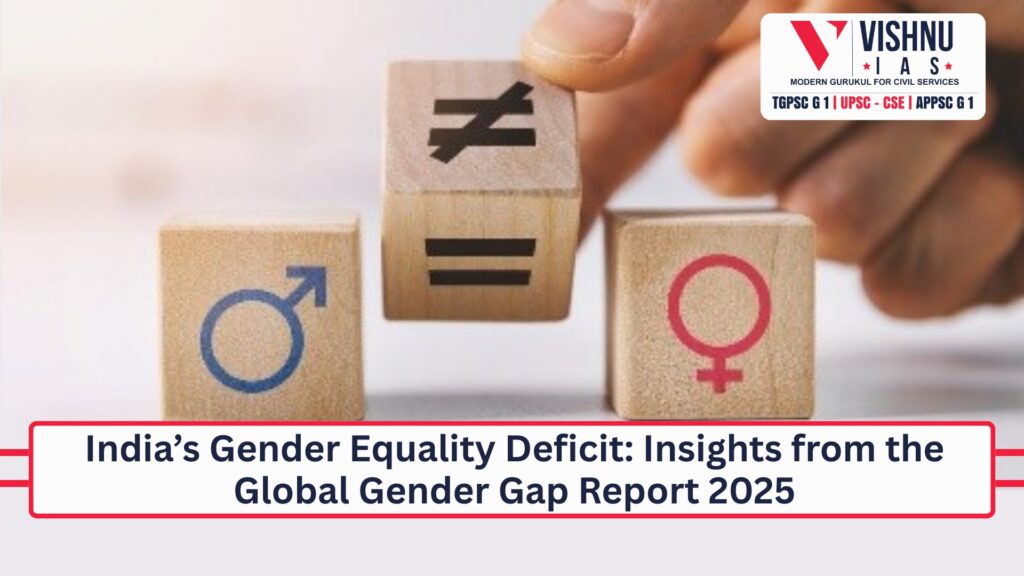
Three wooden blocks showing male, female, and equality symbols representing India’s gender disparity highlighted in the Global Gender Gap Report 2025, with Vishnu IAS branding

India’s Gender Equality Deficit: Key Findings from the Global Gender Gap Report 2025

India’s Gender Equality Deficit: Key Findings from the Global Gender Gap Report 2025 India’s Gender Equality Deficit continues to threaten national growth and social cohesion, as revealed by the Global Gender Gap Report 2025. Despite being a rising digital and economic powerhouse with the world’s largest youth population, India ranks 131st out of 148 countries.

India’s Gender Equality Deficit: Key Findings from the Global Gender Gap Report 2025 Read More »

Scroll to Top