MAY 2025 MONTHLY MAGAZINE – TOTEM MAY
- ASI study on DIGITAL LITERACY AND IT’S IMPACT ON CULTURAL HERITAGE PRESERVATION- GARO CASE STUDY(Paper 2 Unit 6.1)
Case study on : Garo tribe of MeghalayaIt details how cultural heritage ensures continuity of identity and social cohesion for communities. It underscores both positive effects (easier documentation, archiving, promotion) and negatives (risk of cultural dilution and misrepresentation).
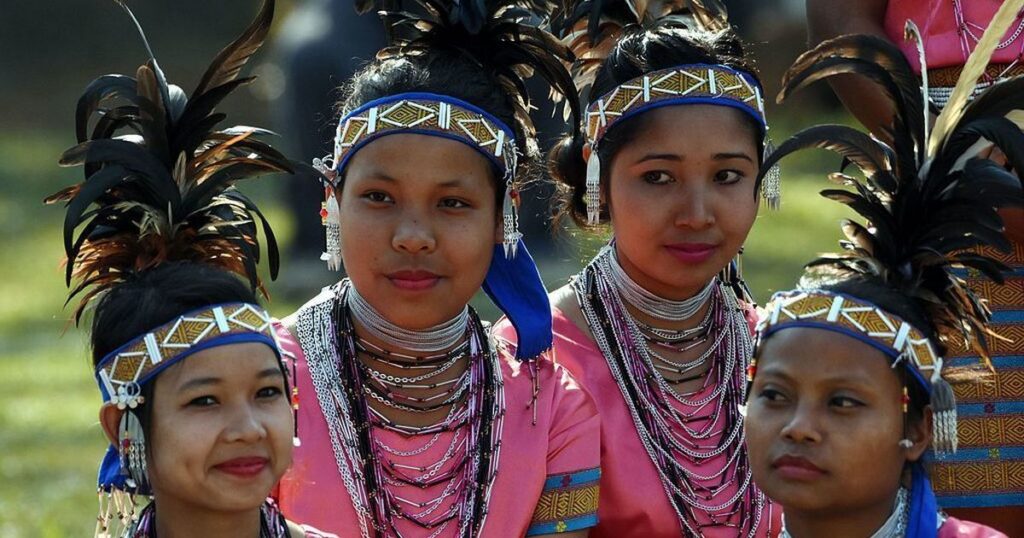
Garo tribe – Cultural traits
Language: The Garos speak A-chik language, a branch of the Tibeto-Burman family (Bodo-Garo group).Kinship terminology: Garo kinship system is classificatory, generally a characteristic of matrilineal societies, with relatives grouped into broader categories.
Clan system: Clans (chatchi) are exogamous and matrilineal; a Garo must marry outside their mother’s clan. They follow tribe endogamy and sub-clan exogamy. The clan of the Garo is a unilateral descent group.
Marriage: Traditionally monogamous. They practice matrilocal residence. Marriage is not mandatory and pregnancy before marriage is not appreciated but accepted.
Inheritance of property: In the past, inheritance of property was through the heiress selected by the parents; typically the youngest daughter or the heiress selected by the parents, but nowadays it varies and sometimes may be divided equally or non-equally among the children.
In Garo churches, they sing carols accompanied by their traditional musical instruments, creating a unique blend of their cultural heritage and religious practices. This fusion of traditional music with Christian carols helps to preserve and celebrate the Garo musical heritage.
A unique post-mortem ritual is Memngdila, involving the return of a cloth (Debra Sugala) from the groom’s household to his maternal kin to guide the soul to its ancestral abode.
Religion : Songsarek religion is followed in Pre British times.
Garos can be considered close to animism in religion, which means belief in spiritual essence possessed by all beings, elements and objects.
Currently, only 0.74% follow Songsarek, while 72% are Baptist and 25% are Catholic. Conversion to Christianity entails dismantling traditional houses due to their perceived spiritual sanctity, indicating a tangible break from indigenous faith systems. Among the Garo population, those who have converted to Christianity often show less interest in the traditional practices associated with Wangala.Despite all the effects of Christianity, the Garo community still follows the customary law. All the members who identify themselves as Garo, irrespective of their religious identity, have to abide by the Garo Customary law, which has a written format as well, published by Garo Hills Autonomous District Council.
Traditional Tools and Equipment: Includes agricultural implements, fishing gear, and musical instruments crafted from local materials. Preservation of these tools is now primarily through digital photography and video documentation.
The Nokpante (boys’ dormitory) served as a traditional institution for cultural education and skills. The slow decline of these institutions has hampered the transition and transmission of the tangible and intangible elements of culture and cultural heritage.
Despite modernization, marriage customs, residence patterns, and clan systems are preserved. However, changes are visible in language use, food habits, and dress traditions.
Traditional attire is now limited to ceremonial contexts like the Wangala (Hundred Drums Festival).
Impact:
The influence of K-pop culture among youth reshapes dress, language, and music preferences. However, with the influx of global pop culture, these traditional art forms have increasingly taken on a different form. They are now often seen more as stage performances rather than as communal practices that bind individuals and communities together. The teenagers of Garo tribe feel that the “Garo music is not up to the mark.”B. Creation and consumption of cultural content about a community is not regulated and the content is at the discretion of the creator. Thus, cultural content may or may not be in the original form and context.
C. Folk fusion is an upcoming genre where something which is traditional is fused with something which is considered an upcoming trend. Thus, losing the originality and the traditionalism of a culture.
- Digitization in museums can address the challenge of limited physical space for heritage items.
E. During the Covid-19 pandemic, Rajib M. Sangma, a traditional Garo medicine man, began sharing Sam Achik medicine and medical practices through a YouTube channel.
F. The Wangala festival, which was once a grand harvest celebration involving the entire Garo community, has become a state festival that has now become an international tourist attraction. The Wangala, presently celebrated more like a carnival, rather than a harvesting festival, sponsored by the state, promotes the Garo identity, but it has lost its old identity.
G. DDK Tura (1993) marked a major shift, broadcasting Garo folk culture and providing an archive for cultural programs.
H. Alcohol consumption is forbidden in the majority of Christian sects. Among the Garo people, traditionally, Chubak, a type of rice beer, was brewed in households. With the influence of Christianity, many have refrained from consuming Chubak, leading to a decline in knowledge about its preparation.
- Thalassaemia in Karnataka – Consanguineous marriages – logistical challenges(Paper 1 Unit 9.3)
Consanguineous marriages significantly increase the risk of a child inheriting thalassaemia. This is because both parents are more likely to be carriers of the disease. Thalassaemia is inherited as an autosomal recessive trait, meaning a child needs to inherit two copies of the faulty gene (one from each parent) to develop the condition.According to data from the National Family Health Survey (NFHS-5), Karnataka has the second-highest number of consanguineous marriages. While Tamil Nadu tops the list, where 27.9% of the female population is married to close blood relatives such as cousins, uncles, and brothers-in-law, Karnataka follows with 26.6%.
These three are among an estimated 10,000 thalassaemia patients in Karnataka, a number that experts say is growing due to the lack of systematic screening and awareness. No government registry is available to document the number of people living with this disorder.
The State established the Karnataka State Blood Cell for the treatment of patients with blood disorders (haemophilia, thalassaemia, and sickle cell anaemia) in 2017. But, access to quality iron chelation drugs and specialised care remains uneven.
Bone marrow transplant (BMT) offers the only permanent curative option for children with thalassaemia, but access remains limited due to financial and logistical barriers. Because of genetic diversity, the chances of finding a perfect match within Indian registries are relatively low, emphasising the need for more donors.
- GenomeIndia project: Genotyped 10,074 healthy and unrelated Indians(Paper 1 Unit 9.4)
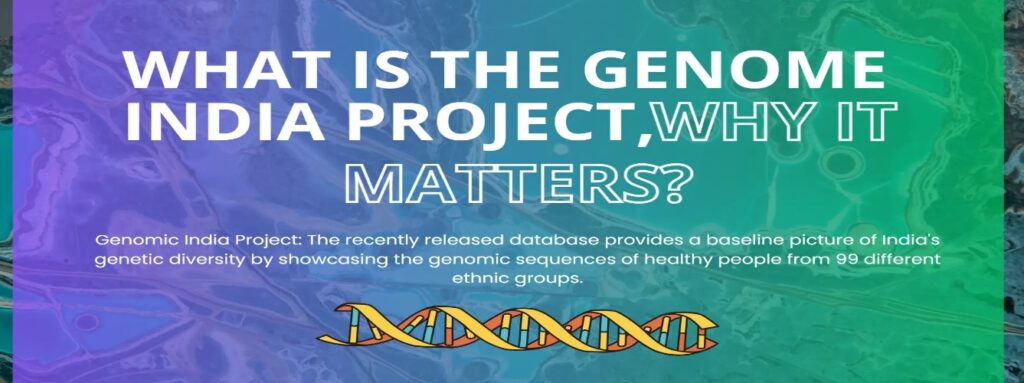
Preliminary findings : GenomeIndia project, 180 million genetic variants found in 9,772 individuals from 85 populations — 32 tribal and 53 non-tribal populations — across India. 130 million variations are in the non-sex chromosomes (22 pairs of autosomes), 50 million mutations are in the sex chromosomes X and Y.
The genome sequence data are deposited in the Indian Biological Data Centre, Haryana.
In-depth analyses of 9,772 diverse genomes along with the blood biochemistry and anthropometry data will improve disease diagnostics, predict the genetic basis of drug responses, and kickstart precision medicine efforts in India.
- Forest Rights – Approaches to Conservation(Paper 2 Unit 7.1)
Conservation science is rooted in colonial ideas, and define nature as “pristine” and untouched by humans. When wielding this approach — fortress conservation model – exclusive spaces called “protected areas” are created, where conservation is implemented with centralised state control.
Researchers have found that the fortress conservation model has displaced 10 to 20 million people around the world by separating their lives, livelihoods, and cultures from landscapes cordoned off as protected areas.
The Kunming-Montreal Global Biodiversity Framework (KMGBF), which CBD signatories adopted at their COP-15 summit in 2022 in Canada, seeks to integrate and ensure equitable representation of IPLCs (indigenous peoples and local communities) and their traditional knowledge in the implementation of the framework.
The KMGBF envisions a world living in harmony with nature with a list of 23 targets to achieve it. But, both approaches are included in this targets. An important one is titled ‘30 by 30,’ e. countries committing to bring 30% of the world’s land and marine areas under their protection by 2030. The targets also mention consultation and inclusion of IPLCs, their cultural practices, and their traditional knowledge.
The KMGBF makes provisions to move beyond protected areas through its “other effective area-based conservation measures” (OECMs). India plans to notify the OECM guidelines soon.
Union Ministry of Tribal Affairs stressed in its response to the draft Biodiversity Rules 2024 – before declaring any biodiversity heritage sites, the government must ensure it has completed the process of settling forest dwellers rights under the FRA and received the prior informed consent of respective gram sabhas.
- Victory of grassroots power over corporate might – Dongria Kondh tribe(Paper 2 Unit 7.1)
Dongria Kondh tribe – the community took their fight to the Supreme Court, which in 2013 upheld their right to decide the fate of their land. In a series of landmark village council meetings, the Dongria unanimously rejected the project – Vedanta Resources, a mining giant that sought to extract bauxite from the Niyamgiri range in Odisha.
Classification: Particularly Vulnerable Tribal Group
Niyamgiri hill: These hills are ecologically rich and spiritually sacred to the tribe, home to their revered deity, Niyam Raja.
Language: Speak Kui, an oral Dravidian languageclosely related to Gondi.
Religion: Follow animism, ancestor worship, and nature-centric spiritual beliefs.
Status: The Dongrias, used to subsist on forest produce and shifting cultivation while a few also work as daily wage labourers. However, now the forest produce has dwindled and shifting cultivation ended. With no work back home, members of the particularly vulnerable tribal group (PVTG) are migrating to other states.
Food habits threat to health: Their lean period is from August to November. During this phase, work is not available due to rains and people have no money to buy rice once the PDS stock runs out. Hence, in the absence of adequate availability of foodgrains, consume gruel made of tamarind seeds and the stem (centrepiece) of the ‘Salap’ tree (Caryata urens). Salap stems are inedible and may cause stomach disorder and diarrhoea.
- Bhil Adivasis – Political position of chieftains of the Dangs(Paper 1 Unit 4)
In south Gujarat’s hilly forests of the Dang district, erstwhile kings and their kins people continue to try to negotiate for privileges and respect within the Indian Union.They assert that after India got Independence, the tribal kings were co-opted into the Union without their consent, the forest lands they ruled over were taken away from them, and a paltry sum was given yearly.
Every year, a three-day festival called the Dang Darbar is held just before Holi. Here, the chieftains arrive in chariots and the district administration gives them the honour of kings. They say that they have been reduced to being treated like kings for just a day once a year, because they are Adivasi, and their forefathers could not read and write.”
Judicial resolution: In the past, the Bhils have taken the government to court over the Indian government’s “unilateral” decision to co-opt them into the Indian state, but the courts ruled it to be “in public interest”.
Tribal identity: Political parties here are building a narrative of tribal identity by employing the histories of Adivasi resistance movements. They present Adivasis as an inseparable part of “Bharatiya sabhyata and sanskriti (Indian civilisation and culture)”, by pushing stories of their rebellions as resistance to British and Muslim invaders.
Rights under FRA: The offices of the District Collector at Dang-Ahwa and the Resident Additional Collector were unable to confirm whether the chiefs have forest rights under the Forest Rights Act, 2006.
Bhils:-
Geographical location: Primarily concentrated in western and central India, spanning the states of Rajasthan, Madhya Pradesh, Gujarat, Maharashtra, and parts of Andhra Pradesh, Chhattisgarh, and Odisha.Language: Bhili – Indo-Aryan language. Especially in urban interactions, there is infuence of local language (Gujarathi/Marathi etc) in their use of terms.
Festivals: The Gauri festival, a dramatic ritual involving dance and music, is unique to Bhil culture.
Kinship Terminology: Classificatory System, This system emphasizes generation and sex over specific lineage distinctions. Kinship terms emphasize collective responsibility and social cohesion, aligning with the Bhils’ community-oriented lifestyle.
Marriage System: Predominantly clan exogamous.
Descent: Unilineal in most of the communities. In some Bhil communities, movable property (e.g., livestock, jewelry) may be inherited by daughters, reflecting a partial double descent system where specific assets follow matrilineal lines.
Political Structure: Village Councils, Clan-Based Leadership – in inter-clan disputes or marriage negotiations, Shamanistic Influence – The Bhopa or spiritual leaders wield considerable influence, often advising on community matters beyond religious rituals. With integration into the Indian state system, Bhils participate in Panchayati Raj (local self-governance) institutions.
Craftsmenship: Known for Pithora paintings, vibrant murals depicting myths and daily life.
- Ecology of Little Andaman: Knowledge of Onge tribe(Paper 2 Unit 9.1)
Objective: understanding the ecological perception of indigenous groups.
Onge: Negrito hunter-gatherer tribe inhabiting Little Andaman Island. They form the best example for ecocide (environmental destruction) facilitating genocide (cultural and physical extinction) by destroying the Onge’s resource base.
Population: Onge population numbers were substantially reduced in the aftermath of colonisation and settlement, from 672 in 1901 to barely 100. The population is still maintaining their cultural and biological identity, and it appears that total numbers have increased from 100 to 117 in 2017.
Traditional knowledge systems of Onge on ecology:-
Honey Collection: The Onge use smoke from specific plants to tranquilize bees, allowing safe honey collection. This technique, involves burning Entada rheedii to create a sedative effect.
Fish Poisoning: They apply Entada rheedii sap to streams, stunning fish without killing them excessively, a method that preserves aquatic ecosystems.
Turtle Hunting: The Onge track green and hawksbill turtles to nesting sites on North Cinque Island, using tidal knowledge to time hunts, showing their understanding of marine cycles.
Survival during catasstrophies: The semi-nomadic Onge have traditional stories that tell of the ground shaking and a great wall of water destroying the land. Taking heed of this story, the Onge survived the tsunami caused by the 2004 Indian Ocean earthquake by taking shelter in the highlands.
- Forced Evictions of Jenu Kurumba tribe – Karnataka(Paper 2 Unit 6.3)
Status: recognized as a PVTG
Population: around 37,000 to 100,000Livelihood: Revolves around collecting honey, fruits, vegetables, tubers, and other minor forest produce, and they maintain a semi-nomadic lifestyle in small settlements called “Hadi”.
Their belief system is deeply tied to the forest, with reverence for wildlife (e.g., tigers) and sylvan deities, viewing the forest as sacred.
Since the 1970s, the Jenu Kuruba have faced forced evictions from their ancestral lands, particularly in the Nagarhole and Bandipur Tiger Reserves. With an estimated 20,000 illegally displaced from Nagarhole National Park.Evictions supported by NGOs: These evictions, supported by organizations like the Wildlife Conservation Society (WCS) and local groups like Living Inspiration for Tribals (LIFT), have been criticized as following a colonial “fortress conservation” model.
Context: In 2025, tensions escalated in the Nagarhole Tiger Reserve as the Jenu Kuruba attempted to reclaim their ancestral lands. On May 5, 2025, 52 families from Karadikallu Hattur Kollehaadi village clashed with forest officials while trying to reoccupy their land under the FRA.
FRA – recognizes forced evictions and allows evidence like sacred spaces and agricultural land to support claims.
Recent development: On June 18, 2025, the Forest Department demolished homes rebuilt by these families, labeling them as “encroachers.”
Impact of eviction: Evicted families were often offered compensation (e.g., ₹10 lakh) to relocate, but many found life outside the forest unsustainable. Relocated Jenu Kuruba struggle with poverty, working as daily laborers on coffee plantations or for the Forest Department, and report health deterioration due to the loss of access to nutrient-rich forest produce.
Judicial ruling: The Jenu Kuruba have leveraged the FRA to assert their rights, applying for recognition since 2009. However, their claims are repeatedly rejected, often on technical grounds, such as the lack of documentation proving residency for three generations—a challenging requirement for a semi-nomadic community with oral traditions.
Eviction threatens their cultural heritage: Their rituals, such as singing during honey collection to honor bees, and their 25 distinct names for forest parts reflect a profound environmental knowledge.
Efforts for reoccupation: Advocacy through initiatives like the book “Who are the Jenu Kuruba” (authored by tribe members).
- Large genetic map of Indians flags hidden disease risks(Paper 1 Unit 9.8 )
Using mutations as genetic clocks, the study also confirmed that present-day Indians descend primarily from a single out-of-Africa migration around 50,000 years ago.In a new study in Cell, researchers reported sequencing the genomes of 2,762 Indians from 23 States and Union Territories. The data captured variation across caste, tribal groups, language, geography, and rural-to-urban settings, offering the most comprehensive genomic map of India to date.
Although archaeology suggests earlier human presence in the subcontinent, “those populations may not have survived or left lasting genetic traces,” said Elise Kerdoncuff, the study’s first author.
The researchers modelled Indian ancestry as a blend of three ancient populations:
indigenous hunter-gatherers known as Ancient Ancestral South Indians;
B. Iranian-related Neolithic farmers and
C. Eurasian Steppe pastoralists, who arrived around 2000 BCE and are associated with the spread of Indo-European languages.India’s population structure reflects long-standing practices of marriage within communities. This has produced strong founder effects, where a small ancestral gene pool gets amplified over generations.
As a result, Indians, especially in South India, have 2-9x more homozygosity than Europeans or East Asians, making them more likely to inherit the same version of a gene from both parents.
Like all non-Africans, Indians carry traces of ancient interbreeding with other hominins, with Neanderthal or Denisovan segments covering up to 1.5% of the genome in some Indians. They also have the widest variety of Neanderthal segments.
Neanderthal-derived sequences are enriched in immune system genes. A region on chromosome 3 (linked to severe COVID-19) is especially common in East and Northeast India. [Can be used in policy of governments in dealing epidemics].
As humans moved into new environments, inheriting these variations from archaic populations likely helped them adapt to unfamiliar pathogens.
The researchers uncovered 2.6 crore undocumented genetic variants. Of these, over 1.6 lakh were protein-altering variants absent from global databases and about 7% were linked to thalassemia, congenital deafness, cystic fibrosis, and metabolic disorders. This highlights how neglected Indians are in genomic surveys. The promise of precision medicine for underrepresented populations ultimately suffers.
- Intergrating rare blood donor (such as the Bombay blood group, P- Null, and Rh-null blood group) registry with e – Rakt Kosh portal (Paper 1 Unit 9.6)
Objective : To treat rare genetic blood disorders like Von Willebrand Disease and HemophiliaIndia has about 1.4 lakh haemophilia patients which is the second highest globally after Brazil. Haemophilia is a rare genetic disorder where the blood doesn’t clot properly due to a deficiency in clotting factors.
- East Asians began evolving to drink milk before rearing cattle (Paper 1 Unit 1.6)
Source: Report (published in) – Proceedings of the National Academy of Sciences – by a team of researchers from Fudan University in Shanghai, China; the Max Planck Institute for Evolutionary Anthropology, in Leipzig, Germany; and the Université de Lyon in France.
The mutations that confer lactase persistence emerged independently in different populations; their emergence in North European and African populations appears to have coincided with domestication of cattle, buffaloes, goats, sheep, and other livestock, which began about 11,000 years ago. The coincidental emergence of lactase persistence mutations with livestock domestication was taken by many scientists at the time to be a “textbook example” of convergent evolution. That is, the independent evolution of similar traits in distantly related populations.
Report says that the East Asian genomes (which includes the Chinese, the Japanese, and the Vietnamese) began evolving towards lactase persistence several millennia before these populations began to domesticate livestock. Unlike the gene-and-culture coevolution well-documented in African and European groups, the East Asian lactase persistence gene had come from the Neanderthals, an archaic group of humans that went extinct about 30,000 years ago.
Lactase Persistence : After weaning, a baby rapidly loses the ability to produce lactase. Yet millions of people around the world regularly indulge in milkshakes, cheese pizzas, and ice cream sundaes even as adults. This is because they carry genetic mutations that allow them to continue producing lactase even as adults. This trait is called lactase persistence.
This gene occurred in roughly 10% of those humans who lived 8,000 to 3,000 years ago, and in about 20% of those who lived about 3,000 to 1,000 years ago. Its current frequency among East Asians is 28.9%.
- Whale Bone tools – Late Paleolithic phase (Paper 1 Unit 1.8)
After studying 173 whale-bone tools and fragments from Magdalenian caves around the Bay of Biscay, researchers have found Late Paleolithic people used the bones of at least five large whale species to make tools. They also said such toolmaking boomed between 17,500 and 16,000 years ago. Because no whaling technology is found from this era, the team suggested people scavenged stranded or drifting whales, and likely extracted oil and baleen from the carcasses. - Dravidian hypothesis of the Indus valley civilization (Paper 2 Unit 1.1)
The Indus script carries proto-Dravidian references— this is the position of scholars including Suniti Kumar Chatterji, Father Heras, Yri Valentinovich Knorozov.
There is substantial linguistic evidence favouring the Dravidian theory:
** The survival of Brahui, a Dravidian language in the Indus region;
** The presence of Dravidian loanwords in the Rigveda;
** The substratum influence of Dravidian on the Prakrit dialects; and
** Computer analysis of the Indus texts revealing that the language had only suffixes (like Dravidian), and no prefixes (as in Indo-Aryan) or infixes (as in Munda).
Tamil Nadu government’s State Department of Archaeology (TNSDA), the study, which is morphological in nature, reveals that nearly 90% of the graffiti marks found during excavations at archaeological sites in the State have parallels to those found in the Indus Valley Civilisation.
The study says “ the exact shapes and their variants found both independently and in composite forms vividly indicate that they were not accidental. It is believed that the Indus script or signs would have not disappeared without any trace[s], rather they would have transformed or evolved into different forms”.
This may indicate the Iron Age of South India and the Copper Age of Indus are contemporary.
- Daojali Hading – Neolithic habitation site with evidence of early metallurgy unearthed in Assam ((Paper 1 Unit 1.8)
It as a Neolithic habitation zone dating back to more than 2,700 years.The discovery of a furnace and iron slag, strong evidence of early metallurgical activities has been found.
Unearthed tools: Double-shouldered celts, cord-marked pottery, grinding stones, mortars, pestles, and double-edged celts.
The unearthed artefacts linked the site with the broader Eastern and Southeastern Asian Neolithic cultural complex.
- New research on why early human attempts to leave Africa repeatedly failed (Paper 1 Unit 1.6)
Humans learned to thrive in a variety of African environments before their successful expansion into Eurasia roughly 50,000 years ago.
Before expanding into Eurasia 50 thousand years ago, humans began to exploit different habitat types – from forests to arid deserts, in Africa in ways not seen before. This likely provided a key mechanism for the adaptive success of our species beyond their African homeland.
Previous discourses:
** Migration seem to have happened during particularly favourable windows of increased rainfall in the Saharo-Arabian desert belt, thus creating ‘green corridors’ for people to move into Eurasia.
** Technological innovations during the period between 70000 – 50000ya.
** Immunities granted by admixture with Eurasian hominins.