
Introduction:
- Multisectoral convergence refers to the coordinated action of multiple sectors—health, nutrition, sanitation, drinking water, education, women and child development, rural development and local governance to address the interconnected determinants of child growth. Panchayati Raj Institutions (PRIs), as constitutionally mandated local self-governments under the 73rd Constitutional Amendment, play a crucial role in planning, monitoring and delivering these services at the grassroots level.
- Despite significant improvements in institutional deliveries, immunisation coverage and access to health services, child undernutrition continues to persist due to foundational environmental and infrastructural deficits. Recent national surveys indicate that nearly three out of every ten children remain stunted, highlighting the need to move beyond sector-specific interventions towards integrated local action addressing water, sanitation, nutrition, housing and caregiving environments simultaneously.
Body:
I. Multisectoral Convergence as a Foundation for Child Growth
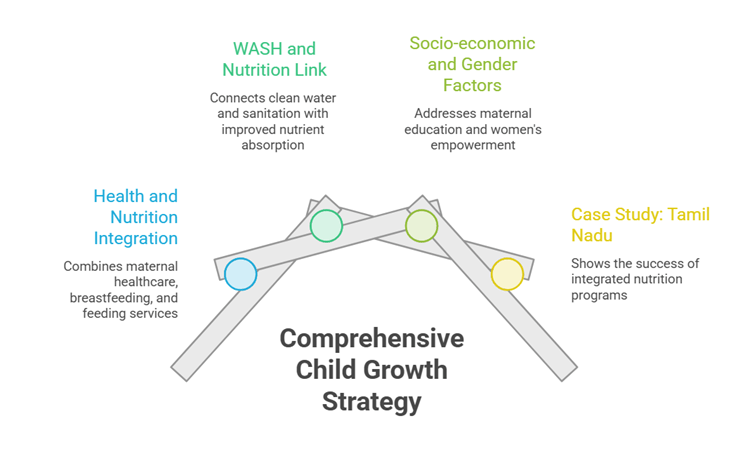
A. Integrating Health, Nutrition and Early Childhood Services
- Child growth is influenced by the first 1,000 days from conception to two years of age, requiring coordinated interventions through maternal healthcare, breastfeeding support, immunisation and complementary feeding.
- Convergence between Anganwadi Centres, ASHAs, ANMs and Primary Health Centres enables early identification of growth faltering, timely counselling and referral of vulnerable children.
- Example: Under POSHAN Abhiyaan, growth monitoring, nutrition counselling and health services are integrated through community-based events such as Village Health, Sanitation and Nutrition Days.
B. Linking Water, Sanitation and Hygiene (WASH) with Nutrition Outcomes
- Repeated exposure to unsafe water and poor sanitation contributes to diarrhoeal diseases, intestinal infections and environmental enteropathy, reducing nutrient absorption and impairing physical growth.
- Access to clean drinking water, toilets and waste management directly reduces disease burden and improves nutritional outcomes among children.
- Example: The combined implementation of Jal Jeevan Mission and Swachh Bharat Mission (Gramin) has improved household access to piped water and sanitation, contributing to healthier childhood environments.
C. Addressing Socio-economic and Gender Determinants
- Maternal education, women’s empowerment and social protection significantly influence childcare practices, feeding behaviour and healthcare utilisation.
- Women’s time poverty, resulting from unpaid care work and livelihood responsibilities, often constrains breastfeeding and complementary feeding practices.
- Case Study: Tamil Nadu Integrated Nutrition Programme
- Demonstrated that combining nutrition interventions with maternal education, health services and community participation produced better child growth outcomes than isolated feeding programmes.
II. Role of Panchayati Raj Institutions in Addressing Environmental and Infrastructural Deficits
A. Local Planning and Infrastructure Development
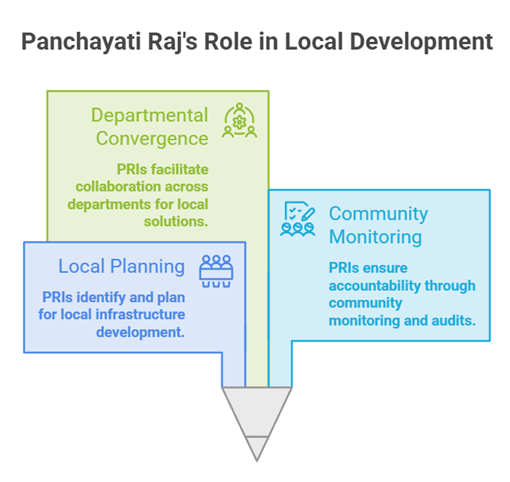
- PRIs are uniquely positioned to identify village-specific deficits relating to drinking water, sanitation, drainage, roads and Anganwadi infrastructure through participatory planning.
- Gram Panchayats can integrate child nutrition priorities into Gram Panchayat Development Plans (GPDPs), ensuring resource allocation towards child-friendly infrastructure.
- Example: Several Panchayats in Kerala’s decentralised planning model have prioritised sanitation facilities, nutrition gardens and community health infrastructure through local development plans.
B. Strengthening Community Monitoring and Accountability
- Gram Sabhas provide a platform for reviewing service delivery relating to nutrition, health, water supply and sanitation.
- Social audits and community monitoring help identify gaps in Anganwadi functioning, immunisation coverage and maternal health services.
- PRIs can ensure that frontline workers receive community support and that vulnerable households are not excluded from welfare programmes.
- Case Study: Kudumbashree-led Local Governance Initiatives
- Community institutions working alongside local governments improved outreach to women and children through participatory monitoring and social mobilisation.
C. Facilitating Convergence Across Departments
- Child malnutrition often falls between departmental responsibilities, making local convergence essential.
- Panchayats can convene officials from health, education, women and child development, rural development and water departments to address local determinants collectively.
- Example: Village Health, Sanitation and Nutrition Committees (VHSNCs), operating under Panchayat oversight, promote coordinated action on nutrition, hygiene and maternal-child health.
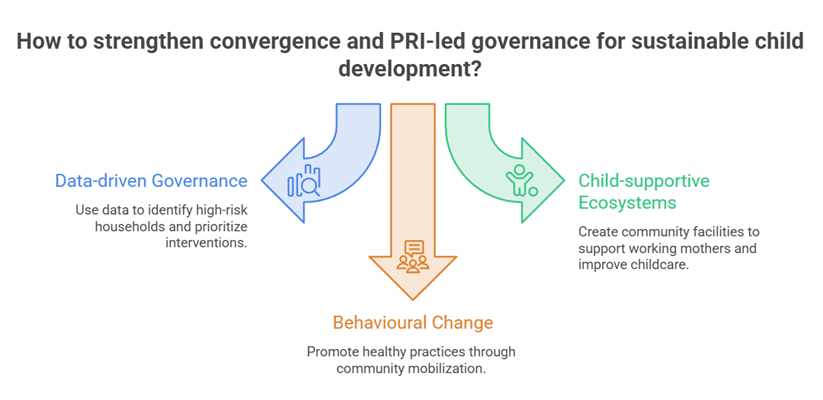
III. Strengthening Convergence and PRI-led Governance for Sustainable Child Development
A. Data-driven Local Governance and Early Intervention
- Regular anthropometric monitoring can help detect growth stagnation before severe malnutrition develops.
- Local analysis of nutrition data enables Panchayats to identify high-risk households and prioritise interventions accordingly.
- Digital platforms can support real-time tracking of child growth and service delivery.
- Example: POSHAN Tracker facilitates monitoring of beneficiaries and nutritional indicators at the grassroots level.
B. Creating Child-supportive Community Ecosystems
- Child nutrition requires supportive social infrastructure including crèches, childcare centres and safe community spaces.
- Community-based childcare facilities reduce the burden on working mothers and improve feeding frequency and supervision of young children.
- Case Study: Mobile Crèche Models
- Community-managed childcare centres near worksites have improved nutrition, health monitoring and early learning opportunities for children of informal workers.
C. Promoting Behavioural and Social Change
- Infrastructure alone cannot eliminate malnutrition unless accompanied by behavioural change regarding infant feeding, hygiene and caregiving practices.
- PRIs can mobilise self-help groups, youth clubs, schools and religious institutions to promote healthy feeding practices and shared caregiving responsibilities.
- Greater involvement of fathers and family members enhances child nutrition outcomes and reduces the caregiving burden on mothers.
- Example: Community-led nutrition campaigns under POSHAN Maah have successfully promoted breastfeeding, complementary feeding and dietary diversity in many districts.
Conclusion:
- Child growth is shaped not merely by food intake but by the broader ecosystem of healthcare, sanitation, safe water, housing, education, gender relations and local governance. Therefore, addressing foundational environmental and infrastructural deficits demands robust multisectoral convergence anchored in empowered Panchayati Raj Institutions.
- With strengthening decentralised planning, data-driven governance, community participation and integrated implementation of nutrition-sensitive programmes, India possesses the institutional framework to significantly reduce undernutrition and ensure that every child attains their full physical and cognitive potential.
- The steady decline in stunting levels and expansion of maternal and child health services demonstrate that sustained, locally driven convergence can translate developmental gains into lasting human capital outcomes.