
Introduction:
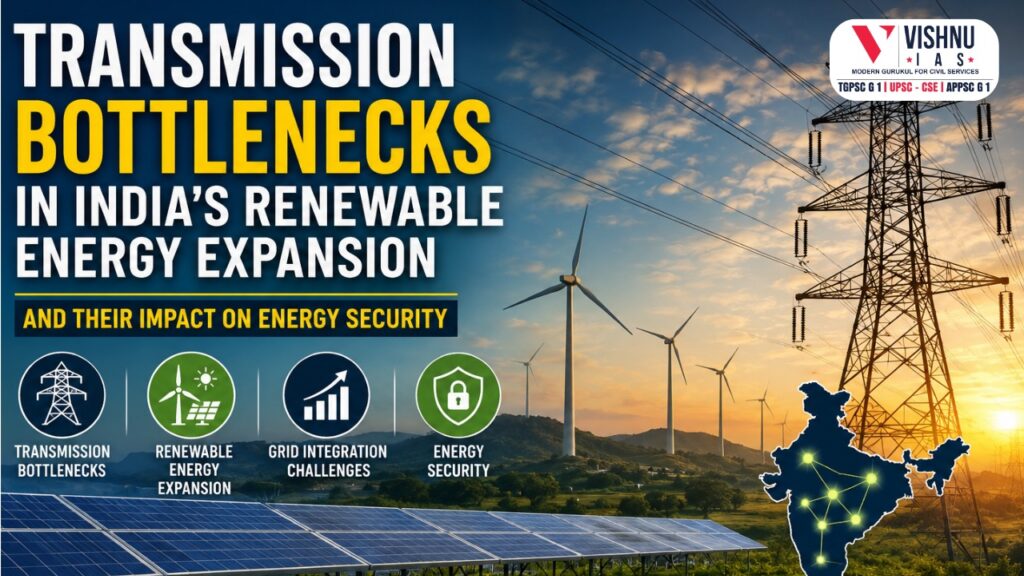
- Transmission bottlenecks refer to the inability of the electricity transmission network to evacuate, transport and distribute power efficiently from generation centres to demand centres. As India advances towards its target of 500 GW of non-fossil fuel capacity by 2030 and is projected to require nearly 2,000 GW of clean energy capacity by 2050 to support industrialization, electrification and economic growth, transmission infrastructure has emerged as a critical constraint. Despite renewable energy becoming the cheapest source of electricity and annual additions exceeding 45 GW, more than 50 GW of renewable capacity remains stranded or delayed due to inadequate grid connectivity, making transmission infrastructure central to both renewable energy expansion and long-term energy security.
Body:
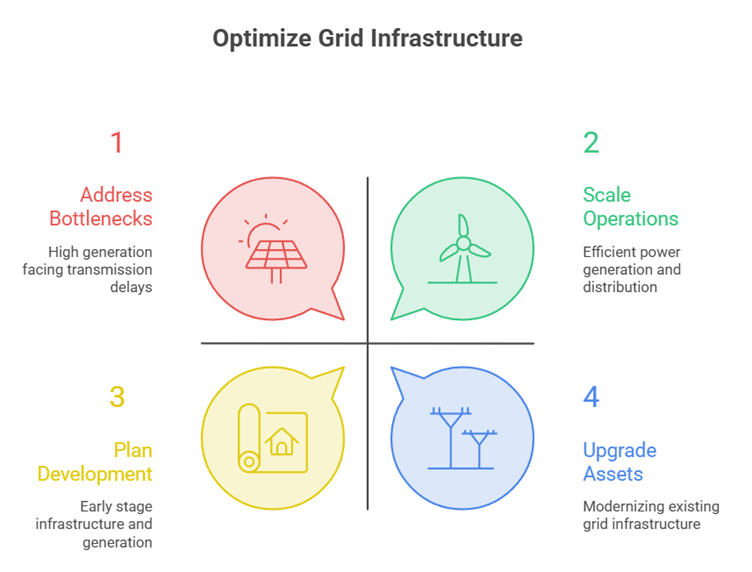
I. Transmission Bottlenecks Hindering Renewable Energy Expansion
1. Mismatch between renewable deployment and transmission development
- Renewable energy projects, particularly solar and wind farms, can be commissioned within 12–18 months, whereas transmission corridors often require 3–5 years because of lengthy approvals, environmental clearances and inter-agency coordination challenges.
- Concentration of renewable resources in regions such as Rajasthan, Gujarat, Tamil Nadu and Karnataka creates significant evacuation pressure, while transmission expansion struggles to keep pace.
- Delays in grid connectivity increase project costs, reduce investor confidence and lead to underutilization of installed renewable capacity.
- Example: Renewable-rich regions under the Green Energy Corridor Programme have periodically experienced congestion due to faster growth in generation capacity than transmission infrastructure.
2. Land acquisition and infrastructure constraints
- Acquisition of land and right-of-way for transmission lines frequently encounters resistance from local communities, environmental concerns and competing land-use demands.
- Rapid urbanization, industrial expansion and ecological sensitivities make the establishment of new transmission corridors increasingly difficult.
- Existing transmission networks often rely on ageing conductors and conventional technologies that limit power transfer capacity despite growing demand.
- Case Study: Several interstate transmission projects linking western renewable energy parks with northern demand centres have faced delays owing to land acquisition and forest clearance issues.
3. Grid integration and intermittency challenges
- Solar and wind power are inherently variable, requiring flexible grid management, storage systems and balancing mechanisms.
- Many renewable projects utilize transmission infrastructure only for a limited portion of the day, resulting in inefficient asset utilization.
- Insufficient battery storage and pumped hydro facilities increase curtailment risks during periods of excess generation.
- Example: Solar-rich states frequently experience midday generation surpluses that cannot be fully evacuated due to transmission congestion and inadequate storage support.
II. Implications of Transmission Bottlenecks for India’s Energy Security
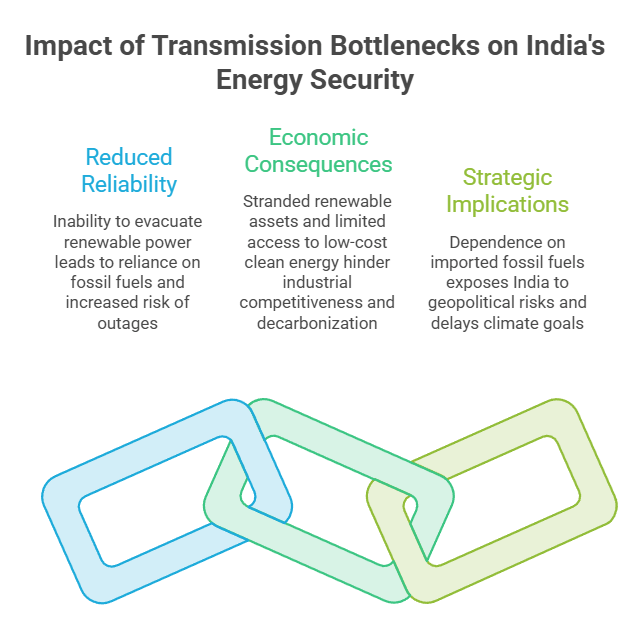
1. Reduced reliability and resilience of electricity supply
- Inability to evacuate renewable power forces continued dependence on fossil-fuel-based generation, reducing diversification of the energy mix.
- Congested grids increase the risk of localized outages, frequency fluctuations and supply disruptions during peak demand periods.
- Delayed integration of renewable energy weakens the resilience of the electricity system against fuel price shocks and supply-chain disruptions.
- Case Study: During periods of high electricity demand, several states have relied on imported coal and expensive thermal generation despite available renewable capacity elsewhere in the grid.
2. Economic and industrial consequences
- Stranded renewable assets increase the cost of capital and create inefficiencies in energy markets.
- Industries such as steel, cement, aluminium, chemicals, electric mobility and data centres increasingly require reliable, affordable and round-the-clock clean power for competitiveness.
- Transmission constraints reduce the economic benefits of low-cost renewable electricity and slow industrial decarbonization.
- Example: Renewable power tariffs have fallen significantly, yet congestion-related transmission limitations often prevent industries from fully accessing low-cost clean electricity.
3. Strategic and environmental implications
- Continued dependence on imported fossil fuels exposes India to geopolitical uncertainties and international energy price volatility.
- Delayed renewable integration hampers progress towards climate commitments and emission reduction goals.
- Energy security increasingly depends not merely on generation capacity but on the ability to transmit electricity efficiently across regions.
- Case Study: Global energy price disruptions following major geopolitical conflicts highlighted the strategic value of domestically generated renewable energy supported by robust transmission networks.
III. Measures to Overcome Transmission Bottlenecks and Strengthen Energy Security
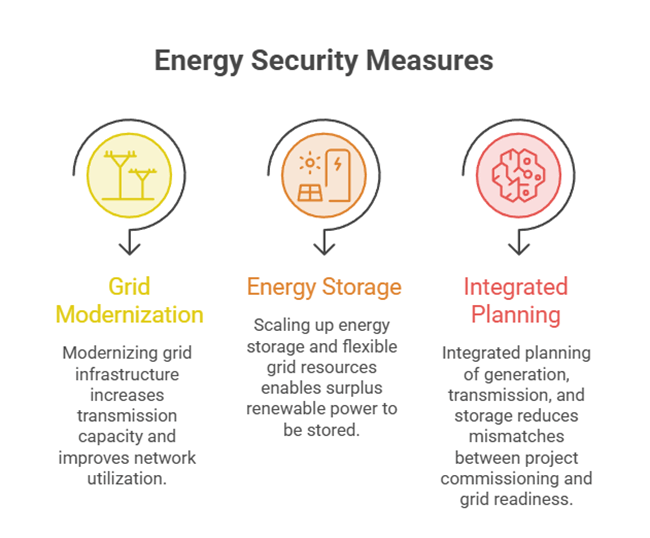
1. Modernization and optimization of existing grid infrastructure
- Deployment of high-temperature low-sag (HTLS) conductors, dynamic line rating systems and advanced grid technologies can significantly increase transmission capacity without acquiring additional land.
- Reconductoring existing lines can nearly double power transfer capability while minimizing environmental and social impacts.
- Digital grid management through artificial intelligence, real-time monitoring and smart dispatch systems can improve network utilization.
- Government Initiative: The Revamped Distribution Sector Scheme (RDSS) supports modernization and digitalization of power infrastructure for improved efficiency and reliability.
2. Scaling up energy storage and flexible grid resources
- Battery Energy Storage Systems (BESS) and pumped storage projects enable surplus renewable power to be stored and supplied during peak demand periods.
- Co-locating storage with renewable projects improves utilization of existing transmission infrastructure and reduces curtailment.
- Hybrid renewable projects combining solar, wind and storage can provide firm and dispatchable power.
- Government Initiative: The National Framework for Promoting Energy Storage Systems and viability gap funding support for battery storage projects aim to accelerate deployment.
- Case Study: Solar-plus-storage projects in renewable energy parks have demonstrated the ability to provide reliable power beyond daylight hours while improving transmission utilization.
3. Integrated planning and development of renewable energy zones
- Simultaneous planning of generation, transmission and storage infrastructure reduces mismatches between project commissioning and grid readiness.
- Development of large-scale renewable energy zones linked to dedicated transmission corridors can accelerate capacity addition.
- Strengthening interstate transmission systems enables efficient transfer of renewable power from resource-rich regions to demand centres.
- Government Initiative: The Green Energy Corridor Project and PM Gati Shakti National Master Plan promote integrated infrastructure planning and renewable energy evacuation.
- Example: Renewable energy parks in Gujarat and Rajasthan are being developed alongside dedicated transmission infrastructure to facilitate large-scale clean energy integration.