Introduction:
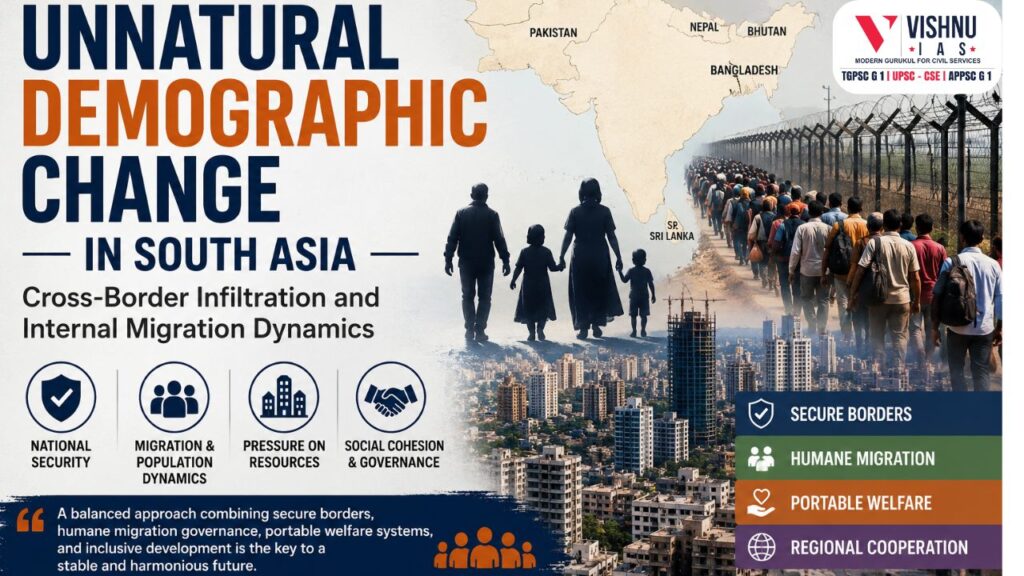
- Demographic change refers to alterations in the size, composition, distribution and characteristics of a population resulting from fertility, mortality and migration patterns. In South Asia, demographic transitions are being shaped simultaneously by cross-border migration, internal population movements, urbanization, declining fertility rates and changing age structures.
- With South Asia hosting nearly one-fourth of the global population and witnessing some of the world’s largest migration flows, concerns regarding illegal infiltration, border management, resource distribution, social cohesion and national security have gained prominence.
- At the same time, migration remains an essential driver of economic development, labour mobility and regional integration. Therefore, while abrupt and unregulated demographic shifts can pose challenges, a balanced assessment requires distinguishing between genuine security concerns and normal demographic processes.
Body:
I. Why Unregulated Demographic Changes Can Pose Significant Challenges
1. National Security and Sovereignty Concerns
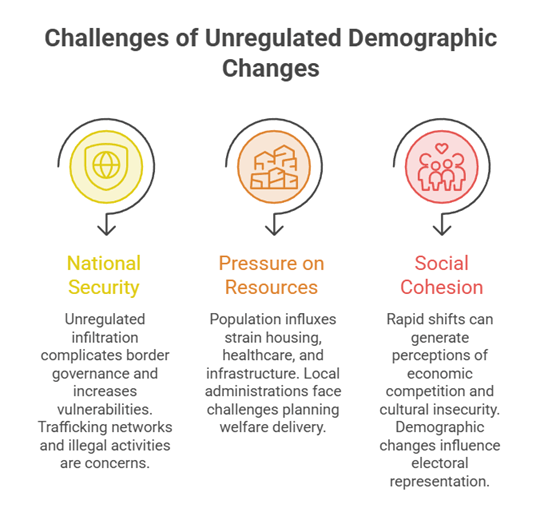
- Unregulated cross-border infiltration can complicate border governance, create difficulties in identity verification and increase vulnerabilities in sensitive border regions.
- In regions witnessing porous borders, concerns arise regarding trafficking networks, counterfeit currency circulation, extremist movements and illegal economic activities.
- Case Study – India-Bangladesh Border: Long-standing concerns regarding undocumented migration have influenced border fencing initiatives, smart surveillance projects and strengthened border management mechanisms.
2. Pressure on Resources and Public Services
- Sudden population influxes may strain housing, healthcare, education, water supply and urban infrastructure, especially in already resource-constrained regions.
- Local administrations often face challenges in planning welfare delivery when population growth exceeds official projections.
- Example – Urban Agglomerations: Metropolitan regions such as Delhi, Mumbai and Bengaluru experience pressure on transport systems, affordable housing and civic amenities due to rapid population concentration.
3. Social Cohesion and Political Implications
- Rapid demographic shifts can generate perceptions of economic competition, cultural insecurity and political marginalization among host communities.
- Demographic changes may influence electoral representation, local governance structures and resource allocation debates.
- Case Study – Assam: Concerns relating to migration, identity preservation and indigenous rights have shaped public discourse, leading to exercises such as the National Register of Citizens and implementation of provisions aimed at protecting local communities.
- Case Study – Assam: Concerns relating to migration, identity preservation and indigenous rights have shaped public discourse, leading to exercises such as the National Register of Citizens and implementation of provisions aimed at protecting local communities.
II. Limitations of Viewing Demographic Change Solely Through a Security Lens
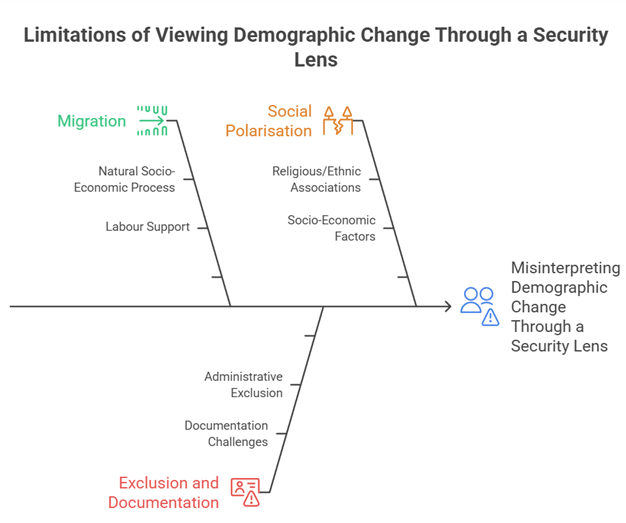
1. Migration is a Natural Socio-Economic Process
- Human mobility has historically been integral to South Asia’s development, facilitated by shared cultural, linguistic and economic linkages across borders.
- Labour migration supports sectors such as construction, agriculture, manufacturing and services, contributing significantly to economic growth.
- Example – Kerala Migration Model: Interstate migrant workers have become indispensable to construction, hospitality and service sectors, filling labour shortages generated by demographic ageing and rising educational attainment among locals.
2. Risk of Exclusion and Documentation Challenges
- Excessive emphasis on documentation may inadvertently affect vulnerable populations lacking formal records despite long-term residence.
- Large-scale verification exercises can create risks of administrative exclusion, legal uncertainty and statelessness if not accompanied by robust safeguards.
- Case Study – Rohingya Crisis: The absence of recognized citizenship status has demonstrated how unresolved documentation issues can create prolonged humanitarian and geopolitical challenges.
3. Potential for Social Polarisation
- Associating demographic change primarily with particular religious, ethnic or linguistic groups may deepen social divisions and weaken trust in institutions.
- Population trends are often shaped more by socio-economic factors, urbanization and fertility transition than by deliberate demographic strategies.
- Example – Fertility Convergence: Across South Asia, fertility rates have steadily declined among most communities due to rising education levels, urbanization and improved access to healthcare, reducing earlier demographic disparities.
III. Internal Migration Dynamics: The More Significant Demographic Transformation
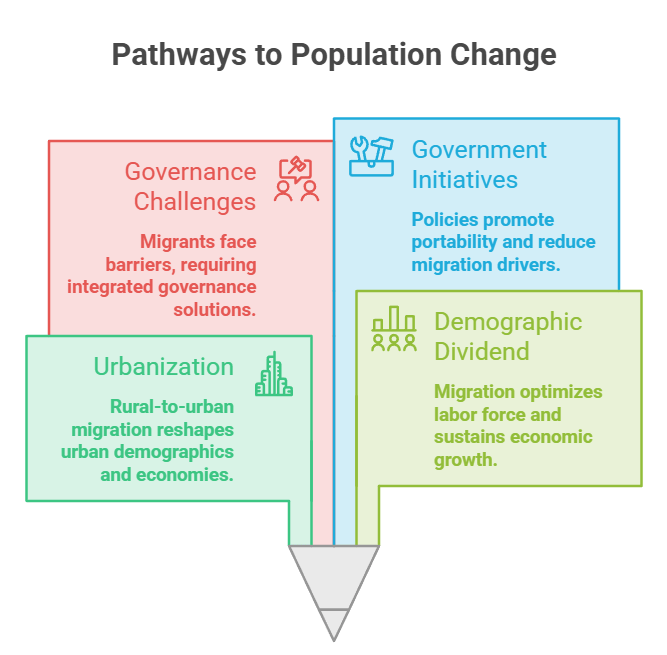
1. Urbanization and Regional Economic Imbalances
- Internal migration increasingly reflects disparities in employment opportunities, industrialization and infrastructure development.
- Rural-to-urban migration has transformed demographic patterns far more extensively than cross-border infiltration in many South Asian countries.
- Case Study – Delhi NCR and Bengaluru: Economic clusters attract millions of migrants from multiple states, reshaping labour markets, urban planning requirements and demographic composition.
2. Demographic Dividend and Labour Mobility
- Migration enables optimal utilization of the working-age population by connecting labour-surplus regions with labour-deficit economies.
- As fertility declines and ageing accelerates in certain regions, migration helps sustain productivity and economic dynamism.
- Example – Southern States: Several southern regions are approaching lower fertility levels and increasingly depend on migrant labour from eastern and northern India to sustain industrial and service-sector growth.
3. Emerging Governance Challenges and Policy Responses
- Internal migrants often face barriers in accessing social protection, healthcare, housing and political participation.
- Governance increasingly requires portable welfare systems and integrated population databases rather than restrictive mobility frameworks.
- Government Initiatives:
- One Nation One Ration Card enables portability of food security benefits across states.
- e-Shram Portal seeks to create a national database of unorganized workers, including migrants.
- PM Gati Shakti and industrial corridor projects aim to reduce regional disparities that drive distress migration.
Conclusion:
- The statement that “unnatural demographic change is a very significant challenge to the present and future of any nation” is valid to the extent that unregulated cross-border infiltration, weak documentation systems and sudden population pressures can affect security, governance and social stability. However, demographic change itself should not be viewed exclusively through a security framework.
- In South Asia, internal migration, urbanization, demographic transition, ageing populations and labour mobility are equally significant drivers of demographic transformation. With fertility rates declining toward replacement levels in several regions and life expectancy continuing to rise, the central challenge is not merely controlling population movements but creating institutions capable of managing them effectively.
- A balanced approach combining secure borders, humane migration governance, portable welfare systems, demographic data integrity, regional cooperation and inclusive development offers the most sustainable path for preserving both national interests and social harmony.