World Malaria Day 2026: From Awareness to Malaria Elimination
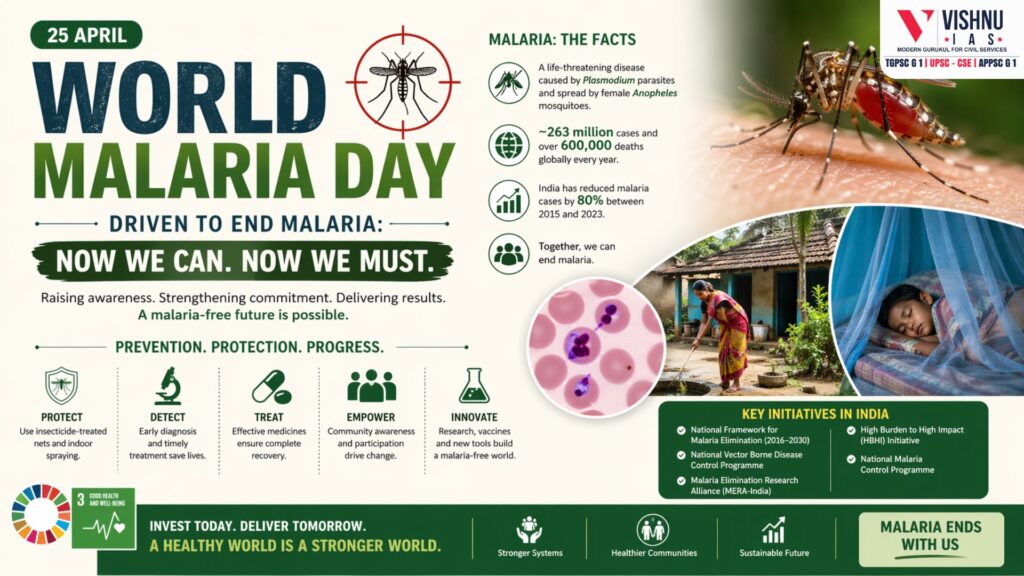
World Malaria Day 2026 highlights the global effort to eliminate malaria, focusing on awareness, prevention, treatment, and policy initiatives. Observed every year on 25 April, it emphasizes urgent action toward malaria eradication while showcasing India’s progress and global challenges.
Why in News?
World Malaria Day is observed every year on 25 April, an initiative of the World Health Organization (since 2007), to raise awareness and accelerate efforts toward malaria elimination.
Theme 2026: “Driven to End Malaria: Now We Can. Now We Must.”
Understanding Malaria: Beyond Basics
Malaria is a life-threatening vector-borne disease caused by Plasmodium parasites and transmitted through infected female Anopheles mosquitoes.
- Species: P. falciparum (deadliest), P. vivax (most widespread), others include P. malariae, P. ovale, P. knowlesi
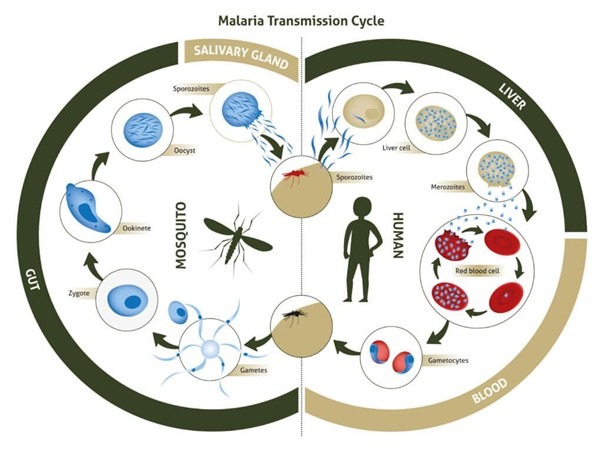
- Lifecycle: Parasites enter bloodstream → liver stage → infect red blood cells
- Symptoms: Fever, chills, headache; severe cases may lead to organ failure or death
- Key Insight: Malaria is preventable and curable, yet persists due to systemic gaps
Global & Indian Scenario
- Global Burden: ~263 million cases and over 600,000 deaths annually; Africa contributes ~95% of cases
India’s Progress:
- Cases reduced from 11.69 lakh (2015) → 2.27 lakh (2023)
- Deaths declined by nearly 80%
- Exited WHO’s High Burden to High Impact (HBHI) group in 2024
Why Malaria Still Persists? (Analytical View)
- Drug and insecticide resistance
- Climate change expanding mosquito habitats
- Poor sanitation and stagnant water
- Limited healthcare access in rural/tribal regions
Prevention, Treatment & Innovation
- Drugs: Artemisinin-based therapies (discovered by Tu Youyou)
- Vaccines: RTS,S (2021) and R21 (2023)
- Prevention Tools: ITNs, indoor spraying, preventive chemotherapy
Key Initiatives
Global:
- WHO Global Malaria Programme
- Global Technical Strategy (2016–2030)
- E-2025 Initiative
India:
- National Framework for Malaria Elimination (2016–2030)
- National Vector Borne Disease Control Programme
- Malaria Elimination Research Alliance (MERA-India)
- National Malaria Control Programme (1953)
Value Addition (History)
- Parasite discovered by Charles Louis Alphonse Laveran (1880)
- Transmission proved by Ronald Ross (1897)
Way Forward
- Strengthen healthcare systems & surveillance
- Climate-sensitive public health planning
- Community participation
- Investment in research & vaccines
- Align with SDG 3 (Good Health & Well-being)
Conclusion
With the 2026 theme stressing urgency—“Now We Can. Now We Must.”—the focus shifts from awareness to decisive action. Malaria elimination is no longer just an aspiration, but an achievable goal with sustained policy, innovation, and collective effort.