
Introduction:
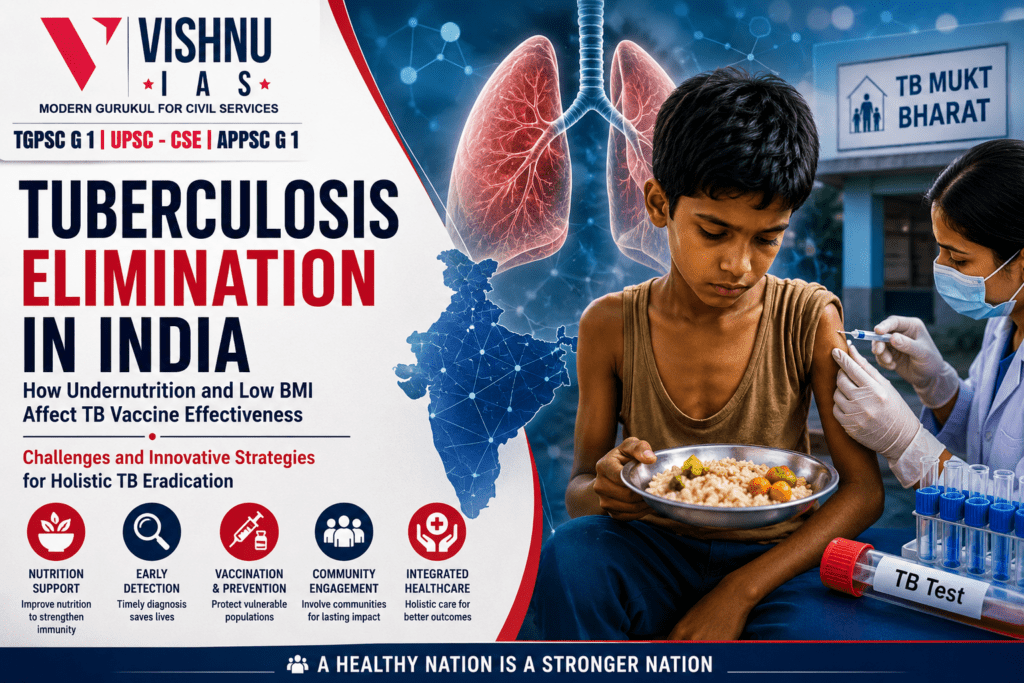
- Tuberculosis (TB) is a chronic infectious disease caused by Mycobacterium tuberculosis and remains one of the world’s deadliest infectious diseases. Despite significant advances in diagnostics and treatment, India continues to account for nearly one-fourth of the global TB burden, making elimination a major public health challenge. Evidence increasingly shows that structural vulnerabilities such as undernutrition, low Body Mass Index (BMI), poverty, overcrowding, and poor living conditions significantly reduce the effectiveness of healthcare interventions, including vaccines, by impairing immune responses and increasing susceptibility to disease progression.
Body:
1. How Undernutrition and Low BMI Bottleneck Clinical Efficacy of Vaccines and Other Healthcare Interventions
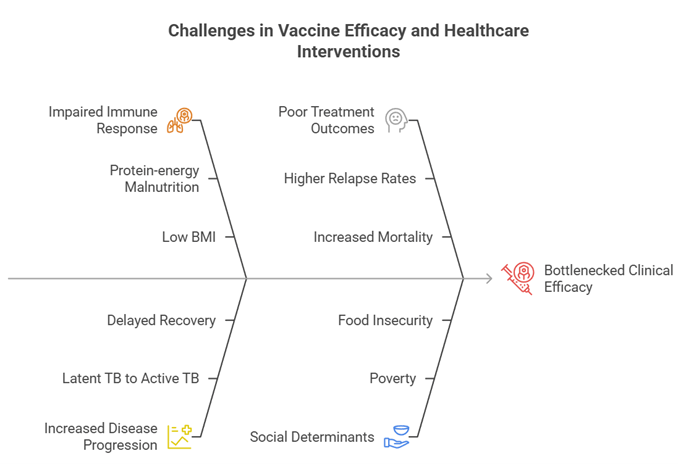
a) Impaired Immune Response and Reduced Vaccine Effectiveness
- Protein-energy malnutrition weakens both innate and adaptive immunity, reducing the body’s ability to generate robust vaccine-induced protection.
- Individuals with low BMI often exhibit reduced T-cell responses, which are critical in controlling TB infection and preventing disease progression.
- Example: Several TB vaccine trials have observed lower protective efficacy among undernourished populations compared to nutritionally secure groups.
b) Increased Risk of Disease Progression and Poor Treatment Outcomes
- Undernourished individuals are more likely to progress from latent TB infection to active TB disease, thereby undermining preventive interventions.
- Low BMI is associated with delayed recovery, higher relapse rates, and increased mortality despite access to anti-TB therapy.
- Case Study: Nutritional deprivation during the COVID-19 pandemic disrupted TB control efforts, contributing to increased vulnerability among economically weaker households.
c) Reinforcement of Social Determinants of Disease
- Malnutrition is often linked with poverty, food insecurity, poor sanitation, and overcrowding, creating a cycle that sustains TB transmission.
- Healthcare interventions become less effective when underlying determinants remain unaddressed.
- Government Initiative: The Nikshay Poshan Yojana recognizes nutrition as a therapeutic component by providing direct nutritional support to TB patients.
2. Challenges Hindering Tuberculosis Elimination in India
a) Diagnostic and Detection Gaps
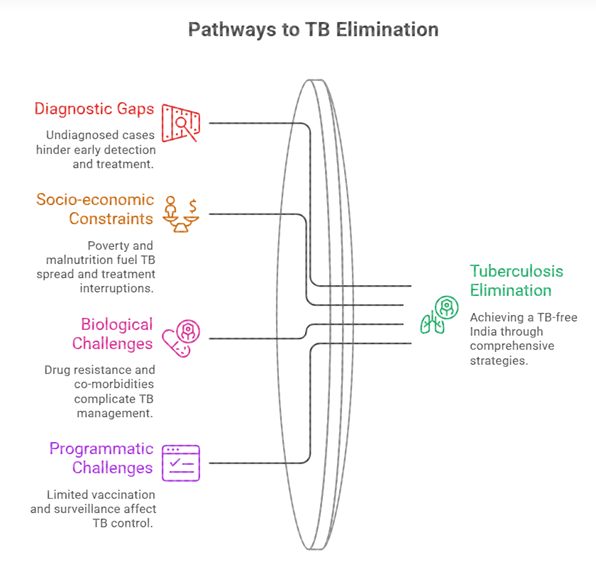
- A significant proportion of cases remain undiagnosed or are diagnosed late, especially among individuals with subclinical and extrapulmonary TB.
- Rural and tribal populations face barriers in accessing advanced molecular diagnostics.
- Example: Deployment of indigenous molecular platforms such as TrueNat has improved decentralised diagnosis but coverage gaps remain.
b) Socio-economic and Nutritional Constraints
- High prevalence of undernutrition continues to fuel new infections and disease progression.
- Migrant workers, urban poor, and vulnerable communities often experience treatment interruptions due to economic insecurity.
- Case Study: States with high levels of undernutrition frequently report a disproportionate TB burden, demonstrating the nutrition-TB nexus.
c) Emerging Biological and Programmatic Challenges
- Drug-resistant TB, treatment non-adherence, and co-morbidities such as diabetes complicate disease management.
- Limited vaccination coverage beyond infancy leaves adolescents and adults vulnerable.
- Government Initiative: The National TB Elimination Programme (NTEP) has expanded active case finding and drug-resistance surveillance to address these concerns.
3. Innovative Strategies for Holistic Elimination of Tuberculosis
a) Nutrition-Centred TB Control Framework
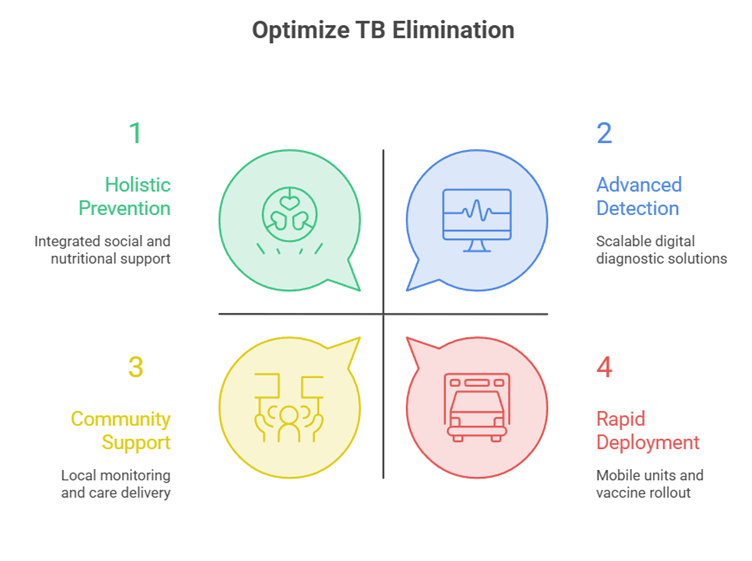
- Integrate TB programmes with food security, maternal health, and social protection schemes to address root causes.
- Adopt community-based nutrition monitoring using digital health platforms.
- Government Initiative: Convergence of Poshan Abhiyaan, Public Distribution System reforms, and TB care can improve treatment outcomes.
b) Technology-Driven Early Detection and Prevention
- Scale up AI-assisted chest X-ray screening, portable molecular diagnostics, and digital contact tracing.
- Expand screening for latent TB infection among high-risk household contacts.
- Example: Mobile diagnostic units in remote regions have demonstrated improved case detection and treatment initiation.
c) Multi-layered Vaccination and Community-Based Strategy
- Develop targeted vaccination strategies for household contacts, adolescents, healthcare workers, and other vulnerable groups.
- Integrate vaccination with preventive therapy, nutritional supplementation, and active surveillance.
- Case Study: India’s successful expansion of indigenous vaccines during public health emergencies demonstrates the feasibility of large-scale deployment of locally developed TB vaccines if efficacy is established.
Conclusion:
- India’s TB elimination challenge extends beyond biomedical solutions and reflects deeper structural inequities. Addressing undernutrition, low BMI, poverty, and healthcare access deficits is as critical as advancing diagnostics, drugs, and vaccines.
- A holistic strategy combining nutrition support, early detection, preventive therapy, targeted vaccination, technological innovation, and sustained public investment can accelerate progress toward elimination.
- With continued strengthening of community-based interventions and integrated health programmes, India can transform TB control from disease management to disease eradication while improving overall population health and human development.