Post-Conflict Tribal Reconciliation in India: Ending Naxalism and Preventing Tribal Alienation
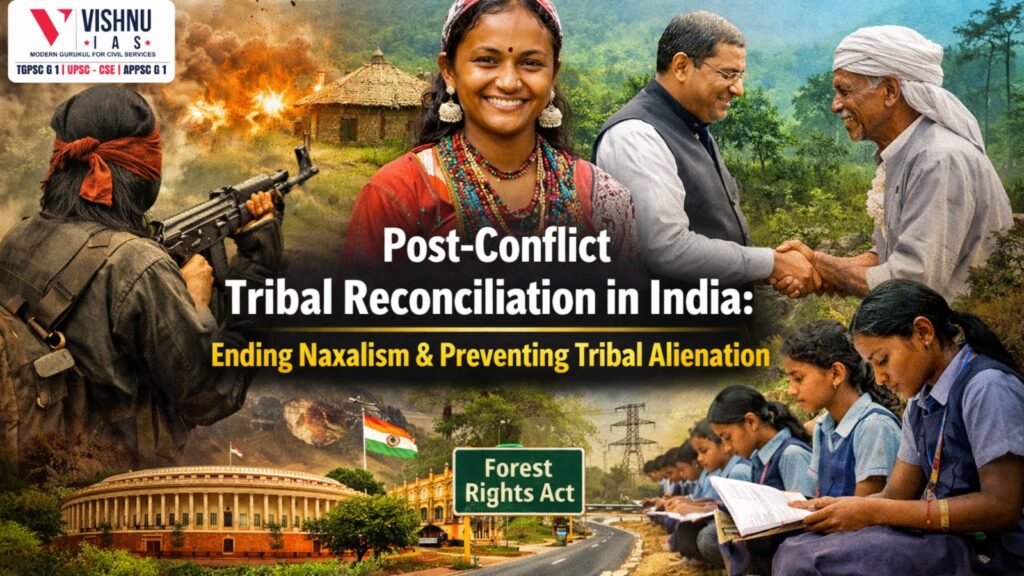
Post-Conflict Tribal Reconciliation in India is essential as the country transitions from the decline of Left Wing Extremism (LWE), often referred to as Naxalism, towards sustainable peace and inclusive governance.
Introduction
- Left Wing Extremism (LWE), often referred to as Naxalism, has historically represented an armed insurgency rooted in ideological opposition to the Indian state, drawing support from tribal grievances, land alienation, and governance deficits.
- At its peak, it affected over 180 districts across central and eastern India, particularly in resource-rich but development-deficient regions. Recent government data indicates a sharp decline in violence, cadre strength, and geographical spread, with thousands of militants surrendering or being neutralised, prompting claims of the near elimination of insurgent capabilities.
- However, while the operational weakening of insurgency marks a significant internal security milestone under leaders like Amit Shah, the deeper structural issues that sustained it—exclusion, displacement, and lack of political voice—remain critical. Therefore, the transition from conflict to peace must prioritise reconciliation and inclusive governance, rather than mere territorial control.
Body
1. Addressing Structural Causes of Alienation
Land Rights, Forest Governance and Legal Empowerment
- Effective implementation of the Forest Rights Act (2006) is essential to secure individual and community forest rights, which remain inadequately recognised in many regions.
- Example: In parts of Gadchiroli (Maharashtra), community forest rights have enabled tribal gram sabhas to manage bamboo resources, increasing incomes and reducing insurgent influence.
- Case Study: Odisha’s Nayagarh model demonstrates how recognition of forest rights reduced local resentment and improved state legitimacy.
Equitable Resource Utilisation and Anti-Displacement Safeguards
- Preventing crony capitalist extraction and ensuring fair compensation, rehabilitation, and consent (FPIC principle) in mining projects is critical.
- Example: Conflicts in Niyamgiri Hills (Odisha) highlighted how tribal assertion under constitutional provisions can safeguard ecological and cultural rights.
- Strengthening PESA Act (1996) provisions ensures that tribal communities have decision-making authority over local resources.
Bridging Development Deficits without Cultural Disruption
- Infrastructure (roads, schools, healthcare) must be aligned with local socio-cultural contexts rather than imposed top-down.
- Example: Expansion of Eklavya Model Residential Schools in tribal areas aims to improve educational outcomes while preserving identity.
- Balanced development prevents the perception of the state as an extractive rather than welfare-oriented entity.
2. Governance Reforms and Democratic Deepening
Strengthening Grassroots Institutions and Political Participation
- Empowering Gram Sabhas under PESA to function as genuine units of self-governance enhances democratic legitimacy.
- Case Study: In Bastar region (Chhattisgarh), participatory governance initiatives have begun integrating tribal voices into local planning processes.
- Increased political representation of tribal communities in legislatures fosters inclusion.
Human Rights Protection and Rule of Law
- Ensuring accountability in security operations, preventing excesses, and safeguarding civil liberties is crucial in post-conflict trust-building.
- Past criticisms of heavy-handed approaches highlight the need for judicial oversight and transparency.
- Example: Strengthening institutions like the National Human Rights Commission in conflict regions helps restore confidence.
Administrative Presence with Sensitivity and Accessibility
- Expanding state presence through schools, health centres, Aadhaar enrolment, and welfare delivery must be accompanied by empathetic administration.
- Example: The Aspirational Districts Programme has improved governance indicators in previously neglected regions through targeted interventions.
- Building trust requires shifting from a security-centric to citizen-centric administrative approach.
3. Rehabilitation, Reconciliation and Social Healing
Comprehensive Rehabilitation and Reintegration Policies
- Surrendered militants must be provided with livelihood training, financial support, and social reintegration opportunities.
- Example: Chhattisgarh’s Surrender and Rehabilitation Policy has facilitated the mainstreaming of former cadres into productive roles.
- Sustainable reintegration reduces the likelihood of relapse into insurgency.
Dialogue, Trust-Building and Community Engagement
- A long-term peace requires institutionalised dialogue platforms involving civil society, local leaders, and government agencies.
- Example: Peace-building efforts in Andhra Pradesh (2000s) demonstrated that negotiation channels can weaken insurgent networks.
- Engagement must move beyond security narratives to address identity, dignity, and justice concerns.
Cultural Recognition and Identity Preservation
- Promoting tribal languages, traditions, and knowledge systems strengthens social cohesion and reduces alienation.
- Case Study: Inclusion of tribal art forms and traditions in state-supported initiatives has enhanced cultural pride and reduced marginalisation.
- Policies must recognise tribals as stakeholders, not beneficiaries, in nation-building.
Conclusion
- The decline of Naxalism marks a critical shift in India’s internal security landscape, but peace cannot be sustained through force alone. Historical evidence suggests that insurgencies rooted in social exclusion and economic injustice tend to re-emerge if underlying grievances persist.
- With violence indicators having significantly reduced and governance outreach expanding, the present moment offers a strategic opportunity to transition from conflict management to conflict transformation.
- A forward-looking approach must integrate rights-based development, participatory governance, and ethical resource management, ensuring that tribal communities are not merely integrated but empowered as equal partners in democracy.
- The true success of this phase will be measured not just by the absence of violence, but by the presence of justice, dignity, and inclusive growth in India’s most vulnerable regions.
1. Addressing Structural Causes of Alienation
Land Rights, Forest Governance and Legal Empowerment
- Effective implementation of the Forest Rights Act (2006) is essential to secure individual and community forest rights, which remain inadequately recognised in many regions.
- Example: In parts of Gadchiroli (Maharashtra), community forest rights have enabled tribal gram sabhas to manage bamboo resources, increasing incomes and reducing insurgent influence.
- Case Study: Odisha’s Nayagarh model demonstrates how recognition of forest rights reduced local resentment and improved state legitimacy.
Equitable Resource Utilisation and Anti-Displacement Safeguards
- Preventing crony capitalist extraction and ensuring fair compensation, rehabilitation, and consent (FPIC principle) in mining projects is critical.
- Example: Conflicts in Niyamgiri Hills (Odisha) highlighted how tribal assertion under constitutional provisions can safeguard ecological and cultural rights.
- Strengthening PESA Act (1996) provisions ensures that tribal communities have decision-making authority over local resources.
Bridging Development Deficits without Cultural Disruption
- Infrastructure (roads, schools, healthcare) must be aligned with local socio-cultural contexts rather than imposed top-down.
- Example: Expansion of Eklavya Model Residential Schools in tribal areas aims to improve educational outcomes while preserving identity.
- Balanced development prevents the perception of the state as an extractive rather than welfare-oriented entity.
2. Governance Reforms and Democratic Deepening
Strengthening Grassroots Institutions and Political Participation
- Empowering Gram Sabhas under PESA to function as genuine units of self-governance enhances democratic legitimacy.
- Case Study: In Bastar region (Chhattisgarh), participatory governance initiatives have begun integrating tribal voices into local planning processes.
- Increased political representation of tribal communities in legislatures fosters inclusion.
Human Rights Protection and Rule of Law
- Ensuring accountability in security operations, preventing excesses, and safeguarding civil liberties is crucial in post-conflict trust-building.
- Past criticisms of heavy-handed approaches highlight the need for judicial oversight and transparency.
- Example: Strengthening institutions like the National Human Rights Commission in conflict regions helps restore confidence.
Administrative Presence with Sensitivity and Accessibility
- Expanding state presence through schools, health centres, Aadhaar enrolment, and welfare delivery must be accompanied by empathetic administration.
- Example: The Aspirational Districts Programme has improved governance indicators in previously neglected regions through targeted interventions.
- Building trust requires shifting from a security-centric to citizen-centric administrative approach.
3. Rehabilitation, Reconciliation and Social Healing
Comprehensive Rehabilitation and Reintegration Policies
- Surrendered militants must be provided with livelihood training, financial support, and social reintegration opportunities.
- Example: Chhattisgarh’s Surrender and Rehabilitation Policy has facilitated the mainstreaming of former cadres into productive roles.
- Sustainable reintegration reduces the likelihood of relapse into insurgency.
Dialogue, Trust-Building and Community Engagement
- A long-term peace requires institutionalised dialogue platforms involving civil society, local leaders, and government agencies.
- Example: Peace-building efforts in Andhra Pradesh (2000s) demonstrated that negotiation channels can weaken insurgent networks.
- Engagement must move beyond security narratives to address identity, dignity, and justice concerns.
Cultural Recognition and Identity Preservation
- Promoting tribal languages, traditions, and knowledge systems strengthens social cohesion and reduces alienation.
- Case Study: Inclusion of tribal art forms and traditions in state-supported initiatives has enhanced cultural pride and reduced marginalisation.
- Policies must recognise tribals as stakeholders, not beneficiaries, in nation-building.
Conclusion
- The decline of Naxalism marks a critical shift in India’s internal security landscape, but peace cannot be sustained through force alone. Historical evidence suggests that insurgencies rooted in social exclusion and economic injustice tend to re-emerge if underlying grievances persist.
- With violence indicators having significantly reduced and governance outreach expanding, the present moment offers a strategic opportunity to transition from conflict management to conflict transformation.
- A forward-looking approach must integrate rights-based development, participatory governance, and ethical resource management, ensuring that tribal communities are not merely integrated but empowered as equal partners in democracy.
- The true success of this phase will be measured not just by the absence of violence, but by the presence of justice, dignity, and inclusive growth in India’s most vulnerable regions.
Recap: