The Mineable Self: How Human Sociality Became a New Global Commodity in Digital Capitalism
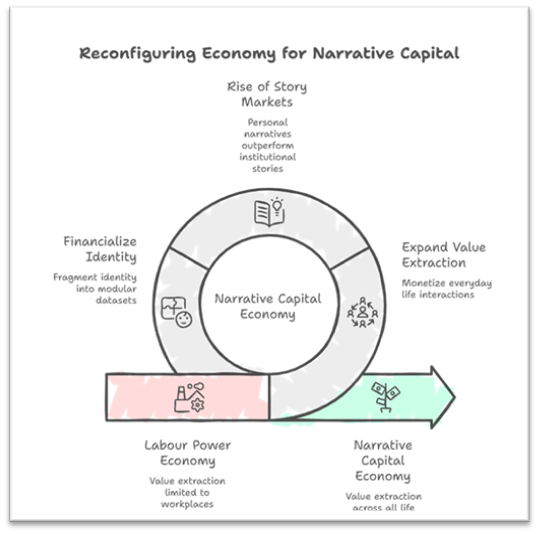
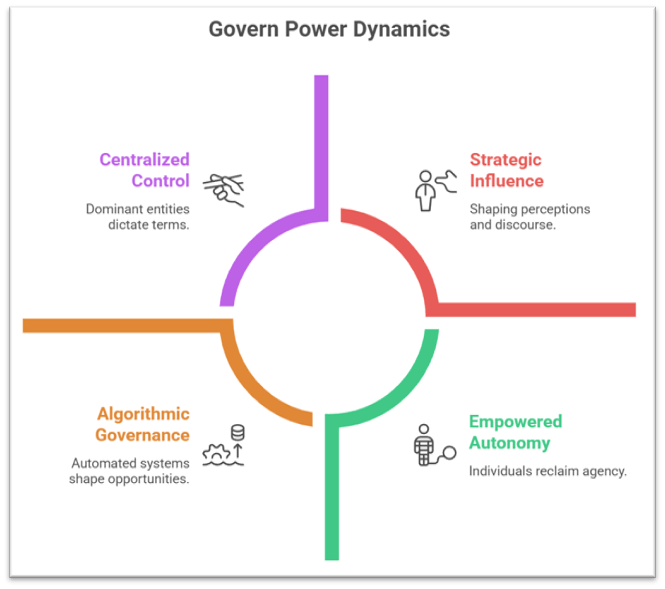
In the contemporary digital economy, capitalist extraction has undergone a structural shift from the exploitation of physical labour and natural resources to the commodification of human sociality itself. The emergence of the mineable self—where personal identity, emotions, relationships, narratives and digital footprints are transformed into economic assets—marks a new phase of capitalism. With over 5.4 billion global internet users, an average individual spending nearly 7 hours a day online, and data-driven sectors contributing an increasing share to global GDP, the self has become an infinitely renewable, low-cost, high-yield commodity. Unlike traditional commodities, this resource regenerates through everyday acts of living, communicating, consuming and expressing, making it central to platform capitalism, digital finance, media, governance and geopolitics. The economic frontier has moved beyond workplaces into friendships, family ties, consumption habits and emotions, allowing firms to generate surplus value without formal employment contracts. Example / Case Study: Social media platforms monetise interpersonal interactions through targeted advertising and influencer economies, while creator monetisation models convert personal struggles, lifestyles and identities into revenue streams. Government Initiative: Digital public infrastructure initiatives seek to formalise parts of the platform economy by extending social security and financial inclusion to gig and creator workers. Global demand for locally rooted but globally consumable stories has intensified, particularly through streaming platforms and short-form video ecosystems, where personal narratives outperform institutional storytelling. Example / Case Study: OTT platforms sourcing regionally grounded content with universal emotional appeal have disrupted studio monopolies and redefined cultural labour markets. Government Initiative: National creative economy missions promote audiovisual production, digital storytelling and cultural exports to capture value while supporting domestic creators. The individual is increasingly fragmented into credit scores, behavioural data, consumption profiles and algorithmic risk assessments, replacing the coherent economic subject with modular datasets. Example / Case Study: Alternative credit scoring models use digital footprints and social behaviour to determine loan eligibility for first-time borrowers. Government Initiative: Financial inclusion programmes leverage digital identity systems to expand credit access while attempting to curb exclusionary algorithmic bias. The extraction of value from personal life renders concepts like privacy, trust and consent increasingly porous, as social interactions become data points. Example / Case Study: Health, fitness and relationship apps monetise sensitive personal data through analytics and partnerships. Government Initiative: Data protection frameworks seek to rebalance individual autonomy against corporate surveillance by regulating consent and purpose limitation. Local experiences are reframed as nodes of global volatility, where events gain value through their transnational narrative circulation rather than their immediate context. Example / Case Study: Citizen-shot conflict or disaster footage instantly becomes part of global media supply chains, redefining journalism and witnesshood. Government Initiative: Media and information literacy campaigns aim to equip citizens to navigate algorithmically amplified global narratives. While digital platforms lower barriers to visibility and self-expression, they also intensify competition, volatility and emotional labour, producing unequal outcomes. Example / Case Study: Viral success stories coexist with widespread creator burnout and income instability in attention-based economies. Government Initiative: Skill development programmes increasingly incorporate digital creativity, platform literacy and mental health support. Control over narrative infrastructures enables corporations and states to exercise soft power, shaping perceptions, identities and political discourse. Example / Case Study: Nation branding campaigns and algorithm-driven political messaging influence diaspora engagement and electoral behaviour. Government Initiative: Regulatory oversight of political advertising and platform accountability mechanisms aim to protect democratic integrity. Automated decision-making systems increasingly govern access to welfare, credit and opportunities, embedding invisible forms of discrimination within data-driven governance. Example / Case Study: Predictive analytics in policing or welfare delivery disproportionately affect marginalised communities. Government Initiative: Ethical AI frameworks and algorithmic audits are being introduced to ensure transparency and fairness. Civil society responses seek to reclaim agency over the self through data sovereignty, platform cooperativism and digital labour rights. Example / Case Study: Movements advocating data dividends and user ownership challenge extractive business models. Government Initiative: Participatory digital governance experiments promote citizen-centric design of public digital systems. The rise of the mineable self represents a profound reorganisation of capitalism, where human sociality becomes both the raw material and the site of accumulation. While this transformation has expanded economic participation, cultural visibility and innovation, it has also deepened inequalities, eroded privacy and destabilised the social foundations of trust and autonomy. Moving forward, a balanced path lies in embedding ethical governance, robust data protection, inclusive digital infrastructure and social security mechanisms within the digital economy. With digital sectors projected to contribute an ever-growing share of national and global income, aligning economic growth with human dignity will determine whether the mineable self becomes a source of empowerment or exploitation in the decades ahead. Recap:Introduction
I. Economic Reconfiguration: From Labour Power to Narrative Capital
Expansion of Value Extraction into Everyday Life
Rise of Story-Centred Markets and Platform Intermediation
Financialization of Identity and Reputation
II. Social and Cultural Implications: Redefining Identity, Privacy and Locality
Erosion of Privacy and Intimacy as Economic Boundaries
Transformation of Locality and the Global–Local Binary
Democratisation and Precarisation of the Self
III. Political and Ethical Dimensions: Power, Governance and Resistance
New Asymmetries of Power and Soft Influence
Algorithmic Governance and Social Sorting
Emergence of Counter-Movements and Digital Rights Discourse
Conclusion: