Judicial Safeguards Against Misuse of Laws and Protection of Vulnerable Women | UPSC Mains
Introduction
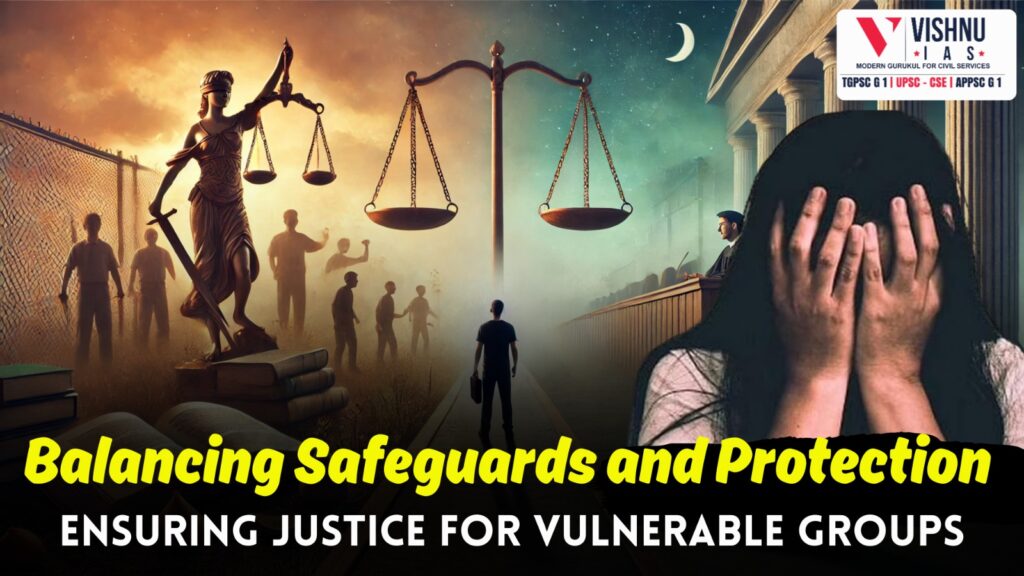
The statement "Judicial safeguards against misuse of laws must not dilute the protection they offer to vulnerable groups" underscores the delicate balance between preventing the abuse of legal provisions and ensuring justice for marginalized sections, particularly women facing domestic violence.
In the context of India's legal framework, Section 498-A of the erstwhile Indian Penal Code (IPC), now Section 85 of the Bharatiya Nyaya Sanhita (BNS) 2023, was enacted in 1983 to address cruelty against married women, including dowry harassment and acts driving women to suicide or injury. The National Family Health Survey-5 (NFHS-5) indicates gross under-reporting of domestic violence, with only a fraction of cases reaching the legal system, emphasizing the law’s critical role in protecting vulnerable women. The Supreme Court’s judgment in Shivangi Bansal vs. Sahib Bansal (July 22, 2025) has sparked debate by endorsing a two-month "cooling-off" period before arrests under Section 498-A, raising concerns about its impact on gender justice and criminal justice systems.
Body:
Judicial Safeguards and Their Rationale
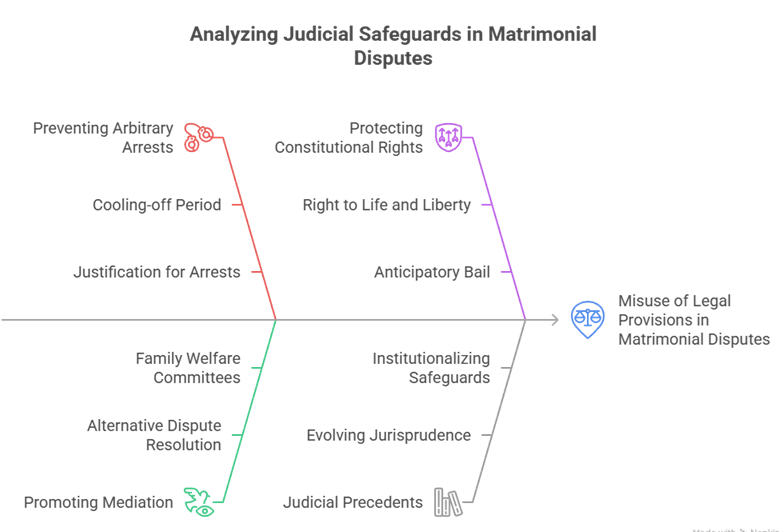
- Preventing Arbitrary Arrests: Judicial safeguards, such as the two-month cooling-off period mandated in Shivangi Bansal, aim to curb the perceived misuse of Section 498-A, where broad allegations sometimes implicate entire families.
Case Study: Arnesh Kumar vs. State of Bihar (2014) guidelines required police to justify arrests, while Shivangi Bansal extended this to mandatory mediation.
- Promoting Mediation in Matrimonial Disputes: The Supreme Court’s endorsement of FWCs highlights ADR methods to resolve disputes amicably, as seen in Rajesh Sharma vs. State of UP (2017).
- Protecting Constitutional Rights: Safeguards uphold Article 21 rights and prevent arbitrary detention, as emphasized in Preeti Gupta vs. State of Jharkhand (2010).
- Judicial Precedents: The court’s concerns about misuse, seen in Sushil Kumar Sharma vs. Union of India (2005), continue to shape jurisprudence.
Impact on Protection for Vulnerable Groups
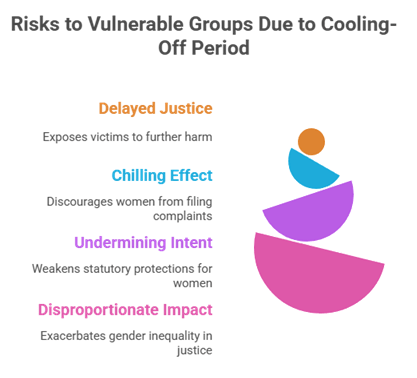
- Risk to Victim Safety: Delays from the cooling-off period may endanger victims. NFHS-5 data shows significant under-reporting.
- Chilling Effect on Reporting: Procedural delays may deter complaints. NCRB 2022 reported 1,34,506 cases under Section 498-A, yet many go unreported.
- Undermining Legislative Intent: Safeguards should not weaken the statutory purpose of protecting women from cruelty.
- Disproportionate Impact on Women: Procedural hurdles disproportionately affect women from marginalized socio-economic backgrounds.
Balancing Safeguards and Justice
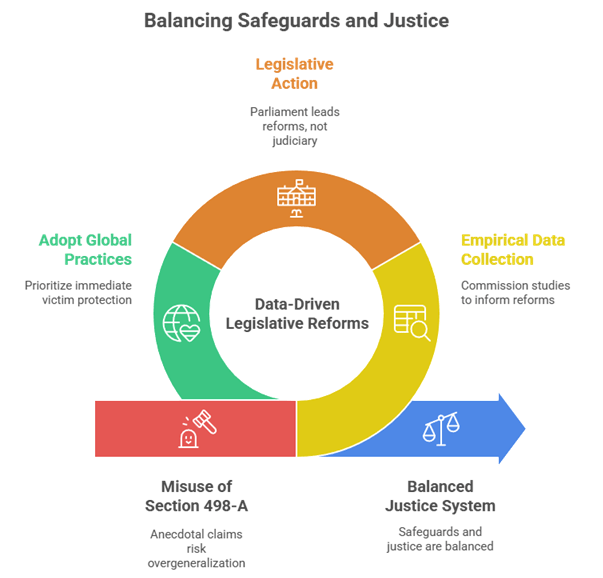
- Need for Empirical Data: Judicial reforms must be based on evidence, as the Law Commission has recommended.
- Legislative vs. Judicial Roles: The separation of powers must be respected, with Parliament leading reforms.
- Global Best Practices: Lessons from the UK’s Domestic Abuse Act (2021) and the US’s Violence Against Women Act can inform policy.
Conclusion:
Case Study: Arnesh Kumar vs. State of Bihar (2014) guidelines required police to justify arrests, while Shivangi Bansal extended this to mandatory mediation.
The Shivangi Bansal vs. Sahib Bansal judgment highlights the tension between judicial safeguards against misuse of Section 498-A and the protection of vulnerable women from domestic cruelty. While safeguards like the cooling-off period aim to prevent arbitrary arrests and promote mediation, they risk diluting protections for victims, as evidenced by NFHS-5 findings on under-reported violence. A balanced approach requires empirical data to assess misuse, alongside strengthening investigation processes through police training under CCTNS. Legislative reforms should clarify Section 85 BNS to ensure victim safety without compromising due process. By aligning judicial and legislative efforts, India can uphold gender justice while ensuring fair application of laws.
Recap: