Jan Vishwas 2.0 and Ease of Doing Business in India: Impact on MSMEs
Jan Vishwas 2.0 and Ease of Doing Business is a crucial reform initiative that reflects a shift in India’s regulatory philosophy from criminalisation to trust-based governance. The Jan Vishwas (Amendment of Provisions) Bill, 2026 (Jan Vishwas 2.0) builds upon earlier reforms to reduce compliance burden, promote ease of doing business, and support MSMEs through simplified regulations and rationalised penalties.
Introduction
- The Jan Vishwas (Amendment of Provisions) Bill, 2026 (Jan Vishwas 2.0) represents a significant shift in India’s regulatory philosophy from criminalisation to trust-based governance.
- Building upon the 2023 reform that amended over 180 provisions across 40+ central laws, the 2026 version expands its scope to nearly 800 provisions across close to 80 Acts.
- In a context where India’s judicial system faces millions of pending cases and MSMEs contribute nearly 30% to GDP and over 40% to exports, such reforms aim to create a predictable and facilitative regulatory ecosystem.
1. Jan Vishwas 2.0 and Ease of Doing Business: Structural Reforms
1.1 Decriminalisation of Minor Offences
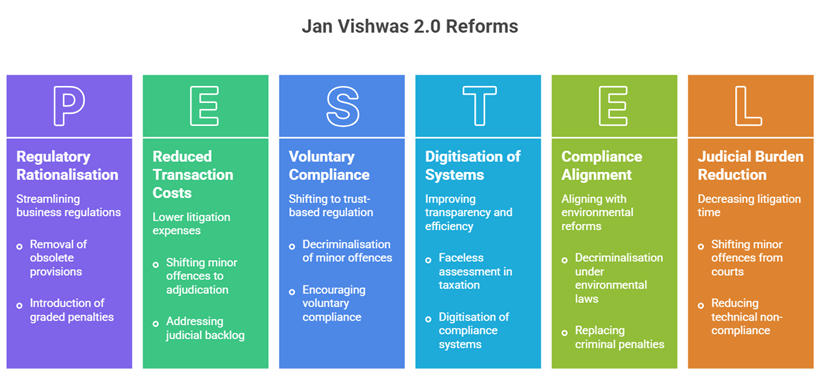
- Replacement of criminal penalties with civil/administrative penalties reduces fear of prosecution for procedural lapses.
- Encourages voluntary compliance and trust-based regulation.
- Minor delays earlier attracting criminal liability are now treated with graded monetary penalties.
1.2 Rationalisation of Regulatory Framework
- Removal of obsolete provisions improves clarity and reduces regulatory overlap.
- Introduction of graded penalties ensures proportional punishment.
- Aligns with digitisation and transparency reforms.
1.3 Reduction in Judicial Burden and Transaction Costs
- Shifting minor offences from courts to administrative mechanisms reduces litigation.
- Helps address judicial backlog and improves efficiency.
- Earlier Companies Act reforms showed improved compliance and reduced litigation.
2. Impact on MSME Sector: Enhancing Competitiveness and Confidence
2.1 Reduction in Compliance Burden
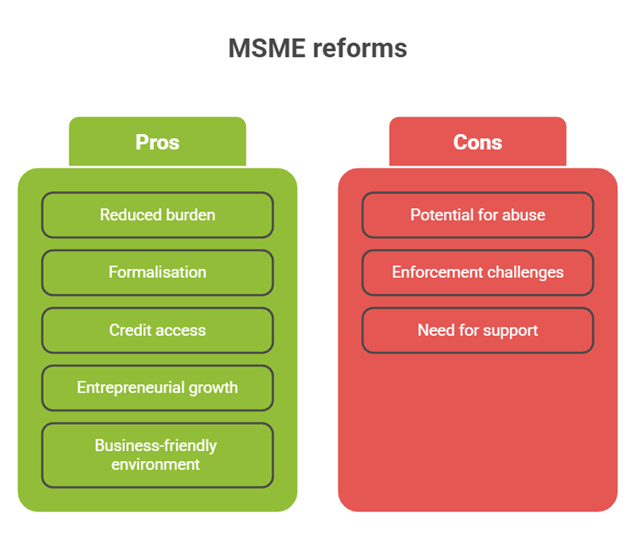
- MSMEs benefit from simplified procedures and reduced criminal liability.
- Encourages formalisation of small enterprises.
- Small exporters now face monetary penalties instead of prosecution.
2.2 Improved Access to Credit and Investment Climate
- Predictable regulatory regime enhances investor confidence.
- Reduced litigation risk improves access to loans and funding.
- Supports schemes like CGTMSE.
2.3 Promotion of Entrepreneurial Ecosystem
- Reduces compliance anxiety and encourages startups.
- Supports initiatives like Udyam Registration and Make in India.
- Boosts MSME onboarding and startup growth.
3. Provisions for First-Time Offenders and Trust-Based Governance
3.1 Improvement Notices and Warnings
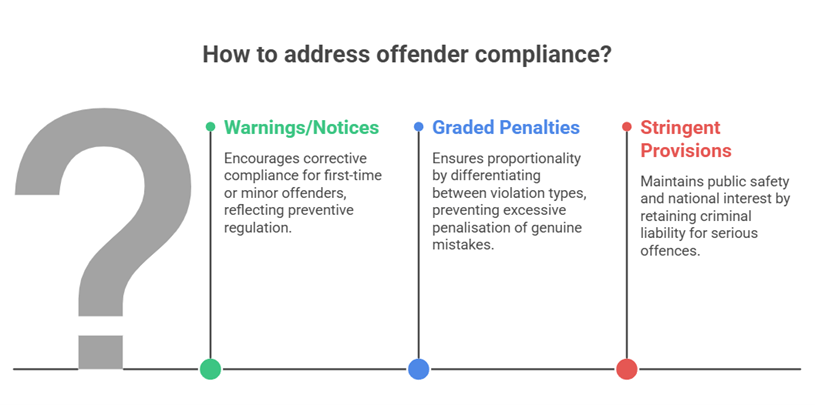
- First-time offenders receive warnings instead of penalties.
- Encourages corrective compliance.
3.2 Graded Penalty Mechanism
- Differentiates between first-time and repeated violations.
- Ensures proportional penalties.
3.3 Retention of Stringent Provisions
- Maintains strict action for serious offences like fraud.
- Balances ease of doing business with regulatory integrity.
Conclusion
- Jan Vishwas 2.0 strengthens ease of doing business through trust-based governance and reduced criminalisation.
- It significantly benefits MSMEs by simplifying compliance and improving business confidence.
- Effective implementation and digital monitoring will be key to long-term success.
- Jan Vishwas 2.0 strengthens ease of doing business through trust-based governance and reduced criminalisation.
- It significantly benefits MSMEs by simplifying compliance and improving business confidence.
- Effective implementation and digital monitoring will be key to long-term success.
Recap: