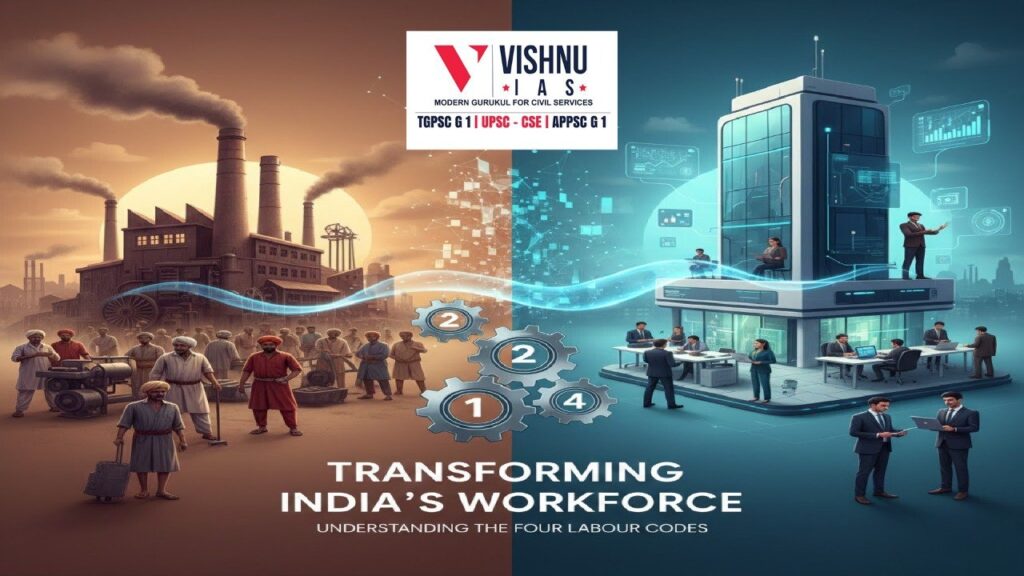
Four Labour Codes: India’s Biggest Structural Reform After GST
The Four Labour Codes represent one of India’s most important structural reforms after GST, aiming to modernise labour governance, simplify laws, and strengthen worker protection. India’s labour regulatory architecture has historically been fragmented, consisting of more than 40 Central laws and about 100 State laws, leading to compliance burdens, litigation, and limited protection for workers, especially in the informal sector. The enactment and recent operationalisation of the Four Labour Codes – Code on Wages (2019), Industrial Relations Code (2020), Code on Social Security (2020), and the Occupational Safety, Health and Working Conditions (OSH) Code (2020) – marks a major overhaul of this landscape.
With a workforce of over 643 million, one of the world’s largest and youngest, and formal sector employment gradually increasing, the Codes attempt to build a modern, simplified, and future-ready labour governance framework. Given the scale, uniformity, and transformative potential similar to the impact made by the Goods and Services Tax (GST) in indirect taxation, these Codes are often described as the next most significant structural reform.
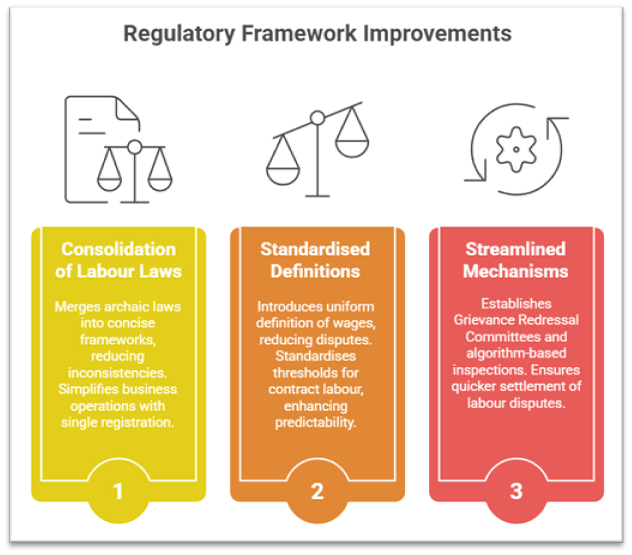
1. A Unified and Modernised Regulatory Framework
1.1 Consolidation and Simplification of Labour Laws
- The Codes merge multiple archaic labour laws into four concise frameworks, reducing inconsistencies and overlap. This is crucial when enterprises—particularly MSMEs—faced compliance challenges due to varying definitions, thresholds, and returns across earlier laws.
- The introduction of single registration, single licence, and single return simplifies business operations, supporting initiatives like Ease of Doing Business and Digital India.
- Example/Case Study: Large-scale manufacturing units in electronics under PLI schemes had repeatedly highlighted inspector raj and compliance fragmentation as bottlenecks; digital inspections and deemed approvals under the Codes address many of these concerns.
1.2 Standardised Definitions and Predictability
- The Codes introduce a uniform definition of ‘wages’, reducing disputes related to variable pay components that frequently led to litigation in provident fund and bonus calculations.
- Standardisation of thresholds for contract labour, standing orders, and industrial establishments enhances predictability, a feature that global investors often cite as essential for supply-chain diversification.
- Real-world example: Multinational factories relocating from East Asia to India often flagged varied State-level compliance requirements; the Codes provide harmonising principles for States to adopt.
1.3 Streamlined Institutional Mechanisms
- Establishment of Grievance Redressal Committees, Industrial Tribunals, and algorithm-based inspection systems enhances transparency.
- Time-bound dispute resolution under the Industrial Relations Code ensures quicker settlement of labour disputes, aligning with global standards.
- Example: Dispute resolution timelines in countries like Vietnam have been cited as factors attracting investment; India’s reforms aim to create similar confidence among employers.
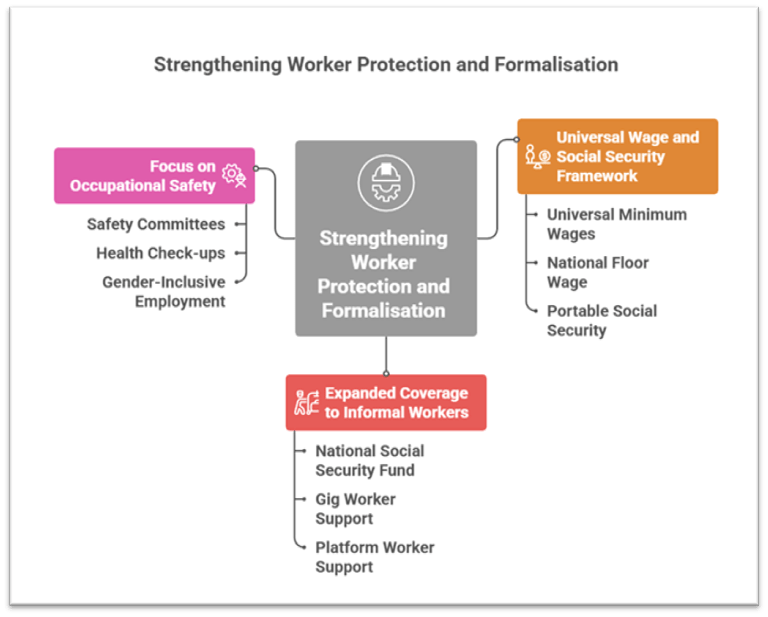
2. Strengthening Worker Protection and Formalisation
2.1 Universal Wage and Social Security Framework
- The Code on Wages introduces universal minimum wages and a national floor wage, ensuring baseline income security across sectors.
- The Code on Social Security extends ESIC and EPFO benefits universally, eliminating geographical restrictions and making social protection portable across States.
- Case Study: The construction sector, with over 55 million workers, benefits from simplified cess payments and better integration of welfare boards.
2.2 Expanded Coverage to Informal, Gig, and Platform Workers
- With nearly 80 percent of India’s workforce still informal, the Codes include self-employed, gig, and platform workers for the first time.
- A National Social Security Fund is envisioned to support gig and platform workers, whose numbers are projected to rise from 1 crore in 2024–25 to over 2.35 crore by 2029–30.
- Example: App-based drivers and delivery partners faced vulnerabilities during COVID-19; the inclusion of this workforce under a statutory welfare framework is a forward-looking reform.
2.3 Focus on Occupational Safety, Health, and Working Conditions
- The OSH Code mandates safety committees, periodic health check-ups, and improved workplace standards, bringing uniformity across factories, mines, and construction sites.
- The provision permitting women to work at night with consent and safety measures enhances gender-inclusive employment.
- Case Study: Sectors such as textiles and food processing, which employ a high number of women, benefit from expanded safe employment hours, aiding labour force participation.
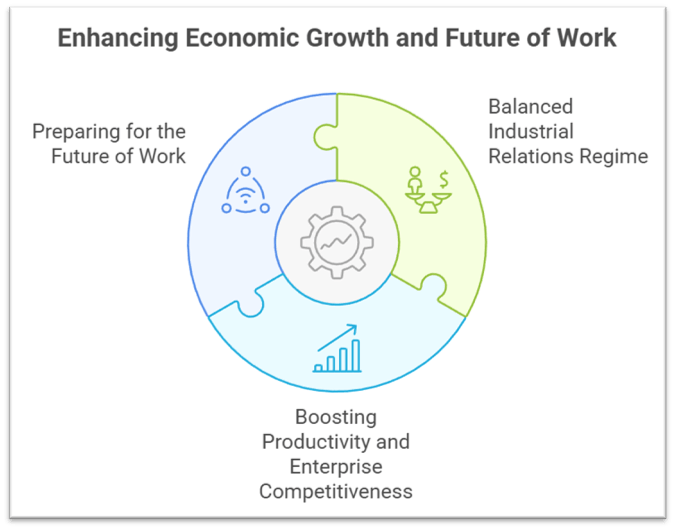
3. Supporting Economic Growth, Investment, and the Future of Work
3.1 Balanced Industrial Relations Regime
- The Industrial Relations Code provides clearer rules for layoffs, retrenchment, and closure with defined thresholds, balancing worker security with employer flexibility.
- Fixed-term employment provisions allow industries to hire based on seasonal or project needs without compromising worker benefits.
- Example: Apparel and footwear industries competing with Bangladesh and Vietnam require flexible yet secure hiring practices to meet export demands.
3.2 Boosting Productivity and Enterprise Competitiveness
- Predictable wage structures, reduced compliance burdens, and transparent inspection regimes enhance competitiveness for MSMEs.
- Formalisation facilitated by the Codes can expand the tax base, improve worker productivity, and aid India’s aspiration to be a global manufacturing hub.
- Example: States adopting labour reforms (such as Rajasthan earlier) witnessed improvements in industrial productivity and investment inflows; nationwide Codes ensure uniformity of such reforms.
3.3 Preparing for the Future of Work in a Digital Economy
- With digital-enabled jobs, gig platforms, and flexible working on the rise, the Codes modernise India’s regulatory ecosystem to accommodate new labour forms.
- Provisions for reskilling funds, technological upgradation, and social protection for emerging work models align with long-term economic transitions.
- Case Study: Rapid growth of platform-based sectors—logistics, e-commerce, ride-hailing—requires regulatory clarity for sustainable expansion; the Codes fill this gap.
Conclusion:
The Four Labour Codes represent a transformative shift in India’s labour landscape, comparable in scale and structural impact to the GST reform. By simplifying over 40 laws into four comprehensive Codes, they offer uniformity, predictability, and modern labour governance suitable for a rapidly evolving economy. At the same time, they aim to expand universal social security, enhance worker welfare, promote gender-inclusive growth, and integrate emerging forms of work.
Going forward, effective State-level implementation, capacity-building of institutions, and continuous dialogue with employers and trade unions will determine the success of these reforms. As India aims to harness its demographic dividend and aspire for higher economic growth, these Codes—if executed well—can strengthen formalisation significantly and contribute to India's larger vision of becoming a highly productive, inclusive, and globally competitive Viksit Bharat.
Recap: