Why Digital Sovereignty in India's Foreign Trade Needs a Strong Digital Industrialisation Policy
Introduction:
- In the rapidly evolving digital era, data and digital ecosystems have become the new frontiers of global trade, shaping power relations and economic capabilities across nations. Digital sovereignty in India's foreign trade refers to the nation’s ability to control, regulate, and benefit from its own digital infrastructure, data, and technology ecosystem, without being overly dependent on foreign powers.
- As per NASSCOM, India's digital economy is projected to reach USD 1 trillion by 2030, driven by the growth of Artificial Intelligence (AI), e-commerce, and data-centric services.
- Yet, India remains a latecomer to digital industrialisation, with no overarching digital trade policy that safeguards its long-term interests. The recent India–United Kingdom Free Trade Agreement (FTA), called the Comprehensive Economic and Trade Agreement (CETA), has underscored the urgency of crafting a comprehensive digital sovereignty framework, especially after India made significant digital sector concessions without sufficient national debate or preparedness.
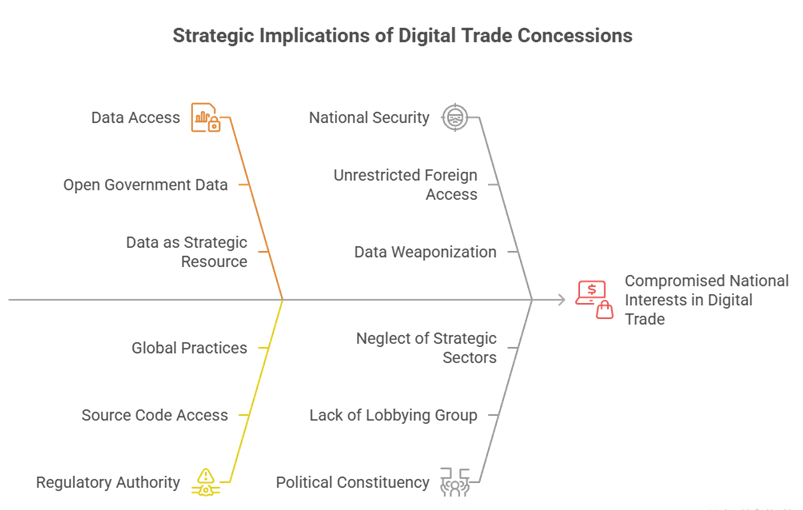
Changing Nature of Digital Trade and Its Strategic Implications
- Digital Trade: From Commodity to Rule-Making Platform
- Data as a strategic resource...
- Digital trade as irreversible...
- Lack of digital policy framework...
- Strategic Autonomy in Software and Source Code Access
- Loss of regulatory authority...
- Comparison with global practices...
- India’s past position reversed...
- Digital Trade Concessions as National Security Threats
- Unrestricted foreign access...
- Example: The Cambridge Analytica scandal...
- Need for secure localisation...
- Weak Political Constituency for Digital Sovereignty
- No visible lobbying group...
- Neglect of strategic sectors...
- Historical lesson...
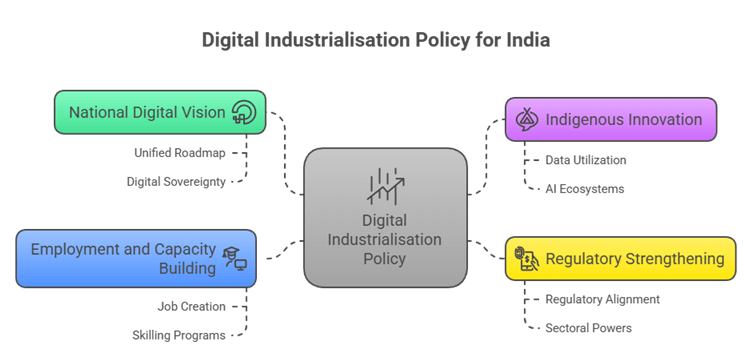
The Case for a Digital Industrialisation Policy
- Need for a Clear National Digital Vision
- Absence of a unified roadmap...
- Need for a National Digital Sovereignty Strategy...
- Example: China's “Made in China 2025”...
- Support for Indigenous Innovation and AI Ecosystems
- Strategic use of data...
- Case study: Estonia’s digital government model...
- Strengthening Domestic Regulations for Strategic Technologies
- Need for regulatory alignment...
- Example: The U.S. CHIPS Act...
- Employment and Capacity Building
- Digital sovereignty linked to job creation...
- Case study: South Korea’s Digital New Deal 2.0...
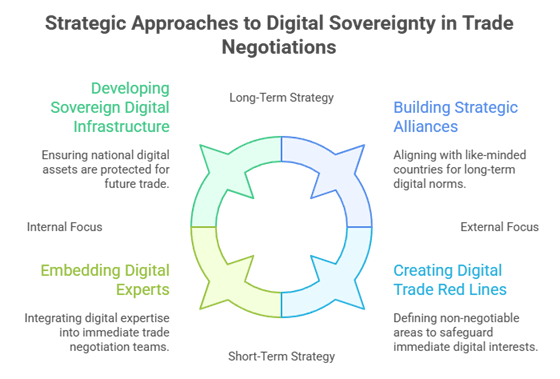
The Role of Digital Sovereignty in Foreign Trade Negotiations
- Need for Domain Experts in Trade Talks
- FTA negotiators lack domain knowledge...
- Example: The EU's digital negotiators...
- Building Strategic Alliances and Coalitions
- Like-minded countries coalition...
- Example: The Digital Cooperation Organization (DCO)...
- Creating Digital Trade Red Lines
- Non-negotiable areas...
- Case study: Japan’s FTA model...
- Interlinking Trade and Strategic Digital Infrastructure
- Developing sovereign digital infrastructure...
- Example: France’s Gaia-X project...
Conclusion
- As India’s digital economy continues its meteoric rise, it becomes imperative to guard its digital assets, architecture, and sovereignty.
- A comprehensive digital sovereignty and digital industrialisation policy will serve as the strategic backbone of India’s foreign trade negotiations, protecting national interests, enabling indigenous innovation, and building long-term digital capabilities.
- According to a 2025 Brookings India report, India can add USD 200 billion annually to GDP by ensuring data localisation, AI development, and secure digital infrastructure.
- India must act now — not react later — to build a resilient, sovereign, and inclusive digital economy that thrives on its own terms in the global trade order.
Recap: