
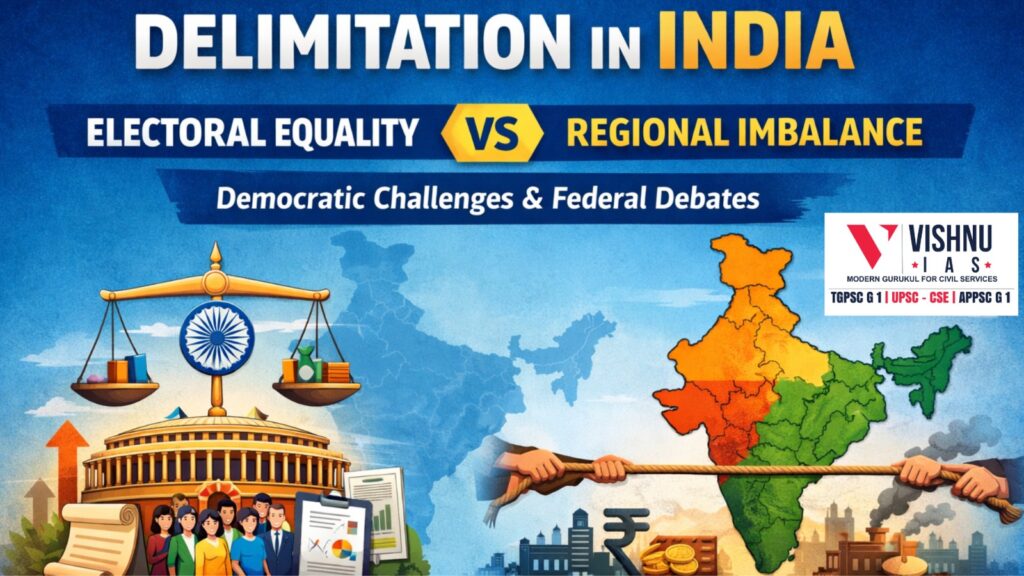
Delimitation in India refers to the process of redrawing boundaries of electoral constituencies to reflect changes in population, ensuring the principle of “one person, one vote, one value.” In India, it is carried out by a Delimitation Commission, with the last major exercise conducted in 2002 based on the 1971 Census, while seat allocation has remained frozen until 2026 through constitutional amendments.
Recent proposals to increase the size of the Lok Sabha (from 550 to ~850) and to base seat allocation on the 2011 Census aim to restore electoral parity, as population disparities across states have widened significantly. However, this raises concerns about federal balance, regional equity, and institutional functioning, especially given demographic divergence between northern and southern states.
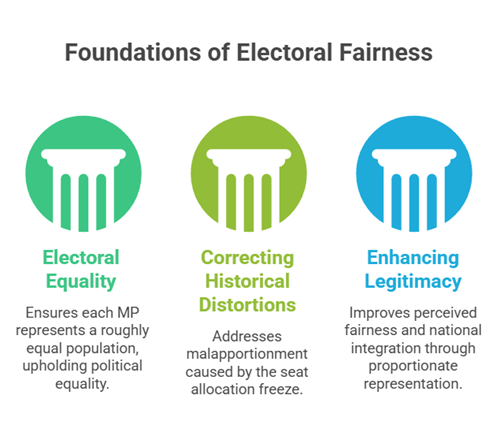
1. Democratic Rationale: Equalising Representation and Electoral Fairness
a) Principle of Electoral Equality and Representative Justice
- Delimitation ensures that each MP represents roughly equal population, correcting distortions where some constituencies have far larger populations than others.
- This strengthens substantive democracy, aligning with constitutional ideals of political equality under Article 14.
- Example: States like Uttar Pradesh currently have constituencies with significantly higher population per MP compared to smaller states, diluting vote value.
b) Correcting Historical Distortions Due to Freeze (1976–2026)
- The freeze on seat allocation aimed to incentivize population control, but over time created malapportionment.
- States successful in demographic transition (e.g., Kerala, Tamil Nadu) saw reduced relative representation.
- Southern states’ demographic success has paradoxically led to a relative decline in parliamentary influence.
c) Enhancing Legitimacy and Inclusiveness of Governance
- Equal vote value improves fairness and reduces grievances of underrepresented populations.
- Strengthens national integration by ensuring proportionate voice in law-making.
- Women’s reservation linked to delimitation enhances inclusive representation.
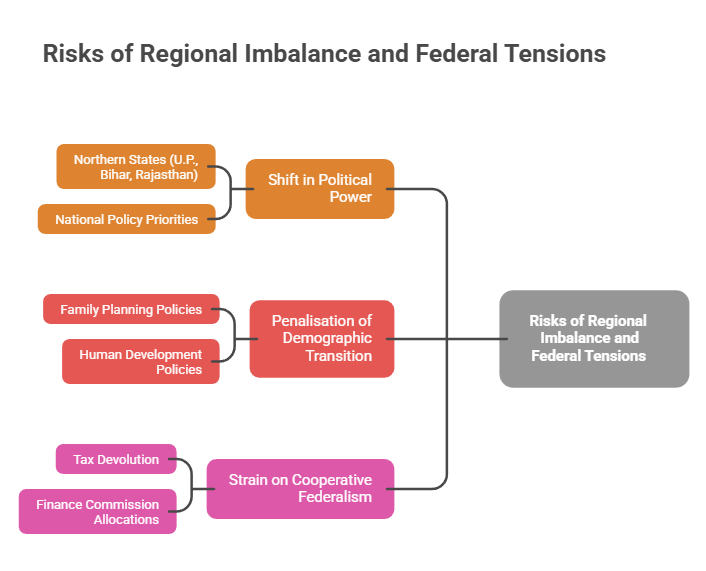
2. Risks of Regional Imbalance and Federal Tensions
a) Shift in Political Power Towards High Population States
- Reallocation based on population will increase representation of northern states like U.P., Bihar, and Rajasthan.
- Their share could rise significantly, influencing national policy priorities.
b) Penalisation of Demographic Transition and Development Success
- States that implemented effective population control may lose political weight.
- This creates a moral hazard, discouraging long-term development policies.
- Example: Tamil Nadu’s success in family planning may reduce its parliamentary strength.
c) Strain on Cooperative Federalism
- May deepen North-South divide, especially in fiscal and political matters.
- States may perceive erosion of autonomy, weakening federal trust.
- Past debates on Finance Commission population criteria highlight similar tensions.
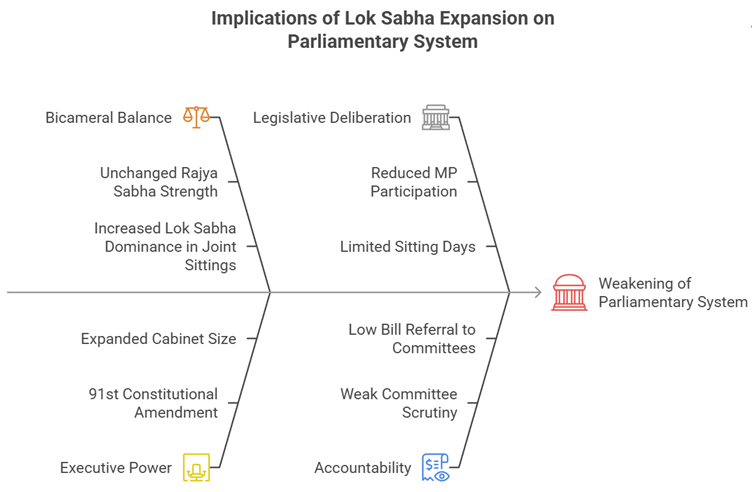
3. Institutional and Functional Implications
a) Weakening of Bicameral Balance
- Lok Sabha expansion without Rajya Sabha increase may disturb institutional equilibrium.
- Lower House dominance may weaken the revisory role of Upper House.
b) Expansion of Executive Power
- Increase in Lok Sabha size may expand the Union Cabinet significantly.
- Raises concerns of inefficiency and patronage politics.
c) Reduced Legislative Deliberation
- Larger House may reduce participation of MPs.
- Limited sittings and fewer committee referrals weaken legislative scrutiny.
Conclusion
The expansion of the Lok Sabha is a necessary step to reflect India’s demographic reality and strengthen democratic representation. However, without safeguards, it may create regional imbalances and federal tensions.
To ensure balance, reforms like increasing parliamentary sittings, strengthening committee systems, and addressing concerns of southern and eastern states are essential. A balanced approach will help maintain both electoral fairness and cooperative federalism.