
Blogs and Articles

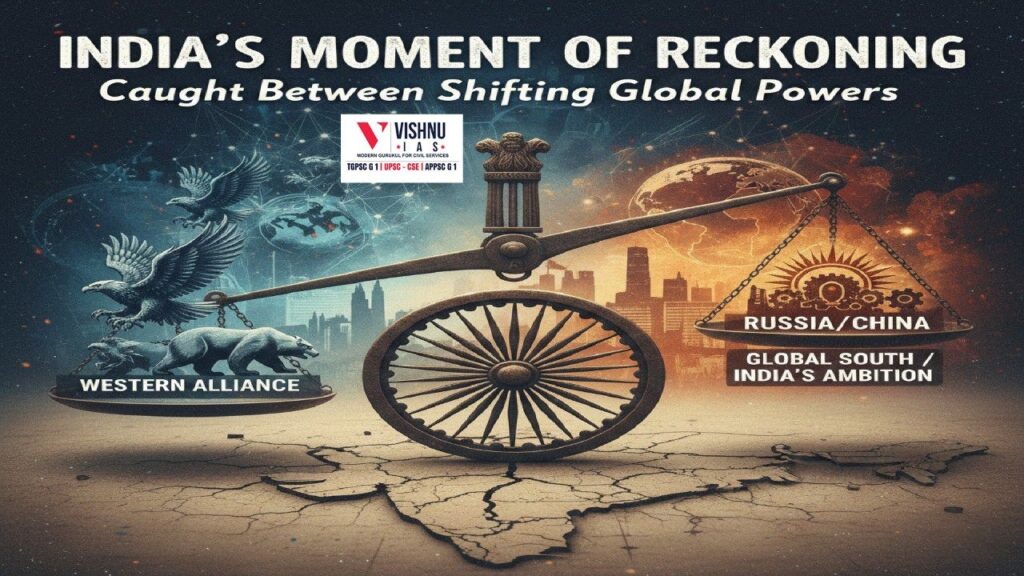
Discover the relevance of India’s Non-Alignment legacy in shaping its contemporary global engagements. Explore how non-alignment influences India’s strategic autonomy, South-South cooperation, and foreign policy in today’s multipolar world.

India’s Non-Alignment Legacy: Relevance in Contemporary Global Engagements

India’s Non-Alignment Legacy and Its Relevance in Contemporary Global Engagements Introduction India’s Non-Alignment legacy emerged as an independent foreign policy doctrine in the early years of independence, seeking to maintain strategic autonomy amidst Cold War bipolarity. India, under Jawaharlal Nehru and later leaders, helped found the Non-Aligned Movement (NAM) in 1961, which gave newly decolonized […]

India’s Non-Alignment Legacy: Relevance in Contemporary Global Engagements Read More Ā»

Explore how customary laws shape tribal property rights in Scheduled Areas, their impact on gender equality, and why reforms are vital for justice and development.

Tribal Property Rights in Scheduled Areas: Role of Customary Laws and Reforms

Tribal Property Rights and Customary Laws in Scheduled Areas: Need for Reform Tribal Property Rights are central to the discussion below — this post analyses the role of customary laws in governing property rights among tribals in Scheduled Areas and highlights the need for reform. Introduction Customary laws are unwritten rules evolved over generations, reflecting

Tribal Property Rights in Scheduled Areas: Role of Customary Laws and Reforms Read More Ā»

Community-level diplomacy in Indo-Sri Lankan maritime disputes can transform Palk Bay tensions into cooperation. Learn how fisher-led diplomacy, joint conservation, and sustainable fishing models ensure livelihoods and ecological balance.

Community-level Diplomacy in Indo-Sri Lankan Maritime Disputes: Joint Conservation for Palk Bay Fisheries

Community-Level Diplomacy in Indo-Sri Lankan Maritime Disputes: Joint Conservation for Palk Bay Fisheries Introduction Maritime disputes between India and Sri Lanka in the Palk Bay region represent one of South Asia’s most sensitive livelihood-security challenges. These disputes are shaped by cross-border fishing practices, the Katchatheevu sovereignty debate, and ecological pressures on marine resources. According to

Community-level Diplomacy in Indo-Sri Lankan Maritime Disputes: Joint Conservation for Palk Bay Fisheries Read More Ā»

Technological sovereignty is now as vital to national security as political sovereignty. Learn why India needs digital independence to safeguard its economy, defence, and data in an era of global cyber risks and supply chain vulnerabilities.

Technological Sovereignty and National Security: Why India Must Achieve Digital Independence

Technological Sovereignty and National Security: Why India Needs Digital Independence https://yourdomain.com/technological-sovereignty-national-security Technological Sovereignty and National Security: Why India Needs Digital Independence Technological sovereignty refers to a nation’s ability to design, develop, control, and maintain its own critical technologies—both in hardware and software—without dependence on external powers. In today’s interconnected world, technology has become as fundamental

Technological Sovereignty and National Security: Why India Must Achieve Digital Independence Read More Ā»

Unpaid care work in India remains invisible in GDP calculations and minimum wage policies. Discover how undervaluing women’s unpaid labour distorts economic measurement, suppresses wages, and deepens gender inequality.

Implications of Unpaid Care Work in India on GDP and Minimum Wage Policies

Implications of Undervaluing Unpaid Care Work on India’s GDP and Minimum Wage Policies /unpaid-care-work-india-gdp-minimum-wage Implications of Undervaluing Unpaid Care Work on India’s GDP and Minimum Wage Policies Introduction Unpaid care work in India refers to non-market activities such as cooking, cleaning, childcare, eldercare, and household management, which though essential for the economy, are neither monetised

Implications of Unpaid Care Work in India on GDP and Minimum Wage Policies Read More Ā»

The shift in FDI towards short-term, profit-seeking investments is reshaping India’s growth story. Discover recent trends in foreign capital flows, benefits, risks, and policy reforms affecting India’s long-term economic development.

Shift in FDI Towards Short-Term Investments: Challenges for India’s Long-Term Economic Development

  The Shift in FDI Towards Short-Term Profit-Seeking Investments and Its Challenge to India’s Long-Term Economic Development The shift in FDI towards short-term, profit-seeking investments poses a major challenge to India’s long-term economic development. Foreign Direct Investment (FDI) refers to cross-border investments where an individual or company from one country makes a significant investment of

Shift in FDI Towards Short-Term Investments: Challenges for India’s Long-Term Economic Development Read More Ā»

India as the voice of the Global South has strengthened after its G20 Presidency and Global South Summits. Learn how strategic autonomy empowers and complicates India’s leadership role in multilateral forums.

India as the Voice of the Global South | Strategic Autonomy in Multilateral Forums

India as the Voice of the Global South | Strategic Autonomy in Multilateral Forums India as the Voice of the Global South | Strategic Autonomy in Multilateral Forums Introduction India as the voice of the Global South has gained renewed salience, particularly after its G20 Presidency in 2023, when Prime Minister Modi convened the Global

India as the Voice of the Global South | Strategic Autonomy in Multilateral Forums Read More Ā»

Discover how GST slab simplification and the correction of inverted duty structures can transform India’s manufacturing and export competitiveness. Learn about GST 2.0 reforms, sectoral benefits, challenges, and implications for economic growth.

GST Slab Simplification and Inverted Duty Structure Correction: Impact on India’s Manufacturing and Export Competitiveness

GST Slab Simplification and Inverted Duty Structure Correction: Impact on India’s Manufacturing and Export Competitiveness Introduction On September 2025, during its 56th meeting, the GST Council introduced a sweeping reform—transitioning from four GST slabs (5%, 12%, 18%, 28%) into a simplified structure with two principal rates: a Merit Rate of 5% and a Standard Rate

GST Slab Simplification and Inverted Duty Structure Correction: Impact on India’s Manufacturing and Export Competitiveness Read More Ā»

Centralization in maritime sector through the Indian Ports Act, 2025 has empowered the Maritime State Development Council (MSDC). This blog critically analyses its impact on federal balance, state autonomy, and the future of India’s port governance.

Centralization in Maritime Sector: Impact of the Maritime State Development Council on Coastal State Autonomy

Centralization in Maritime Sector: Critically Analysing India’s Maritime State Development Council (MSDC) Centralization in Maritime Sector: Critically Analysing India’s Maritime State Development Council (MSDC) Centralization in maritime sector has become a defining theme of India’s recent legislative reforms. The Indian Ports Act, 2025, by giving statutory power to the Maritime State Development Council (MSDC), marks

Centralization in Maritime Sector: Impact of the Maritime State Development Council on Coastal State Autonomy Read More Ā»

Explore the importance of women judges in the Supreme Court of India, their role in judicial representation, and how gender equality impacts public trust and justice delivery.

Women Judges in Supreme Court: Ensuring Judicial Representation and Gender Equality

Women Judges in Supreme Court | Judicial Representation and Gender Equality Women Judges in Supreme Court | Judicial Representation and Gender Equality The Supreme Court of India, as the apex constitutional court, plays a pivotal role in safeguarding fundamental rights and constitutional morality. While the Court has often upheld progressive interpretations of gender justice—such as

Women Judges in Supreme Court: Ensuring Judicial Representation and Gender Equality Read More Ā»

Scroll to Top