
Blogs and Articles

“Explore the economic viability of a Gold Monetisation Scheme in India. Learn how trust-based gold mobilisation can reduce import dependence, augment domestic capital, and mitigate risks during global capital flow declines.”

Gold Monetisation Scheme: Unlocking Domestic Wealth Amid Economic Uncertainty

Gold Monetisation Scheme: Economic Viability Amid Declining Global Capital Flows Gold Monetisation Scheme: Economic Viability Amid Declining Global Capital Flows Introduction: A Gold Monetisation Scheme allows households, institutions (e.g. temple trusts, corporates), and banks to deposit idle/under-utilised gold (jewellery, coins, bars) with authorised institutions, earning interest, while the deposited gold is put to productive use […]

Gold Monetisation Scheme: Unlocking Domestic Wealth Amid Economic Uncertainty Read More »
Judicial Delays in India are often blamed on court inefficiency — but this post explains why they also reflect deeper systemic governance failures (vacancies, legislation, executive behaviour, litigant conduct) and why a holistic reform approach is essential.

Judicial Delays in India: Court Inefficiency or Systemic Governance Failure?

<!doctype html> Judicial Delays in India: Court Inefficiency or Systemic Governance Failure?   Introduction • Judicial delays refer to the lapse of time between filing of a case and its final disposal (or at least a substantive order), including delays in intermediate stages (e.g. adducing evidence, filing appeals), adjournments, procedural bottlenecks, etc. • Court inefficiency

Judicial Delays in India: Court Inefficiency or Systemic Governance Failure? Read More »

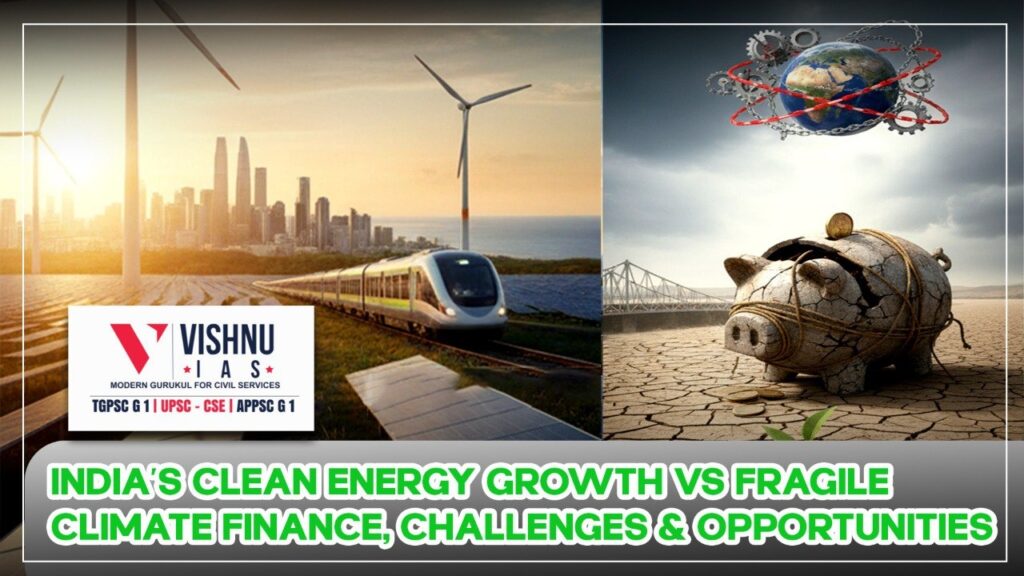
India’s clean energy rise is globally recognised, but fragile climate finance architecture threatens progress. Explore gaps, challenges & solutions.

India’s Clean Energy Rise & Fragile Climate Finance Architecture | Renewable Energy India

  India’s Clean Energy Rise & Fragile Climate Finance Architecture   Introduction India’s clean energy rise has emerged as one of the most significant global developments in recent years. With over 24.5 GW of solar capacity added in 2024, India is now the third-largest solar contributor globally after China and the US, and has been

India’s Clean Energy Rise & Fragile Climate Finance Architecture | Renewable Energy India Read More »

Evaluate the integrity and effectiveness of the global counter-terrorism architecture, recent UN developments, and challenges of terror financing.

Global Counter-Terrorism Architecture: Integrity, Effectiveness & Terror Financing Challenges

Evaluate the integrity and effectiveness of the global counter-terrorism architecture, citing recent developments at the UN and the issue of terror financing as evidence. Introduction: Global counter-terrorism architecture refers to the collective international mechanisms, institutions, treaties, and cooperative frameworks aimed at preventing, combating, and eliminating terrorism. It includes the United Nations (UN), Financial Action Task

Global Counter-Terrorism Architecture: Integrity, Effectiveness & Terror Financing Challenges Read More »

Explore the role of public policy in preventing prolonged wage stagnation and inequality during AI-led technological transitions. Learn how skilling, redistribution, and AI governance shape equitable growth.

Role of Public Policy in Preventing Wage Stagnation and Inequality During AI-Led Technological Transitions

Role of Public Policy in Preventing Prolonged Wage Stagnation and Inequality During AI-Led Technological Transitions Evaluate the Role of Public Policy in Preventing Prolonged Wage Stagnation and Inequality During AI-Led Technological Transitions Introduction Artificial Intelligence (AI), as a general-purpose technology (GPT) like steam power or electricity, has the potential to transform economies by enhancing productivity

Role of Public Policy in Preventing Wage Stagnation and Inequality During AI-Led Technological Transitions Read More »

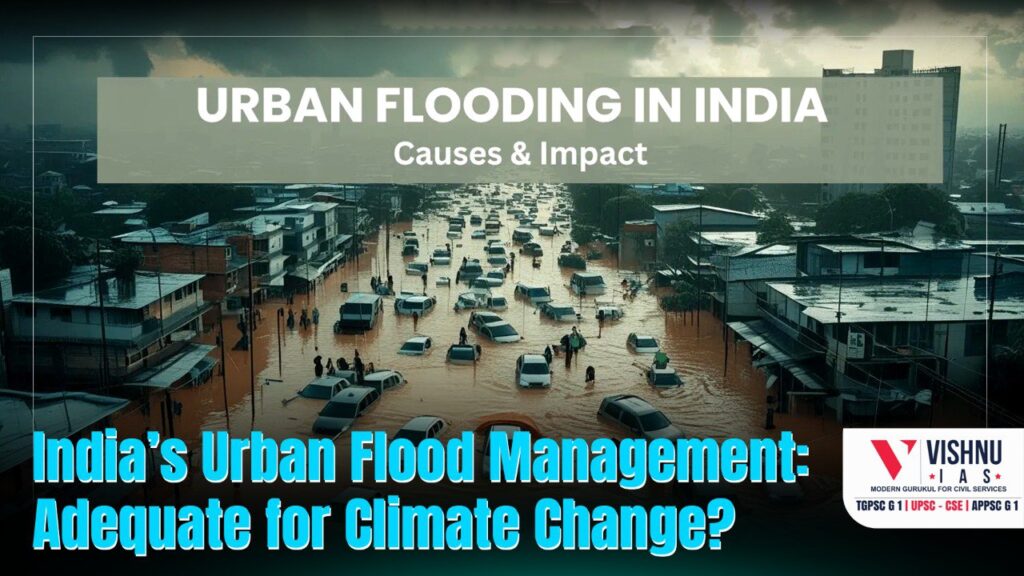
Explore India’s urban flood management strategies, their adequacy against evolving rainfall patterns, and climate change impacts. Learn how cities can strengthen resilience, update drainage systems, and adopt climate-resilient urban planning to reduce flood risks.

Urban Flood Management in India: Evaluating Strategies Amid Climate Change

Urban Flood Management India: Evaluating Strategies Amid Climate Change Introduction: Urban Flood Management in India faces increasing challenges due to evolving rainfall patterns and climate change. Urban floods occur when intense or prolonged rainfall overwhelms drainage capacity, leading to waterlogging, disruption of essential services, and loss of lives and property. Floods have been the most

Urban Flood Management in India: Evaluating Strategies Amid Climate Change Read More »

Explore the adequacy of urban flood management in India in the face of evolving rainfall patterns and climate change. Learn about current strategies, challenges, and future solutions.

Urban Flood Management in India: Are Current Strategies Enough for Climate Change?

Introduction Urban floods occur when intense or prolonged rainfall overwhelms drainage capacity, leading to waterlogging, disruption of essential services, and loss of lives and property. Floods have been the most damaging natural disaster in India in the past two decades, accounting for maximum economic losses and casualties among disasters. A single flood event today can

Urban Flood Management in India: Are Current Strategies Enough for Climate Change? Read More »

The latest GST reforms 2025 simplify tax slabs, resolve the inverted duty structure, reduce litigation, and ease compliance. Discover how these changes strengthen India’s manufacturing and export competitiveness.

GST Reforms 2025: Addressing Inverted Duty Structure & Boosting Manufacturing Competitiveness

Introduction The recent GST reforms approved by the 56th GST Council on 3 September 2025 mark a watershed moment in India’s indirect tax architecture. At its core is the principle of simplifying and rationalising rates and reducing compliance burdens while correcting structural distortions. Under the new regime, the erstwhile four-rate structure (5 %, 12 %,

GST Reforms 2025: Addressing Inverted Duty Structure & Boosting Manufacturing Competitiveness Read More »

Scroll to Top