Balancing Voter Privacy and Electoral Transparency: Challenges of Booth-Level Data & Video Recordings
Introduction
Free and fair elections form the foundation of any democracy, ensuring legitimacy and public trust in governance. In India, where over 96 crore citizens are registered voters, the integrity and transparency of electoral processes are vital for maintaining democratic confidence. However, the challenge lies in balancing voter privacy—a cornerstone of democratic rights—with the growing demand for electoral transparency, especially concerning booth-level data and video recordings. Instances of alleged discrepancies in electoral rolls and duplicate entries have heightened concerns about both data accuracy and public access to election records. This tension underscores the need for a nuanced framework that upholds secrecy of the vote while ensuring verifiability of the process.
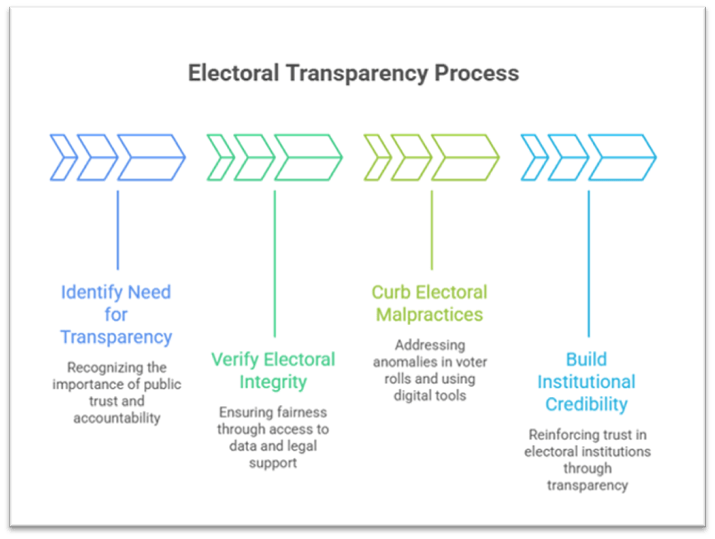
1. The Need for Electoral Transparency: Ensuring Public Trust and Accountability
Verification of Electoral Integrity
- Transparent access to booth-level data, voter lists, and polling records is essential to maintain public confidence in electoral fairness.
- For instance, the Supreme Court’s stance in ADR vs. Election Commission (2002) emphasized the citizen’s right to know as part of Article 19(1)(a)—freedom of expression—underscoring transparency as a democratic right.
- Publishing anonymized booth-level turnout data can enhance verification without revealing voter choices.
Curbing Electoral Malpractices
- Allegations of duplicate, fake, or missing voter entries reveal the importance of public scrutiny. The Election Commission’s Special Intensive Revision (SIR) aims to rectify anomalies in electoral rolls, but independent verification—using digital auditing tools or blockchain-based systems—can add credibility.
- Internationally, countries like Estonia employ transparent e-governance models allowing post-election audits while safeguarding voter identity.
Building Institutional Credibility
- Public access to sanitized booth-level data reinforces the credibility of institutions like the Election Commission of India (ECI). Transparency helps counter accusations of bias or collusion and ensures that electoral institutions remain beyond partisan suspicion.
- For instance, the introduction of Voter Verifiable Paper Audit Trail (VVPAT) was a step toward visible accountability, bridging the gap between technological efficiency and voter trust.
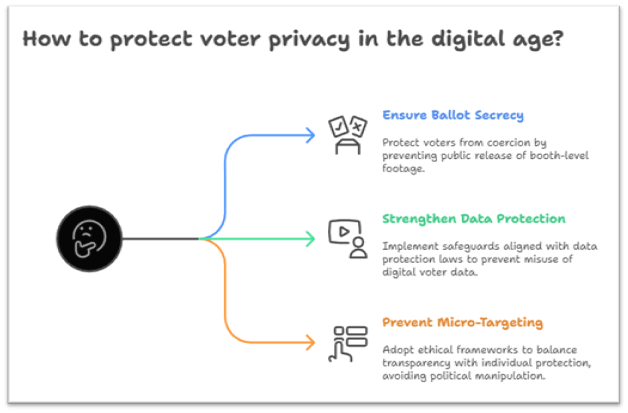
2. Protecting Voter Privacy: The Constitutional and Ethical Imperative
Secrecy of the Ballot as a Fundamental Right
- The secrecy of voting, protected under Section 128 of the Representation of the People Act, 1951, ensures that voters are free from coercion and retaliation.
- Public release of booth-level video footage risks indirectly revealing voter identities or patterns, especially in small constituencies or minority-dominated regions, thereby undermining electoral autonomy.
Data Protection and Digital Vulnerability
- With the digitization of electoral rolls and integration with Aadhaar under initiatives like EPIC–Aadhaar linking, voter data faces potential privacy breaches.
- Without adequate safeguards aligned with the Digital Personal Data Protection Act, 2023, releasing raw booth-level data could expose sensitive personal information to misuse or profiling.
- Lessons can be drawn from the Cambridge Analytica episode, which demonstrated how electoral data misuse can manipulate voter behaviour.
Preventing Targeted Political Manipulation
- Excessive transparency without anonymization may enable political entities to micro-target voters based on location-specific trends. This undermines the democratic principle of secret suffrage.
- Ethical frameworks, similar to the EU’s General Data Protection Regulation (GDPR) standards, could guide India’s electoral data management, balancing transparency with individual protection.
3. Reconciling Privacy and Transparency: Towards a Balanced Electoral Framework
Controlled Public Access and Data Anonymization
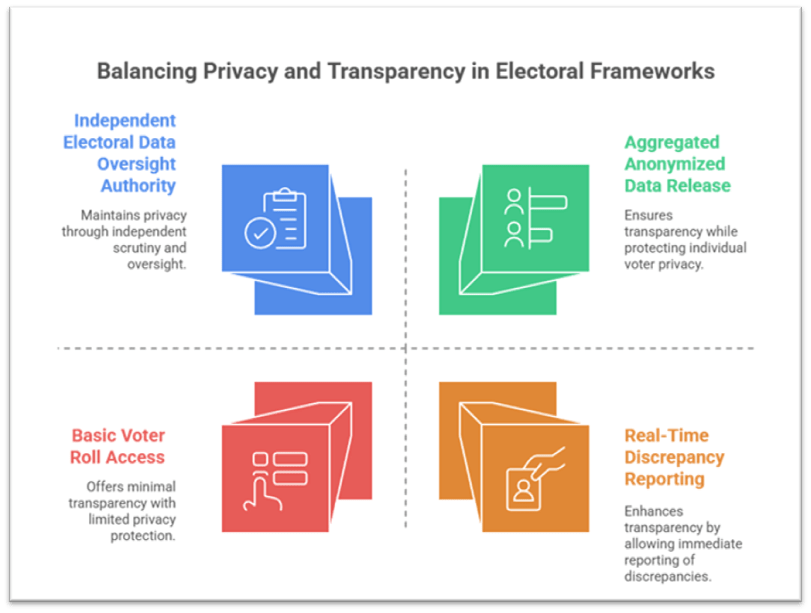
- A middle path involves releasing aggregated, anonymized booth-level data while protecting individual voter identities. The ECI could adopt tiered access systems, where authenticated researchers, political representatives, and the judiciary access data at different levels of granularity, ensuring both transparency and privacy.
Technology-Enabled Accountability
- Deployment of AI-based pattern detection and blockchain technology can help audit voter rolls and booth-level data without compromising privacy.
- Initiatives like the National Voters’ Service Portal (NVSP) and ERONet (Electoral Roll Management System) already support partial transparency; their scope can be expanded to allow real-time discrepancy reporting while masking personal identifiers.
Institutional and Legal Reforms
- Establishing an Independent Electoral Data Oversight Authority can mediate between transparency demands and privacy obligations. Periodic public audits by neutral agencies and Parliamentary oversight mechanisms can ensure that booth-level recordings and voter databases are managed within a constitutional framework.
- Similar models exist in Canada’s Elections Oversight Office and Australia’s Electoral Commission, ensuring independent scrutiny without endangering voter confidentiality.
Conclusion:
The challenge of balancing voter privacy and electoral transparency is not a zero-sum equation but a democratic necessity. As India modernizes its electoral machinery, data governance, institutional accountability, and legal safeguards must evolve in tandem. According to a recent Lokniti-CSDS survey, over 70% of Indian voters express strong trust in the Election Commission, yet this trust hinges on visible transparency and fairness. Moving forward, adopting privacy-by-design principles, fostering open but secure data ecosystems, and ensuring multi-stakeholder oversight can harmonize the twin goals of secrecy and openness. Only through such balanced reforms can India sustain both the sanctity and credibility of its democratic process.