Vishnu IAS Academy

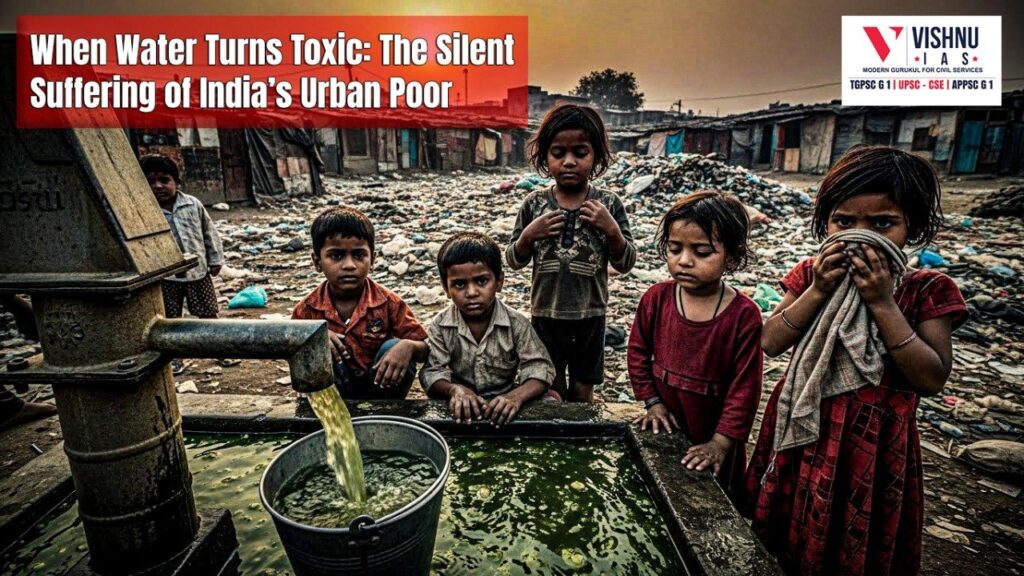
Contaminated municipal water supply in urban India disproportionately affects the urban poor, shaping public health outcomes and socio-economic vulnerability. Learn how unsafe water impacts livelihoods, health, governance, and equity.

Contaminated Municipal Water Supply and Its Socio-Economic Impact on the Urban Poor in India

Contaminated Municipal Water Supply and Its Socio-Economic Impact on the Urban Poor in India Contaminated Municipal Water Supply and Its Socio-Economic Impact on the Urban Poor in India The issue of contaminated municipal water supply in India highlights how deeply the urban poor are affected by unsafe drinking water, making their well-being the truest indicator […]
Contaminated Municipal Water Supply and Its Socio-Economic Impact on the Urban Poor in India Read More »

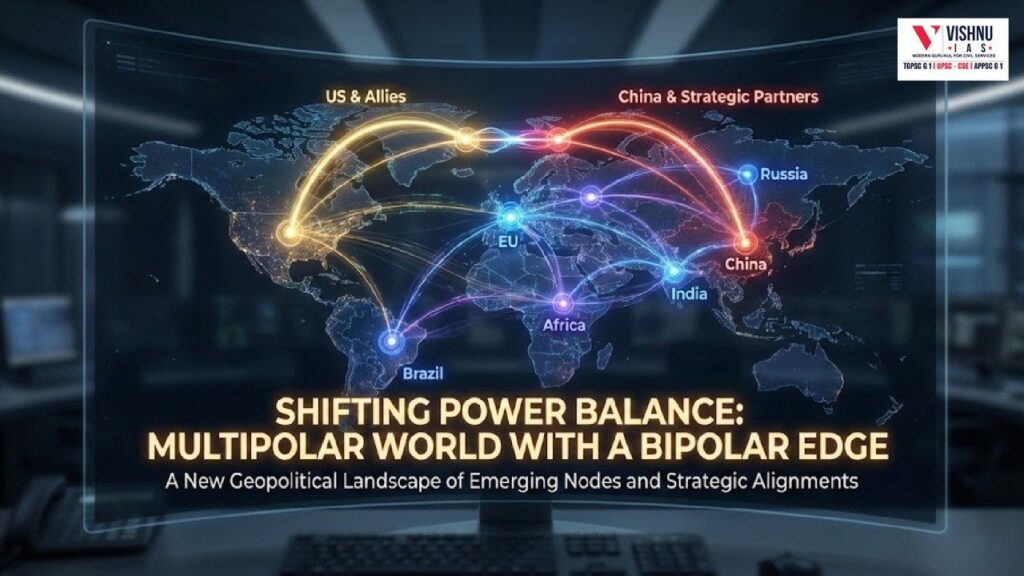
Discover how fluid multipolarity shapes the contemporary international order and how Russia’s emergence as a swing power introduces a bipolar character into this evolving global system.

Fluid Multipolarity in the Contemporary International Order: How Russia as a Swing Power Adds a Bipolar Dimension

Fluid Multipolarity in the Contemporary International Order: How Russia as a Swing Power Adds a Bipolar Dimension Discover how fluid multipolarity shapes the contemporary international order and how Russia’s emergence as a swing power introduces a bipolar character into this evolving global system. Introduction: The contemporary international system is witnessing a transition from the post–Cold

Fluid Multipolarity in the Contemporary International Order: How Russia as a Swing Power Adds a Bipolar Dimension Read More »

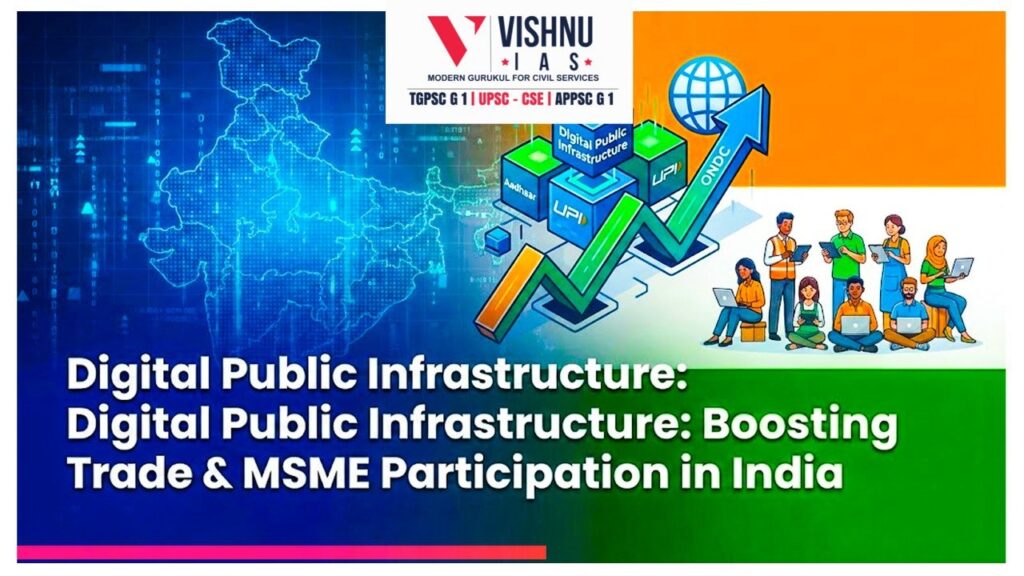
Digital Public Infrastructure is transforming India’s economy by improving trade competitiveness and increasing MSME participation through platforms like ONDC, GeM, and Trade Connect, reducing costs and expanding market access.

How Digital Public Infrastructure Is Boosting India’s Trade Competitiveness and MSME Participation

How Digital Public Infrastructure Enhances India’s Trade Competitiveness and MSME Participation How Digital Public Infrastructure Enhances India’s Trade Competitiveness and MSME Participation Digital Public Infrastructure is playing a defining role in reshaping India’s trade competitiveness and expanding MSME participation in the economy. Platforms like the Government e-Marketplace (GeM), ONDC, and Trade Connect are improving efficiency,

How Digital Public Infrastructure Is Boosting India’s Trade Competitiveness and MSME Participation Read More »

India R&D ecosystem faces major structural challenges, including weak private sector participation in research spending compared to global innovation economies. This analysis examines systemic barriers and industry contribution gaps in India’s R&D framework.

India R&D Ecosystem: Structural Impediments and the Limited Role of Private Sector Research

India R&D Ecosystem: Structural Impediments and the Limited Role of Private Sector Research Introduction: Research and Development (R&D) constitutes the backbone of a nation’s long-term economic competitiveness, technological sovereignty and strategic autonomy. It encompasses systematic activities undertaken to increase the stock of knowledge and translate it into new products, processes and services. Despite housing nearly

India R&D Ecosystem: Structural Impediments and the Limited Role of Private Sector Research Read More »

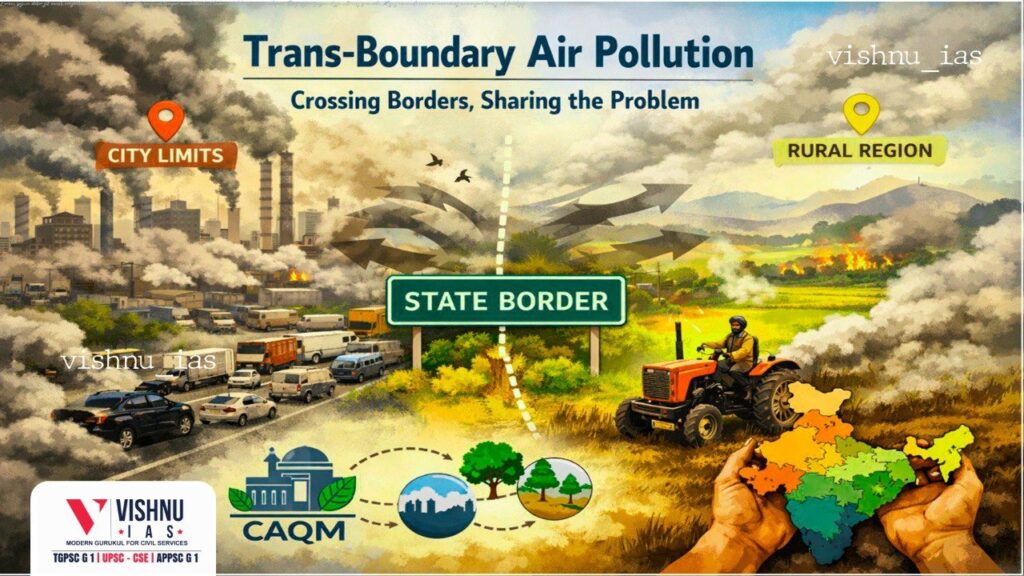
Explore how India manages trans-boundary air pollution across State borders and assess whether CAQM effectively tackles regional pollution beyond city limits in the NCR.

Managing Trans-Boundary Air Pollution in India: How Effectively Does CAQM Address Regional Pollution Beyond City Limits?

Managing Trans-Boundary Air Pollution in India: How Effectively Does CAQM Address Regional Pollution Beyond City Limits? Managing Trans-Boundary Air Pollution in India: How Effectively Does CAQM Address Regional Pollution Beyond City Limits? Trans-boundary air pollution has become a significant governance challenge in India, compelling policymakers to rethink regional environmental cooperation. Introduction: Air pollution has evolved

Managing Trans-Boundary Air Pollution in India: How Effectively Does CAQM Address Regional Pollution Beyond City Limits? Read More »

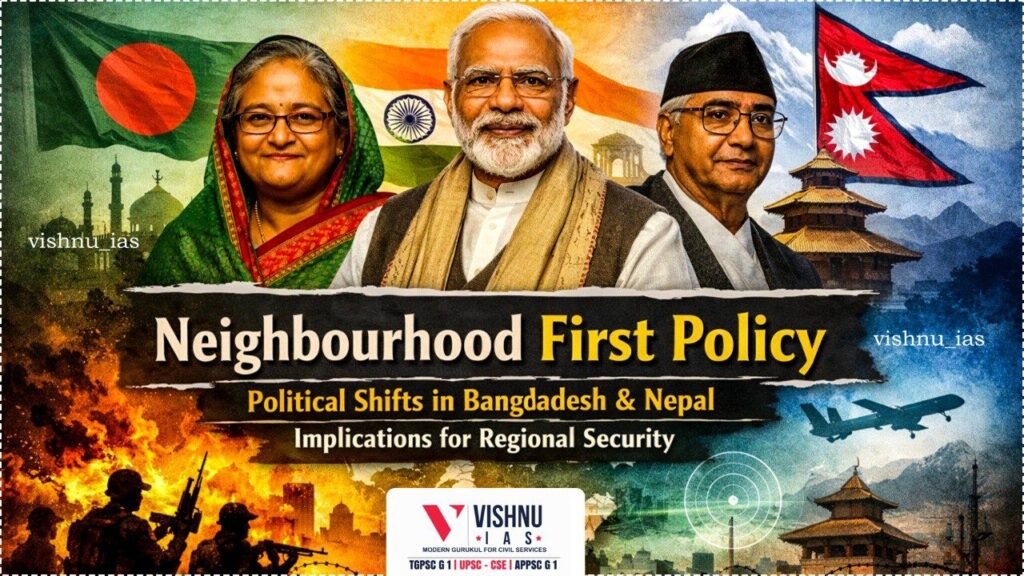
Critically examine the effectiveness of India’s Neighbourhood First Policy in the context of political transitions in Bangladesh and Nepal, and explore how these shifts influence India’s diplomacy, regional stability, and long-term security environment in South Asia.

Critically Examining India’s Neighbourhood First Policy Amid Political Transitions in Bangladesh and Nepal

  Critically Examining India’s Neighbourhood First Policy Amid Political Transitions in Bangladesh and Nepal India’s Neighbourhood First Policy seeks to prioritise political trust, economic integration, development partnership and security cooperation with South Asian neighbours as a foundation for India’s rise as a regional and global power. The approach aligns with India’s constitutional vision of peaceful

Critically Examining India’s Neighbourhood First Policy Amid Political Transitions in Bangladesh and Nepal Read More »

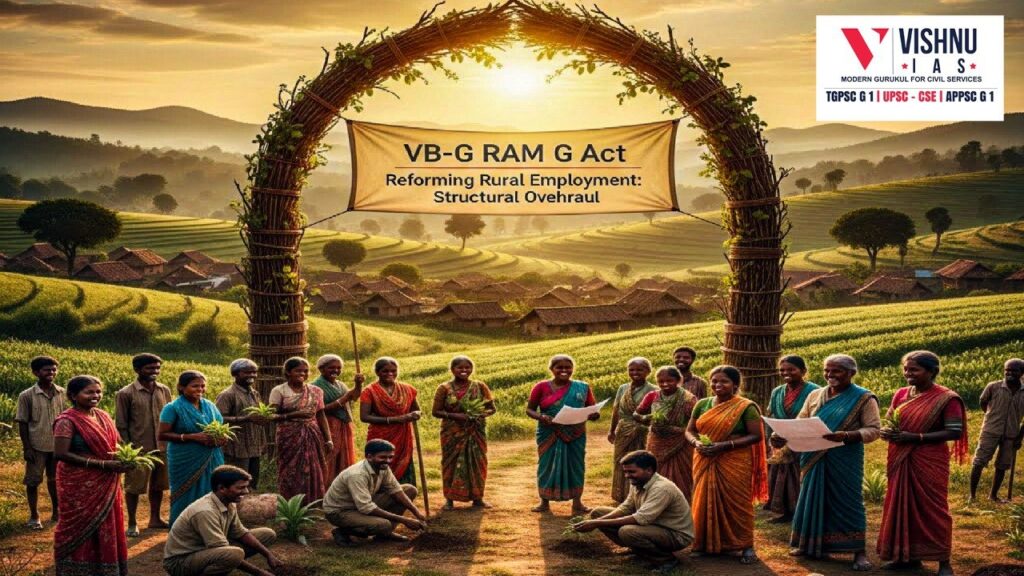
The VB-G RAM G Act 2025 introduces structural reforms to eliminate ghost entries, ensure wage accountability, and enable durable rural asset creation in India.

VB-G RAM G Act 2025: Structural Reforms to End Ghost Entries and Fragmented Rural Asset Creation

VB-G RAM G Act 2025: Structural Reforms to End Ghost Entries and Fragmented Rural Asset Creation <strong Introduction The VB-G RAM G Act 2025 marks a decisive shift in India’s rural employment architecture, addressing long-standing weaknesses of rural wage employment programmes such as ghost job cards, fragmented asset creation and weak enforceability of worker rights.

VB-G RAM G Act 2025: Structural Reforms to End Ghost Entries and Fragmented Rural Asset Creation Read More »

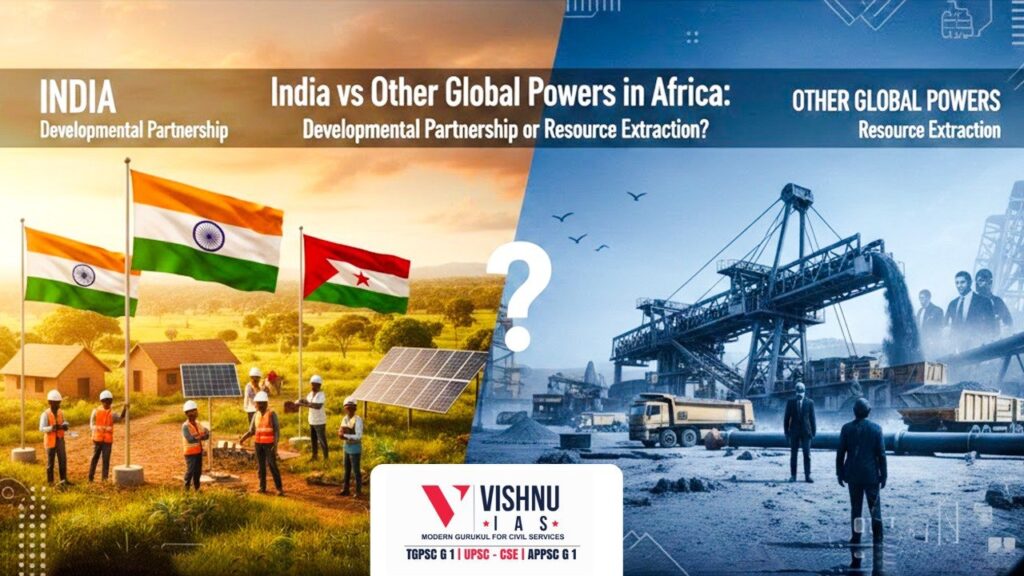
The India Model of developmental partnership with Africa focuses on capacity building, demand-driven cooperation and sustainable growth, offering a clear contrast to extractive investment models followed by other global powers.

India Model of Developmental Partnership with Africa: A Sustainable Alternative to Extractive Investment Models

India Model of Developmental Partnership with Africa: A Sustainable Alternative to Extractive Investment Models The India Model of developmental partnership with Africa refers to a cooperative, demand-driven and capacity-building approach that prioritises mutual benefit, local ownership, and long-term sustainability, rather than short-term profit extraction. Rooted in shared anti-colonial solidarity and South-South Cooperation, India’s engagement with

India Model of Developmental Partnership with Africa: A Sustainable Alternative to Extractive Investment Models Read More »

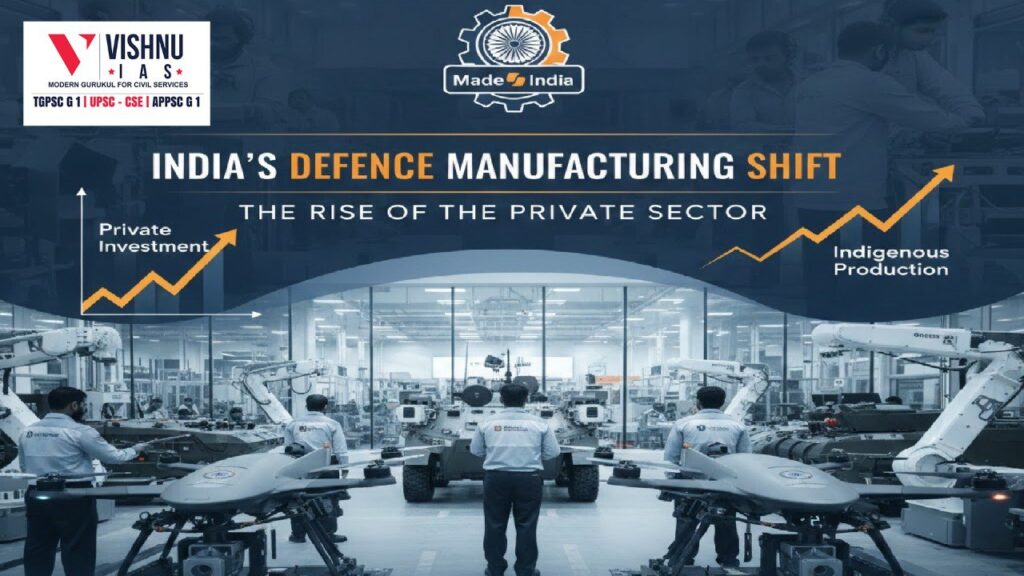
India’s defence manufacturing ecosystem is being reshaped by the domestic private sector. This blog examines how private firms are transforming India from a major arms importer into a global defence manufacturing hub, while analysing persistent regulatory hurdles that still constrain exports, innovation, and scale.

Role of Domestic Private Sector in Transforming India into a Global Defence Manufacturing Hub

Role of Domestic Private Sector in Transforming India into a Global Defence Manufacturing Hub The domestic private sector in India’s defence manufacturing has emerged as a central force in the country’s strategic shift from being one of the world’s largest arms importers to a credible global defence manufacturing hub. This transformation aligns with India’s broader

Role of Domestic Private Sector in Transforming India into a Global Defence Manufacturing Hub Read More »

Scroll to Top