
Weaponization of Tariffs and Global Trade Breakdown: India’s Trade Negotiations and Energy Policy
Weaponization of Tariffs and Global Trade Breakdown: India’s Trade Negotiations and Energy Policy

Weaponization of Tariffs and Global Trade Breakdown: India’s Trade Negotiations and Energy Policy
Chinese Economy Structural Shift: From Investment-Led Growth to New Productive Forces and Lessons for India The Chinese economy structural shift represents a long-term transformation in the composition of growth drivers, sectoral output, and sources of productivity. China’s recent economic trajectory illustrates such a shift—from a high-investment, export-heavy model to one increasingly driven by domestic consumption
Currency Devaluation in India: Why It Fails When Inflation Is Low and Trade Barriers Are Non-Economic Currency devaluation in India refers to a deliberate or market-driven decline in the value of a country’s currency against foreign currencies, often expected to boost exports and correct external imbalances. In India’s current economic scenario, however, this traditional adjustment
Introduction The concept of Spheres of Influence refers to an informal geopolitical arrangement in which a powerful state claims predominant strategic, political, or security interests over a defined region, limiting the autonomy of other states and discouraging external intervention. Though never codified in international law, this practice shaped 19th- and early 20th-century imperial politics and
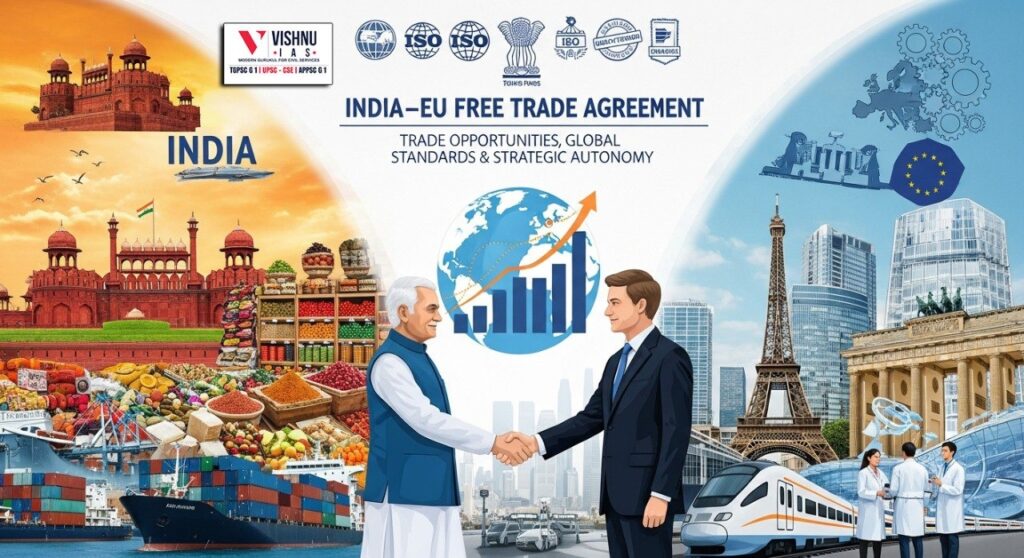
India–EU Free Trade Agreement: Significance for Trade, Standards and Strategic Autonomy Introduction India’s engagement with the European Union (EU) in 2026 marks a qualitative shift from traditional bilateralism to bloc-level diplomacy, reflecting the EU’s character as a 27-member regulatory and economic union rather than a single national actor. With the India–EU Free Trade Agreement emerging
India–EU Free Trade Agreement: Significance for Trade, Standards and Strategic Autonomy Read More »

Lokpal as a Constitutional Filter: Balancing Investigative Independence and Executive Protection Lokpal as a constitutional filter has emerged as a crucial governance debate in India’s anti-corruption discourse, particularly in the context of corruption probes against public servants and the tension between investigative autonomy and executive protection. Introduction Corruption poses a systemic challenge to constitutional governance,
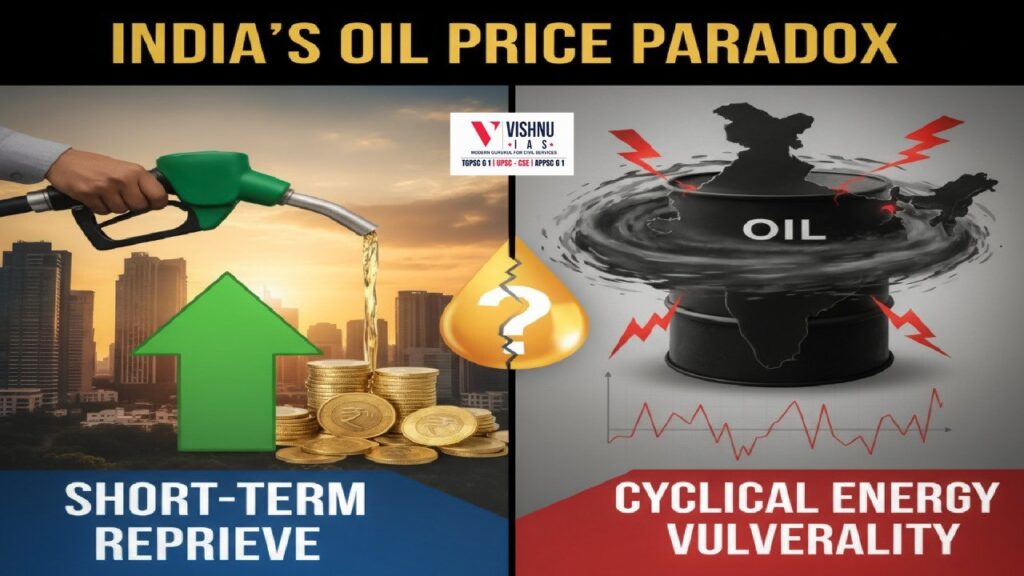
Lower Oil Prices: A Short-Term Reprieve for India’s Economy, but a Warning on Energy Dependence Lower Oil Prices: A Short-Term Reprieve for India’s Economy, but a Warning on Energy Dependence The global oil market remains central to the economic and strategic calculus of major energy-importing nations, and for India the stakes are unusually high. The
The Rise of Remote Work: How It’s Reshaping Cities and Urban Life Read More »
UPSC CSE Telugu Compulsory Language Paper – Pattern, Syllabus & Preparation Tips UPSC CSE Telugu Compulsory Language Paper – Pattern, Syllabus & Preparation Tips Quick summary: The UPSC Telugu paper is a qualifying mains paper (300 marks) that tests matriculation-level Telugu: comprehension, essay, précis, translation and grammar. Minimum qualifying marks: 75 (25%). All answers must
UPSC CSE Telugu Compulsory Language Paper – Pattern, Syllabus & Tips Read More »

Ensuring Citizen-Only Electorate in India: Constitutional Role of Election Commission and Legal Safeguards Context: The foundation of India’s democratic process is adult suffrage, restricted to citizens only. Articles 324 and 326 of the Constitution vest the Election Commission of India (ECI) with the power to prepare and revise electoral rolls under continuous supervision. To safeguard
Electoral Roll Integrity in India: Impact of Non-Citizen Inclusions and Legal Remedies Electoral roll integrity is central to the foundation of India’s democratic framework. Free and fair elections are the cornerstone of a democratic polity, and the electoral roll ensures that only eligible citizens participate in choosing their representatives. According to Article 326 of the
Electoral Roll Integrity in India: Impact of Non-Citizen Inclusions and Legal Remedies Read More »