Introduction:
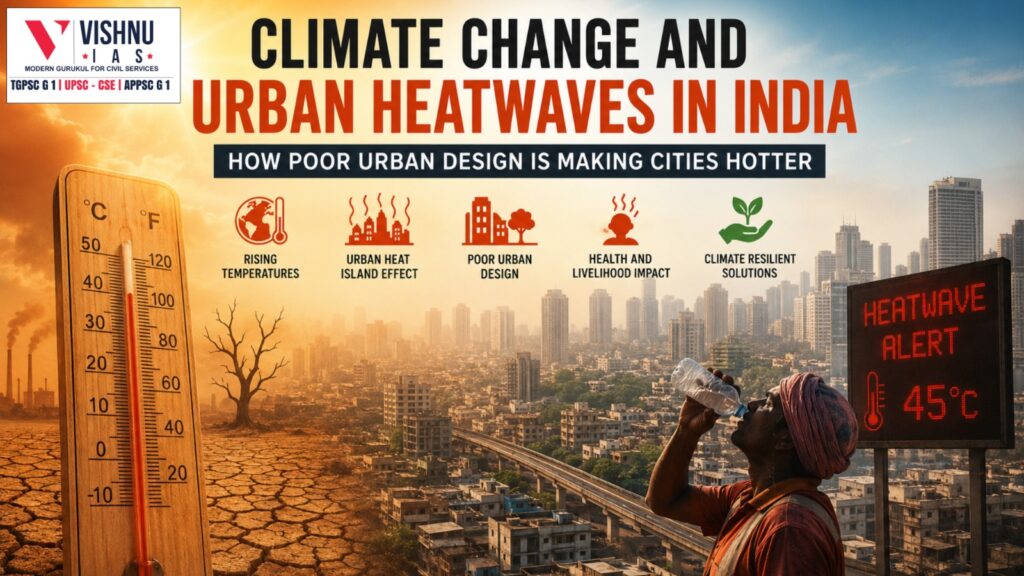
- A heatwave is a prolonged period of abnormally high temperatures that exceeds the climatological threshold prescribed by the India Meteorological Department (IMD). In recent years, heatwaves have evolved from episodic weather events into recurring climate-induced disasters with significant implications for public health, labour productivity, food security, energy demand and urban governance.
- India’s Core Heatwave Zone, covering parts of northwestern, central and eastern India, has witnessed a statistically significant rise in both the frequency and duration of heatwave spells since the 1960s. Simultaneously, rapid urbanisation has intensified the Urban Heat Island (UHI) effect, causing many Indian cities to remain several degrees hotter than surrounding rural regions.
- The interaction between global climate change and poor urban design has transformed heatwaves from a seasonal inconvenience into a major developmental challenge, particularly for outdoor workers, informal-sector labourers, the elderly and low-income populations.
Body:
Climate Change As A Driver Of Increasing Heatwave Frequency And Intensity
1. Rising Global Temperatures and Changing Climate Baselines
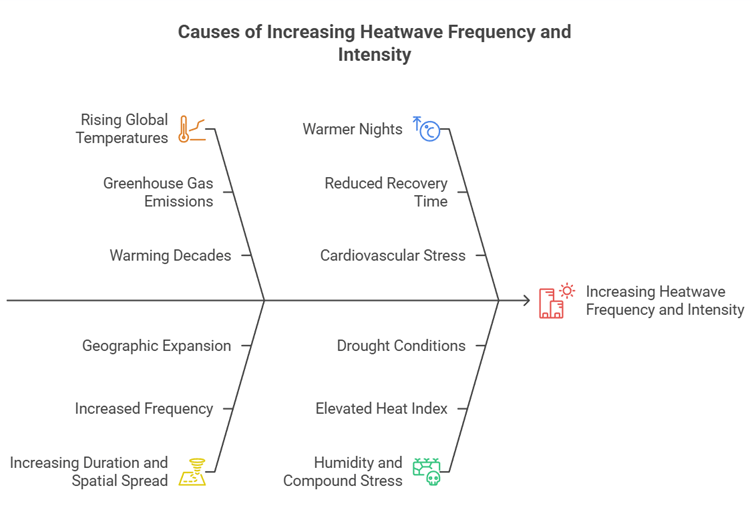
- Human-induced greenhouse gas emissions have increased average global temperatures, causing heatwaves to begin from a much hotter baseline and reach higher peak temperatures.
- The period from 2015-2025 has been recorded among the warmest decades globally, indicating a persistent warming trend rather than isolated extreme events.
- Increasing land-surface temperatures over South Asia have amplified the likelihood of consecutive days crossing heatwave thresholds, especially in Rajasthan, Gujarat, Madhya Pradesh and Telangana.
- Example: Sri Ganganagar crossing 48°C demonstrates how baseline warming is pushing temperatures closer to physiological tolerance limits.
2. Increasing Duration and Spatial Spread of Heatwaves
- IMD analyses indicate that heatwave frequency over India’s Core Heatwave Zone has increased over recent decades, while their duration and maximum persistence have also risen significantly.
- Heatwaves are no longer confined to traditional hotspots and are increasingly affecting eastern, coastal and peninsular regions.
- Scientific projections suggest that future warming could lead to longer and more geographically widespread heatwave events across India.
- Example: Nagpur’s annual heatwave days have increased dramatically over the last five decades, reflecting the long-term intensification of extreme heat events.
3. Warmer Nights, Humidity and Compound Heat Stress
- Rising night-time temperatures reduce the body’s ability to recover from daytime heat exposure, increasing cardiovascular and respiratory stress.
- Growing humidity levels elevate the heat index, making temperatures feel significantly hotter than recorded values.
- The combination of heatwaves with drought conditions creates compound climate extremes that intensify agricultural losses and health risks.
- Case Study: North India Heat Crisis
- Studies indicate a rise in night-time temperatures across states and increasing humidity levels during recent years, resulting in dangerous nocturnal heat stress and reduced thermal relief.
How Poor Urban Design Amplifies Heatwave Lethality
1. Urban Heat Island Effect and Heat-Trapping Infrastructure
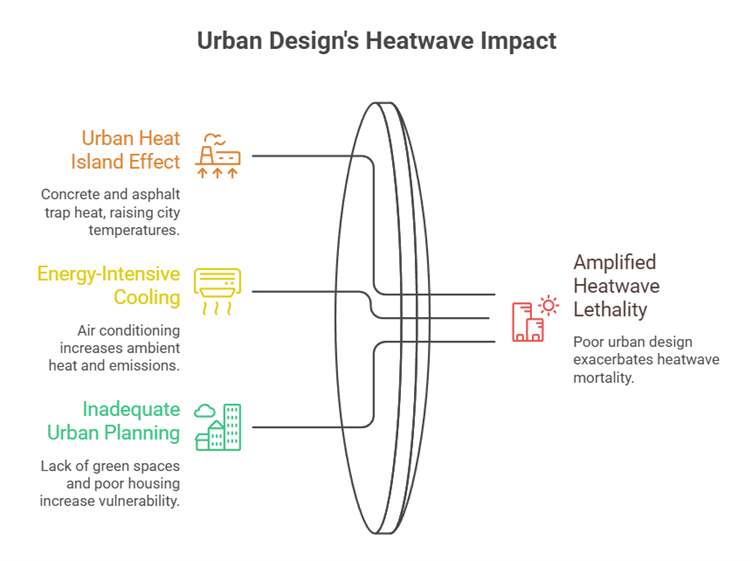
- Dense concentrations of concrete, asphalt, glass façades and paved surfaces absorb solar radiation during the day and re-radiate heat at night.
- Reduced vegetation and shrinking urban green spaces limit natural cooling through evapotranspiration.
- Consequently, many cities experience temperatures substantially higher than surrounding rural areas, particularly after sunset.
- Example: Delhi
- Extensive concretisation, declining tree cover and dense built-up zones have contributed to severe urban heat retention and rising humidity levels.
- Case Study: Hyderabad
- Traditional neighbourhoods with thick walls, shaded streets and vegetation demonstrate lower heat stress compared to newer high-rise commercial districts dominated by concrete structures.
2. Energy-Intensive Cooling and the Heat Feedback Loop
- Rising temperatures increase dependence on air-conditioning, especially among middle- and upper-income groups.
- Air conditioners transfer indoor heat outdoors, increasing ambient urban temperatures and reinforcing the Urban Heat Island effect.
- Greater electricity demand also raises emissions when power generation depends on fossil fuels, creating a self-reinforcing cycle between warming and cooling demand.
- Example: Commercial districts in metropolitan cities witness significant localised temperature increases due to concentrated cooling infrastructure and waste heat emissions.
3. Inadequate Urban Planning and Social Vulnerability
- Informal settlements often lack insulated housing, ventilation, reliable electricity and access to cooling infrastructure.
- Urban expansion frequently encroaches upon wetlands, lakes and green buffers that traditionally moderated local temperatures.
- Street vendors, sanitation workers, delivery personnel and construction workers remain exposed to direct solar radiation for extended periods.
- Case Study: Ahmedabad Heat Action Plan
- Following severe heat-related mortality, Ahmedabad pioneered a heat action framework involving early-warning systems, public awareness campaigns, cooling centres and hospital preparedness, demonstrating the importance of urban governance in reducing heat-related deaths.
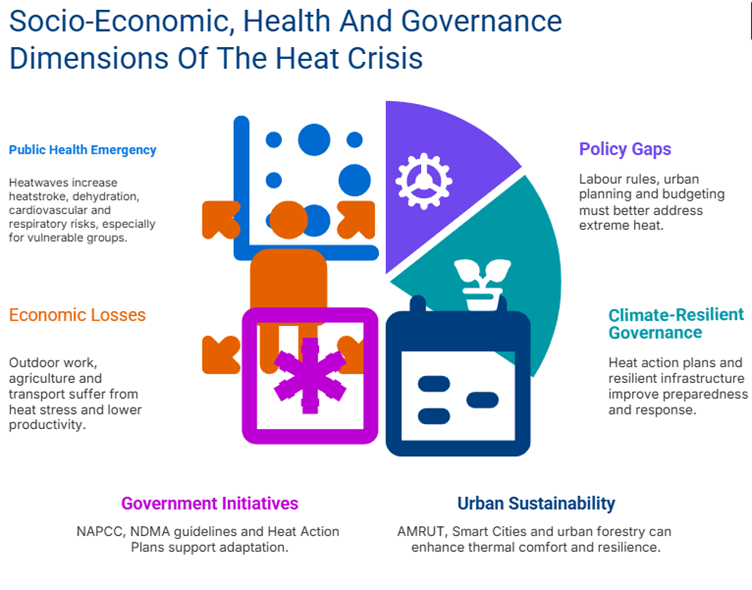
Socio-Economic, Health And Governance Dimensions Of The Heat Crisis
1. Public Health Emergency and Human Mortality
- Heatwaves increase incidences of heatstroke, dehydration, cardiovascular disorders, kidney diseases and respiratory complications.
- Elderly persons, children, pregnant women and individuals with pre-existing illnesses are particularly vulnerable.
- Persistent exposure to high temperatures without night-time cooling significantly raises mortality risks.
- Example: The 2015 Indian heatwave caused thousands of deaths across several states, highlighting the devastating consequences of prolonged extreme heat.
2. Economic Losses and Labour Productivity Decline
- Outdoor workers in agriculture, construction, mining and transport sectors face reduced working hours and increased occupational hazards.
- Heat stress lowers productivity, reduces earnings and disproportionately affects workers in the informal economy.
- Agricultural output suffers through soil moisture depletion, crop stress and increased irrigation demand.
- Example: Rising temperatures across northwestern and central India have led to recurring disruptions in agricultural operations and labour-intensive economic activities.
3. Policy Gaps and Need for Climate-Resilient Governance
- Existing labour regulations often mandate restrictions on outdoor work during dangerous heat conditions, yet enforcement remains weak.
- Urban planning regulations frequently overlook passive cooling architecture, reflective materials and mandatory green infrastructure.
- Heat management remains inadequately integrated into municipal budgeting, disaster management and public health planning.
- Government Initiatives
- National Action Plan on Climate Change (NAPCC) promotes adaptation and resilience measures.
- National Disaster Management Authority (NDMA) Heatwave Guidelines provide protocols for preparedness and response.
- Heat Action Plans (HAPs) have been adopted by multiple states and cities to improve early warning systems and emergency response.
- AMRUT, Smart Cities Mission, Urban Forestry initiatives, Nagar Van Yojana and climate-resilient infrastructure projects aim to enhance urban sustainability and thermal comfort.
Conclusion:
- Heatwaves in India are no longer merely meteorological events; they are the outcome of a dangerous interaction between anthropogenic climate change, unplanned urbanisation, ecological degradation and social vulnerability. Scientific evidence indicates increasing heatwave frequency, longer duration and rising night-time temperatures across large parts of the country, while rapidly expanding urban heat islands further magnify human exposure and mortality risks.
- A sustainable response requires integrating climate-resilient urban design, nature-based solutions, heat-sensitive labour governance, early-warning systems, and low-carbon development pathways. As India continues to urbanise rapidly, investing in cooler, greener and more inclusive cities can significantly reduce heat-related risks while enhancing public health, economic productivity and long-term climate resilience.