
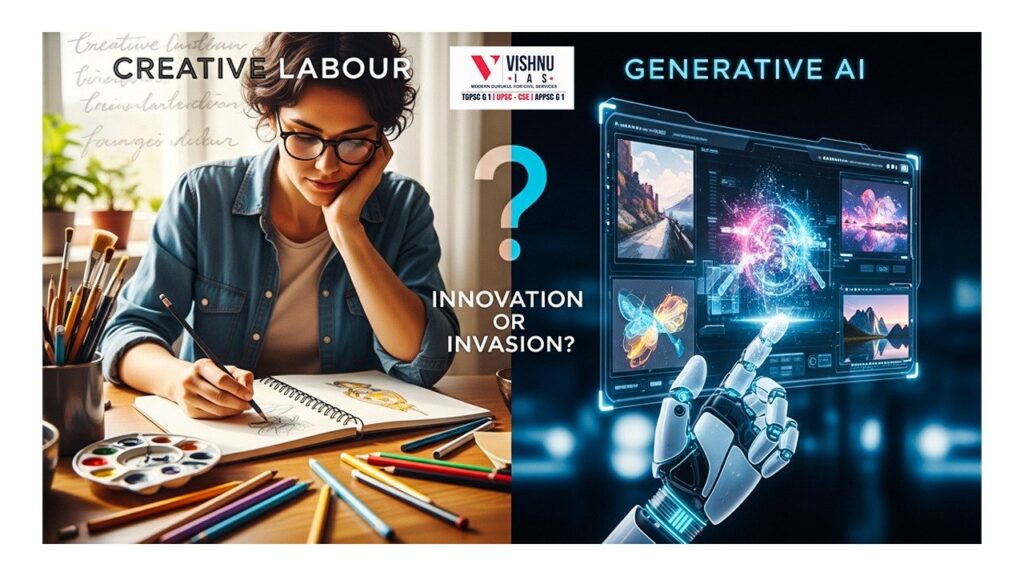
Generative AI and Copyright: Balancing Creative Labour Protection and Technological Progress
Generative AI and Copyright are reshaping the global policy debate on how to protect creative labour while encouraging technological progress. Copyright refers to the legal protection granted to creators over their original works, enabling them to control reproduction, distribution, and adaptation for a defined period. Historically designed to incentivise creativity, copyright has expanded significantly in scope and duration, often lasting for the author’s lifetime plus 70 years, creating long monopolies over knowledge.
At the same time, generative Artificial Intelligence (AI)—which depends on analysing vast datasets—has introduced new tensions between protecting creative labour and enabling technological innovation. According to the World Intellectual Property Organization, global intellectual property filings reached record levels in recent years, while Bloomberg Intelligence estimates that the generative AI market could exceed $1.3 trillion by 2032, reflecting its transformative economic potential. This convergence has intensified debates on balancing creator rights, public access, and technological progress, especially in developing digital economies.
I. Importance of Copyright Protection in Safeguarding Creative Labour
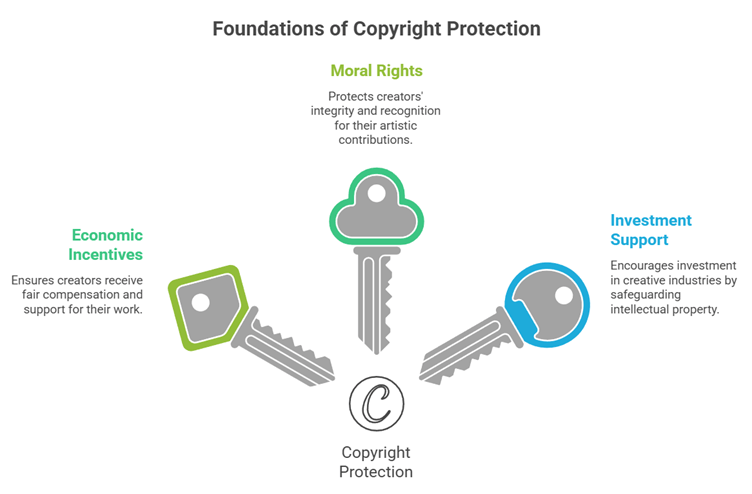
1. Ensuring Economic Incentives and Livelihood Security
Copyright provides creators with exclusive economic rights, enabling monetisation through royalties, licensing, and sales, thereby supporting creative industries which contribute significantly to national economies. For instance, India’s media and entertainment sector contributes billions annually and supports millions of jobs.
Example and Case Study: Getty Images vs Stability AI—Getty Images filed a lawsuit alleging unauthorised use of copyrighted images in AI training, highlighting concerns that unrestricted AI training could undermine artists’ income and ownership rights.
Government Initiative: India’s Copyright Act, 1957 (amended 2012) strengthened performers’ rights and introduced statutory royalties, ensuring musicians and creators receive fair compensation from digital platforms.
2. Protecting Moral Rights and Creative Recognition
Copyright ensures moral rights, including attribution and protection against distortion, preserving the integrity and identity of creators, which is essential for cultural preservation and artistic dignity.
Example and Case Study: The protection of traditional art forms like Madhubani and Warli paintings under intellectual property frameworks ensures recognition and prevents commercial exploitation without attribution.
Government Initiative: The National Intellectual Property Rights Policy (2016) promotes awareness and enforcement mechanisms to protect creators’ ownership and recognition.
3. Supporting Investment and Innovation in Creative Industries
Strong copyright frameworks encourage publishers, film producers, and software companies to invest in creative production, knowing their investments are protected from unauthorised copying.
Example and Case Study: The global success of streaming platforms like Netflix and Amazon Prime demonstrates how copyright protection enables investment in original content, fostering cultural and economic growth.
Government Initiative: The Digital India initiative promotes digital publishing and creative entrepreneurship, strengthening India’s digital creative ecosystem.
II. Challenges Posed by Copyright Regimes to Technological Progress and AI Innovation
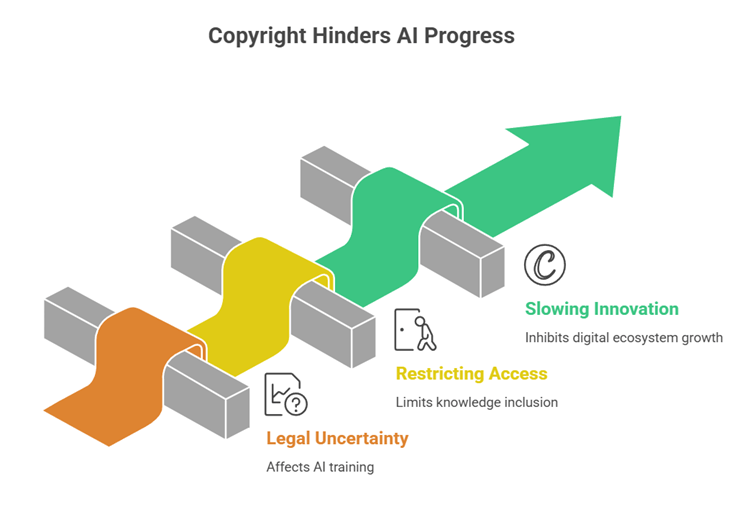
1. Legal Uncertainty Affecting AI Training and Data Access
Generative AI models require massive datasets, often including copyrighted works, but restrictive copyright regimes create legal ambiguity, hindering AI research and development.
Example and Case Study: The lawsuit filed by news publishers against OpenAI reflects ongoing disputes over whether copyrighted text can be used to train AI models.
Global Example: Jurisdictions such as the European Union, Japan, and Singapore have introduced text and data mining exceptions, recognising that machine analysis differs from human creative consumption.
2. Restricting Access to Knowledge and Technological Inclusion
Overly rigid copyright laws can prevent access to knowledge, especially for vulnerable groups such as visually impaired persons, thereby restricting educational and technological inclusion.
Example and Case Study: Implementation of the Marrakesh Treaty enabled accessible-format books for visually impaired individuals, improving inclusion and literacy.
Government Initiative: India’s Sugamya Pustakalaya, an accessible digital library, provides books in accessible formats, enhancing knowledge access for persons with disabilities.
3. Slowing Innovation and Digital Ecosystem Growth
Copyright restrictions can inhibit technological innovation, including search engines, AI, and digital archiving, which rely on copying data temporarily for analysis.
Example and Case Study: Authors Guild vs Google Books (2015)—the court ruled that digitisation of books for search purposes constituted fair use, recognising technological benefits without harming authors’ commercial interests.
Government Initiative: The IndiaAI Mission, launched with a budget exceeding ₹10,000 crore, aims to build public datasets and AI infrastructure, but legal clarity on data usage remains critical.
III. Need for a Balanced and Adaptive Copyright Framework in the AI Era
1. Promoting Innovation While Safeguarding Creators’ Interests
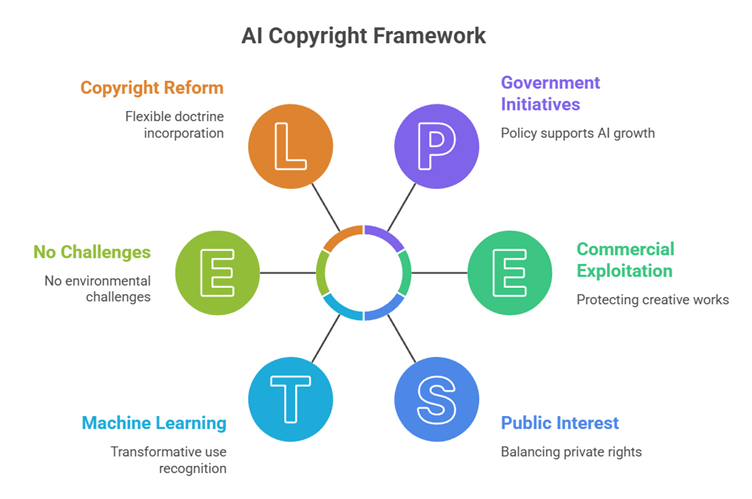
Copyright must evolve to recognise machine learning as a transformative use, ensuring innovation while protecting commercial exploitation of creative works.
Example and Case Study: Japan’s copyright exception permitting data analysis demonstrates a balanced approach enabling AI growth without undermining creator rights.
Government Initiative: India’s National Data Governance Framework Policy proposes anonymised datasets for public and AI use while protecting individual and intellectual property rights.
2. Encouraging Open Innovation and Public Digital Commons
Open-source datasets and AI models contribute to collective knowledge and innovation, reducing barriers to technological entry and enabling broader participation.
Example and Case Study: India’s Bhashini initiative enables open-access language datasets, supporting AI development in Indian languages and improving digital inclusion.
Government Initiative: The Open Government Data Platform India provides publicly accessible datasets, supporting research, transparency, and innovation.
3. Strengthening Public Interest Safeguards and Equitable Digital Access
Copyright law must incorporate flexible doctrines such as fair use, compulsory licensing, and accessibility exceptions to balance private rights with public interest.
Example and Case Study: The Marrakesh Treaty implementation demonstrates how copyright reform can enable accessibility while preserving authors’ economic interests.
Government Initiative: The National Digital Library of India, with millions of accessible digital resources, demonstrates balancing copyright protection with public educational access.
Conclusion
The emergence of generative AI has fundamentally reshaped the relationship between copyright protection and technological innovation, highlighting the need for a balanced, forward-looking framework. While copyright remains essential for protecting creative labour and sustaining cultural industries, excessive restrictions risk impeding innovation, access to knowledge, and economic growth.
According to global estimates, AI could contribute over $15 trillion to the world economy by 2030, while creative industries remain a major source of employment and cultural identity. The way forward lies in adopting flexible copyright exceptions, promoting open digital commons, strengthening accessibility provisions, and encouraging public digital infrastructure.
By aligning copyright law with technological realities, governments can ensure that creativity, innovation, and access to knowledge coexist harmoniously, fostering inclusive and sustainable digital development in the 21st century.
Recap: