Strengthening Women in STEM Careers in India: Challenges, Strategies & Government Initiatives
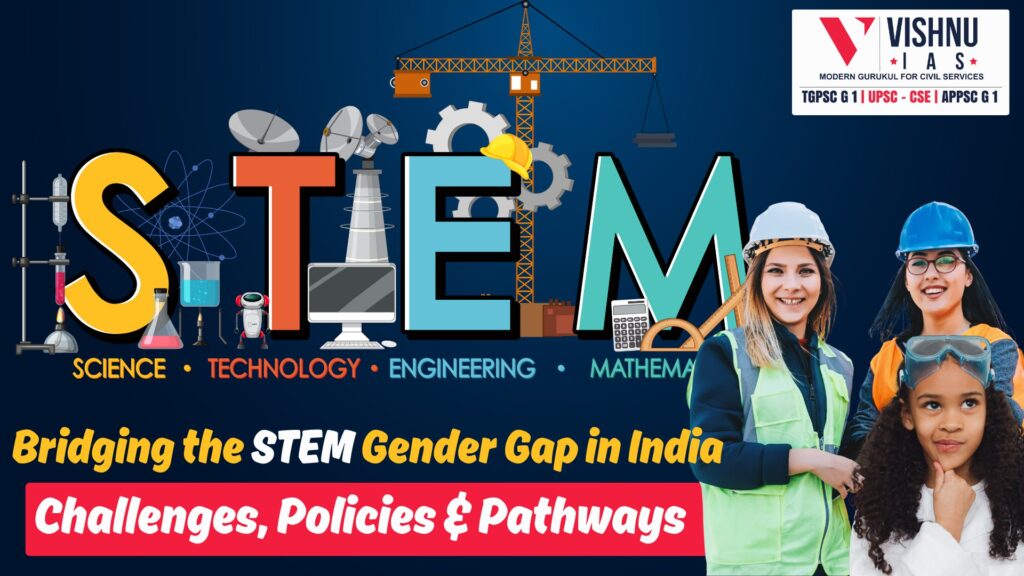
Women in STEM careers in India face a stark mismatch between academic achievement and workforce participation. While 43% of STEM graduates are women, only 27% are employed in the STEM sector. Addressing this gap is vital for achieving gender equality in STEM and unlocking India’s economic and innovation potential.
Women account for 43 percent of STEM graduates in India, yet they represent only 27 percent of the STEM workforce, highlighting a significant disparity between education and employment. Systemic obstacles—including gender stereotypes, safety issues, and career disruptions due to marriage and caregiving—restrict their professional advancement. Closing this gap is crucial not only for achieving gender equity but also for realizing India's complete economic and innovative capabilities.
Key Challenges:
- Social stereotypes: Perceptions that "mechanical is masculine" or "coding is not for girls" discourage females from engaging in technical professions.
- Workplace safety and infrastructure: Insufficient transportation, absence of gender-sensitive amenities, and the risk of harassment compel numerous qualified women to withdraw.
- Career discontinuities: Societal expectations regarding marriage, childbirth, and caregiving lead women to take career breaks without established pathways for re-entry.
- Data disparity: While 43 percent of graduates in STEM fields are women, merely 27 percent enter the workforce; on a global scale, only 31.5 percent of researchers are women (UNESCO 2021).
Government Initiatives:
- The New Education Policy 2020: Incorporates life skills and vocational training, reforming Industrial Training Institutes to provide high-quality technical education in smaller towns and rural areas.
- The gender-focused budget: The proportion of the gender budget increased from 6.8 percent (2024–25) to 8.8 percent (2025–26), with ₹4.49 lakh crore allocated for women's initiatives.
- Skilling and entrepreneurship initiatives: Skill India, Digital India, PM Vishwakarma Yojana, Beti Bachao Beti Padhao, term loans available for women entrepreneurs, and National Skill Training Institutes.
- Rural–urban dynamics: Female labour force participation rate (FLFPR) has risen to 41.7 percent, primarily due to rural women (47.6 percent), while the urban FLFPR stands at 25.4 percent (PLFS 2023–24).
Role of Industry:
- Transitioning from passive recruitment to proactive facilitation: Implementing structured mentorship, establishing gender-balanced internship pathways, and providing scholarships.
- Workplace transformations: Creating gender-neutral job roles, offering flexible working hours, ensuring safe transportation, establishing grievance redressal mechanisms, and providing childcare assistance.
- Collaborative efforts: The UN Women’s WeSTEM initiative in Madhya Pradesh and Gujarat, in partnership with the Micron Foundation, serves as a model for community involvement, role modeling, safety workshops, and family awareness campaigns.
Economic Imperatives:
- McKinsey Global Institute: Inclusion of an additional 68 million women in India's workforce by 2025 could enhance the GDP by $700 billion.
- World Bank: Increasing female workforce participation to 50 percent could result in a 1 percent GDP growth boost.
Way Forward:
- Enhance evaluations based on data regarding STEM attrition and implement focused interventions at the school, college, and early-career levels.
- Encourage return-to-work initiatives and mid-career retraining for women following career breaks.
- Expand industry-driven apprenticeship frameworks and "STEM ambassadors" initiatives in rural regions.
- Require gender-segregated assessments of workplace safety and pay equity.
- Initiate nationwide campaigns aimed at changing perceptions—mobilizing families, community leaders, and educators to normalize the presence of women in STEM.
Conclusion:
Empowering women in STEM careers in India demands a “whole-of-nation” strategy that weaves together robust policy, industry leadership and societal mindset change. By dismantling barriers—social, structural and cultural—India can harness the untapped talent of millions of women, fueling its innovation engine and economic resilience. In doing so, we advance not only gender equity but also the vision of a truly developed, inclusive Bharat.