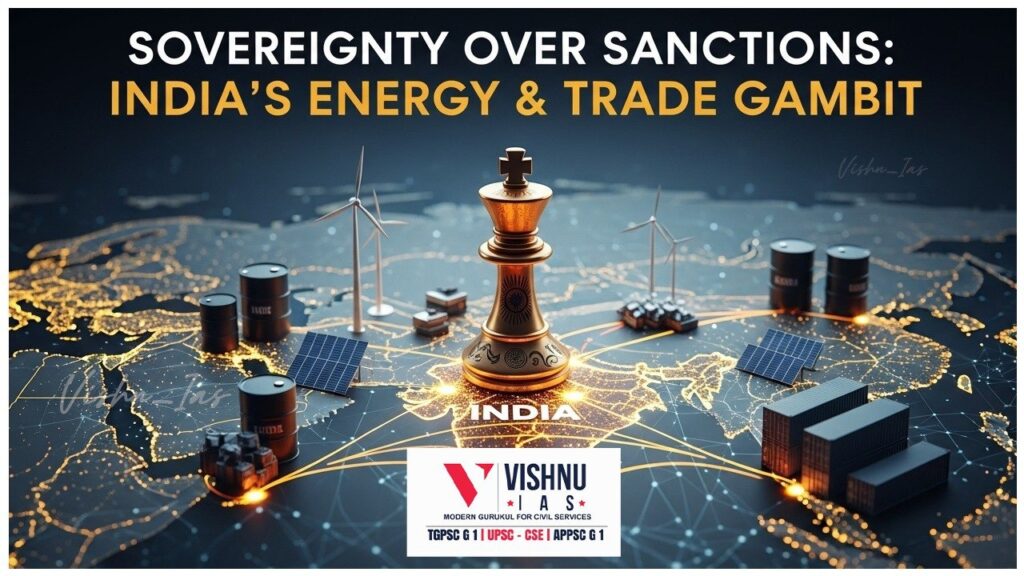
The weaponization of tariffs reflects a breakdown of the global trade system. This analysis examines India’s trade negotiations and energy policy amid coercive diplomacy and neo-mercantilism.

Weaponization of Tariffs and Global Trade Breakdown: India’s Trade Negotiations and Energy Policy

Weaponization of Tariffs and Global Trade Breakdown: India’s Trade Negotiations and Energy Policy

The weaponization of tariffs has emerged as a defining feature of the contemporary global economy, signalling a deeper breakdown of the political system governing international trade. For India, this shift has direct consequences for trade negotiations, energy security, and strategic autonomy in an increasingly coercive global order.

Introduction

  • The contemporary global trade regime was built on the assumption that open markets, multilateral rules, and restrained state power would collectively deliver growth, stability, and political cooperation. Over the last decade, however, trade has increasingly been deployed as an instrument of coercive statecraft, with tariffs, sanctions, and conditional access replacing negotiated reciprocity.
  • Recent episodes of tariff threats linked to foreign policy compliance, including pressures tied to energy sourcing and strategic alignment, illustrate that global trade is no longer governed primarily by rules, but by power asymmetries.
  • This marks a decisive shift from liberal multilateralism to neo-mercantilism, where trade surpluses are treated as strategic assets and deficits as vulnerabilities. For a large but still developing economy like India, this transformation has profound implications for trade negotiations, energy security, and long-term developmental autonomy.

Body

I. Breakdown of the Liberal Multilateral Trade Order

From rule-based trade to power-based bargaining

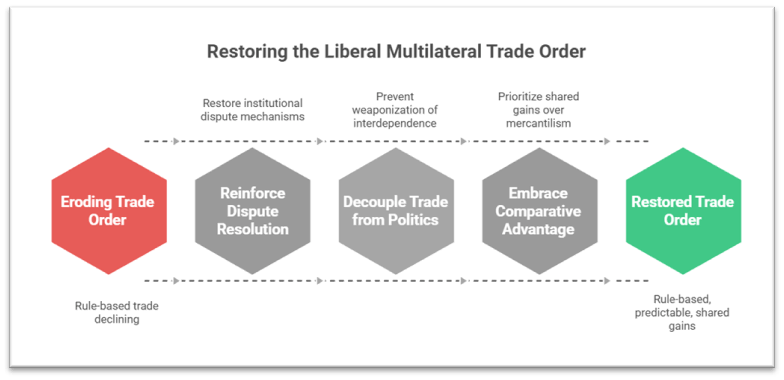
  • The increasing use of unilateral tariffs, secondary sanctions, and trade-linked diplomatic threats reflects the erosion of institutional dispute resolution mechanisms.
  • Example: The effective paralysis of the dispute settlement mechanism of global trade institutions has normalised retaliatory tariffs without adjudication, weakening predictability for exporters like India in steel, aluminium, and pharmaceuticals.

Weaponization of interdependence

  • Trade and finance are now leveraged to extract political concessions, converting economic interdependence into strategic vulnerability.
  • Case Study: Energy trade restrictions imposed on certain countries have reshaped global oil flows, compelling import-dependent economies to recalibrate procurement strategies under political pressure rather than market logic.

Return of mercantilist logic

  • National industrial policy, domestic capacity building, and export dominance have replaced the earlier emphasis on comparative advantage and shared gains.
  • Example: Large-scale subsidy regimes for domestic manufacturing in advanced economies have crowded out developing-country exports while remaining formally compliant with weakened global norms.

II. India’s Trade Negotiations in a Mercantilist World

Shrinking negotiating space for developing economies

  • India’s trade talks increasingly involve issue-linkage, where market access is conditioned on alignment with strategic or security preferences.
  • Example: Recent bilateral negotiations have seen pressure to lower tariffs on sensitive sectors while offering limited reciprocal access, undermining domestic manufacturing objectives tied to self-reliance initiatives.

Balancing openness with strategic autonomy

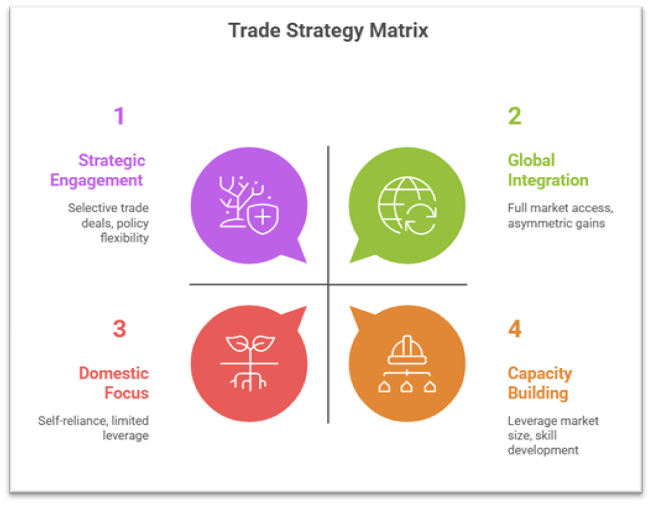
  • India has adopted a calibrated approach, selectively engaging in trade agreements while resisting frameworks that constrain policy flexibility in agriculture, digital governance, and public procurement.
  • Case Study: India’s decision to stay out of certain mega-regional trade arrangements reflected concerns over asymmetric gains and industrial hollowing rather than protectionism per se.

Domestic capacity as the real trade leverage

  • In a world where trade outcomes reflect power, state capacity, infrastructure, and human capital matter more than formal tariff schedules.
  • Example: Production-linked incentive frameworks aim to convert India’s market size into negotiating strength, but uneven skill development and logistics bottlenecks limit their full impact.

III. Energy Policy as a Theatre of Conditional Diplomacy

Energy security versus geopolitical alignment

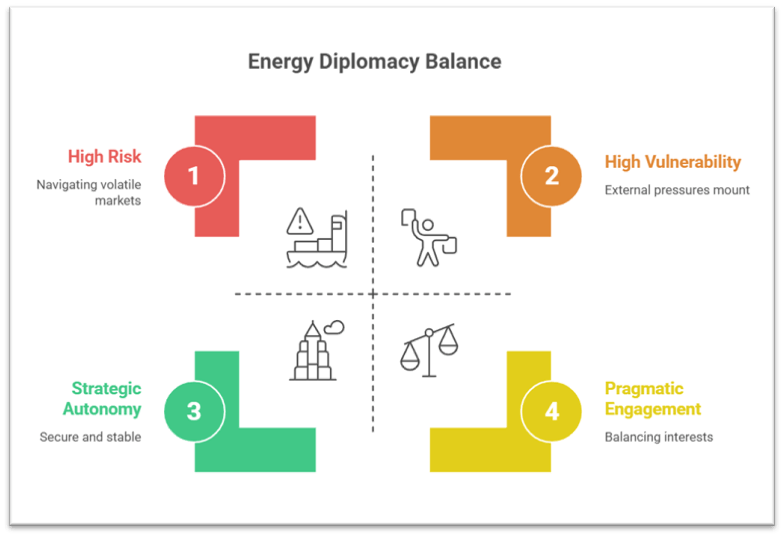
  • India’s energy policy has increasingly been scrutinised through a geopolitical lens, despite its developmental imperative to secure affordable supplies.
  • Example: Diversification of crude oil imports toward discounted sources helped contain domestic inflation and fiscal stress, even as it invited diplomatic pressure from major partners.

Market pragmatism under political pressure

  • Decisions on energy sourcing are no longer evaluated solely on price and reliability but also on diplomatic signalling.
  • Case Study: India’s calibrated adjustment of import shares without formal commitments reflects an attempt to balance external expectations with domestic economic stability.

Transitioning without external dependence

  • Long-term resilience lies in reducing exposure to coercive energy diplomacy through diversification and transition.
  • Example: National missions on green hydrogen, solar manufacturing, and ethanol blending are designed to insulate energy security from external political leverage.

Conclusion:

  • The weaponization of tariffs and conditional diplomacy underscores that the political architecture of global trade has shifted irreversibly from cooperation to competition. For India, this moment presents both constraint and opportunity.
  • Sustained public investment in health, education, and technology diffusion can convert demographic scale into economic power, reducing vulnerability to coercive trade practices.
  • As global growth increasingly fragments into competing blocs, India’s ability to act as an autonomous economic pole will depend less on rhetoric and more on institutional strength, social cohesion, and inclusive growth.

Recap:

Leave a Comment

Your email address will not be published. Required fields are marked *

Scroll to Top