
New Portals on Ayush Sector 

New Portals on the Ayush Sector CTRI (Clinical Trial Registry of India), RMIS (Research Management Information System), SAHI (Showcase of Ayurveda Historical Imprints), AMAR (Ayush Manuscripts Advanced Repository), and e-Medha are the five new Ayush Sector portals that have been developed (electronic Medical Heritage Accession). Traditional and unconventional systems of medicine and healing, such as

New Portals on Ayush Sector  Read More »

Central Information Commission (CIC) -upsc-vishnu ias

Central Information Commission (CIC) 

Central Information Commission (CIC)  The Supreme Court has directed the Union of India and all States to file status reports on the latest developments regarding vacancies and pendency in the Central Information Commission (CIC) and State Information Commissions (SICs). Key Points AboutCentral Information Commission (CIC): Establishment: TheCIC was established by the Central Government in 2005, under the provisions of the Right to Information Act (2005). It is not a constitutional body. Members: It consists of a Chief Information Commissioner and not more than ten Information Commissioners. Appointment:They are appointed by the President on the recommendation of a committee consisting of the Prime Minister as Chairperson, the Leader of Opposition in the Lok Sabha and a Union Cabinet Minister nominated by the Prime  Jurisdiction:The jurisdiction of the Commission extends over all Central Public Authorities. Tenure:The Chief Information Commissioner and an Information Commissioner shall hold office for such term as prescribed by the Central Government or until they attain

Central Information Commission (CIC)  Read More »

Kappa Variant: Covid-19-upsc-vishnu ias

Kappa Variant: Covid-19

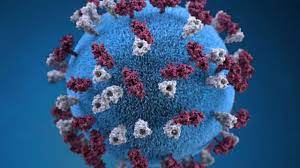
Kappa Variant: Covid-19 Recently, two cases of the Kappa variant of Covid-19 have been recorded in Uttar Pradesh (UP). According to the World Health Organisation (WHO), Kappa is one of the two Covid-19 variants, the other being Delta, first identified in India. Earlier a new variant Lambda was reported from Peru. Key Points About: As

Kappa Variant: Covid-19 Read More »

United Nations Convention against Transnational Organized Crime (UNTOC)-upsc-vishnu ias

United Nations Convention against Transnational Organized Crime (UNTOC)

United Nations Convention against Transnational Organized Crime (UNTOC) The United Nations Convention against Transnational Organized Crime (UNTOC) is the main international instrument in the fight against organized crime. It is an important international treaty under the United Nations system. The Convention against Transnational Organized Crime or UNTOC is also known as the Palermo Convention since

United Nations Convention against Transnational Organized Crime (UNTOC) Read More »

Bangladesh-Bhutan-India-Nepal (BBIN) initiative-upsc-anthropology-vishnu ias

Bangladesh-Bhutan-India-Nepal (BBIN) initiative

Bangladesh-Bhutan-India-Nepal (BBIN) initiative Bangladesh, Bhutan, India and Nepal (BBIN) had signed a framework MVA in  June 2015 to enable movement of passenger and cargo vehicles across borders among the four countries. Bhutan has not yet ratified the pact for its entry to come into force. However, Bhutan had given its consent for the BBIN MVA

Bangladesh-Bhutan-India-Nepal (BBIN) initiative Read More »

Forest Rights Act, 2006

Forest Rights Act, 2006 Historical Background A large number of people especially the scheduled tribes have lived in and around forests for a long period in symbiotic relationship.  This relationship has led to formalized or informal customary rules of use and extraction, often governed by ethical beliefs and practices that have ensured that forests are

Forest Rights Act, 2006 Read More »

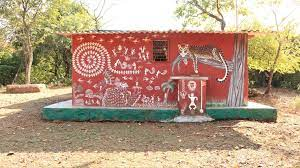
Deifying of leopards by Maharashtra's Warli tribe has prompted a better man-wild relationship 'Waghoba' is the institution under which the Warli tribe of Maharashtra has been worshipping leopards. Across India, worship of nature as gods and goddesses is a common practice. The latest study by the Wildlife Conservation Society (WCS) India has documented how a big cat worshipped as a deity by indigenous people, has facilitated the coexistence between humans and leopards. An example of Maharashtra's Warli tribe has been cited in this regard, which explains that these people have been worshipping 'Waghoba' (a leopard or tiger deity) to gain protection from leopards, which has prompted their peaceful coexistence. This study was conducted by researchers affiliated with WCS-India, NINA, Norway, Inland Norway University of Applied Sciences, Norway and supported by Wildlife Conservation Trust. The fieldwork for the same was conducted between 2018 to 2019, across Mumbai suburban areas, Palghar and Thane districts of Maharashtra. To complete this study, an ethnographic approach was undertaken while collecting data where researchers conducted semi-structured interviews, participant observation and deeply understood all aspects of Waghoba, in the lives of the Warli. They also took part as an audience during the worship ceremonies, concurrent to documenting Waghoba shrines. This study, has been published in a special issue of Frontiers in Conservation Science: Human-Wildlife Dynamics, called 'Understanding Coexistence with Wildlife'. The researchers have noted that though negative interactions with leopards continue, they find much acceptance under 'Waghoba' - the institution under which the Warli tribe worships leopards. Further, during this study, over 150 shrines dedicated to Waghoba have been identified, despite incidents like that of livestock deprivation due to wild attacks continue. The people belonging to Warli believe in a reciprocal relationship, hence, they continue annual traditions, such as 'Waghbaras', to spare themselves from the wrath of this deity. The lead author of this study was quoted saying- "The main aim of the study is to diversify the way we understand and approach human-wildlife interactions. It does so by shedding light on how local institutions that contribute to co-existence are not devoid of conflict but have a role in negotiating the conflicts that arise." Relevance of such institutions in the modern era Such local arrangements that allay the conflict between man and animal may exist in several other cultures and landscapes. These traditional arrangements are relevant in the modern era as they are likely to act as tolerance-building mechanisms and build an understanding of the term 'peaceful coexistence among the upcoming generation. However, the authors of this study state that such conservation interventions are yet to recognise that landscapes have a history before their own point of entry into them. Moreover, when in the area of the Warli tribe, people have to address this issue with more caution as outsiders are no more dealing with just an animal, but a religious belief regarding which all cultures are sensitive.-anthropology-vishnu ias

  Deifying of leopards by Maharashtra’s Warli tribe has prompted a better man-wild relationship

  Deifying of leopards by Maharashtra’s Warli tribe has prompted a better man-wild relationship   ‘Waghoba’ is the institution under which the Warli tribe of Maharashtra has been worshipping leopards.     Across India, worship of nature as gods and goddesses is a common practice. The latest study by the Wildlife Conservation Society (WCS) India has documented

  Deifying of leopards by Maharashtra’s Warli tribe has prompted a better man-wild relationship Read More »

Scroll to Top