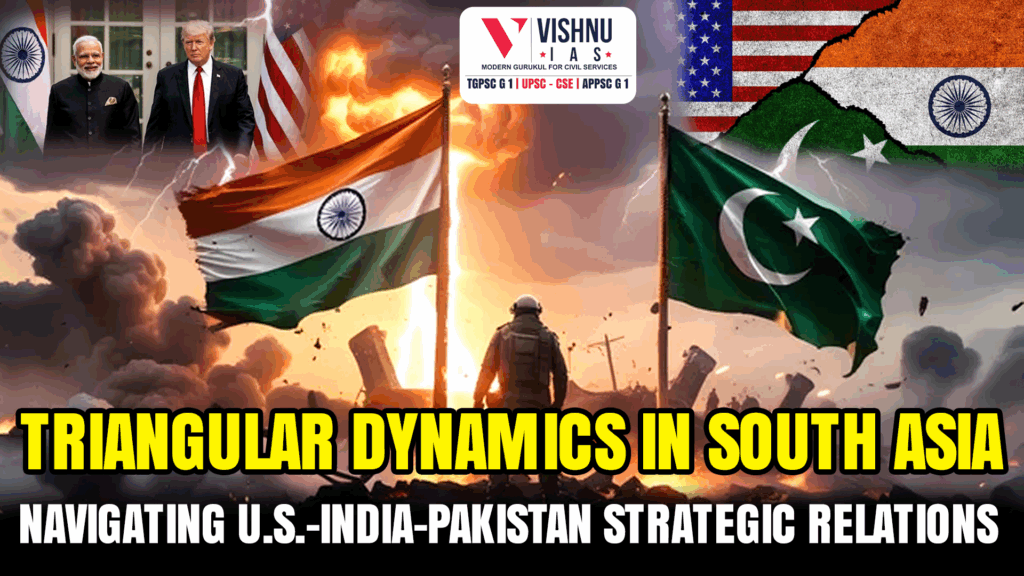
Triangular Dynamics in South Asia: Navigating U.S.–India–Pakistan Strategic Relations
Triangular Dynamics in South Asia continue to shape the region's security framework, influenced by fragile relations between Washington, New Delhi, and Islamabad. The recent engagement of the U.S. with Pakistan during President Trump's administration—evidenced by prominent meetings and the restoration of military assistance—has disrupted the post-Cold War balance that supported robust U.S.–India collaboration in counterterrorism and strategic alignment regarding China.
U.S.–Pakistan Recalibration
- Transactional Diplomacy: The Trump administration reinstated security assistance to Pakistan, including a notable allocation of $397 million for F-16s, and welcomed Army Chief Asim Munir to the White House, indicating a shift back to deal-oriented approaches rather than long-term strategies.
- Strategic Utility: The renewed U.S. engagement with Islamabad is motivated by Pakistan’s geographical significance in Afghanistan and its potential for intelligence collaboration regarding Iran, echoing a narrative of Pakistan as a "phenomenal partner" as articulated by U.S. military officials.
Erosion of U.S.–India Strategic Convergence
- Counterterrorism Strains: Years of collaboration between India and the U.S. on counterterrorism financing and training—previously celebrated as a diplomatic success in the post–Cold War era—now face an uncertain trajectory as Washington shows increasing warmth towards Islamabad, despite its engagement in a "double-game."
- China Factor: India’s efforts to establish a principled partnership with the U.S. in countering China’s assertiveness in the region may be compromised if Pakistan regains favor with the U.S., potentially undermining New Delhi’s ambitions in the Indo-Pacific and the cohesion of the Quad.
India’s Doctrinal Shift
- Operation Sindoor: Following the Pahalgam terror attack, India executed cross-border strikes, signifying a break from its previous strategic restraint and heralding a "new normal" characterized by kinetic retaliation combined with global diplomatic efforts to isolate Pakistan.
- Sovereign Resolve: New Delhi’s refusal to accept third-party mediation regarding Kashmir highlights its commitment to addressing core security matters independently.
Pakistan’s Dual-Track Strategy
- Military Consolidation: The elevation of Asim Munir to the rank of Field Marshal solidifies the military's dominance within a "hard state" framework, resisting civilian oversight while projecting unwavering strength.
- Diplomatic Charm Offensive: Islamabad utilizes trade negotiations, rare-earth concessions, and personal relationships in Washington to regain lost diplomatic influence and present itself as a crucial regional mediator.
Regional and Geopolitical Implications
- Afghanistan and Iran: Pakistan’s logistical and intelligence contributions are vital for stabilizing Afghanistan in the aftermath of withdrawal and for monitoring Iran, thereby encouraging U.S. involvement despite historical mistrust.
- Two-Front Apprehensions: The close relationship between Beijing and Islamabad, coupled with Beijing's antagonism towards New Delhi, amplifies India's fears of facing simultaneous threats from both Pakistan and China.
Conclusion
The U.S. return to close ties with Pakistan underscores the clash between rapid, transactional diplomacy and its broader South Asian strategy. India must defend its hard-won U.S. partnership even as Washington rekindles engagement with Islamabad. Stabilising this triangular balance requires a nuanced U.S. approach that marries tactical gains with long-term alliances and bolsters civilian oversight in Pakistan.