Safeguarding Constitutionalism: How the U.S. and India Reshape Democratic Resilience
Safeguarding constitutionalism is not merely a legal requirement but a civic obligation in every democratic society. The comparative experiences of the United States and India demonstrate the fragility and strength of democratic resilience when confronted with internal crises and executive overreach.
Context
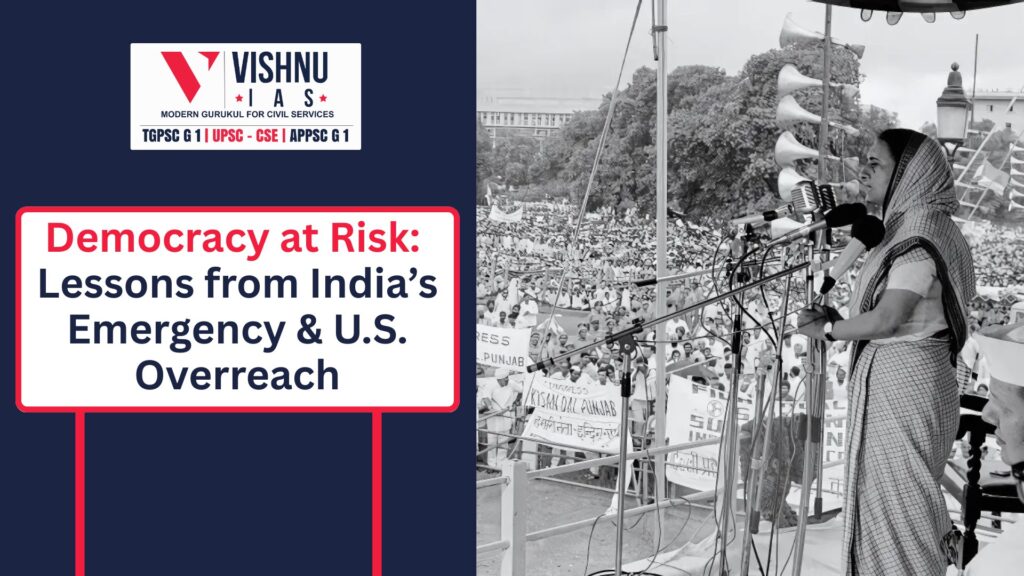
On July 4, Americans took Judge J. Michael Luttig’s warning to heart: preserving constitutional democracy demands unwavering vigilance. India’s 1975 Emergency under Indira Gandhi shows how legal mechanisms can be distorted to suspend fundamental rights and centralize power. It highlights how executive overreach and institutional complacency can hollow out even mature republics.
Constitutional Safeguards and Their Vulnerabilities
The constitutions of the United States and India establish the principles of separation of powers, fundamental rights, and provisions for emergencies.
- Article 352 of the Indian Constitution permits the suspension of rights in the event of "internal disturbance."
- The American counterpart—national emergencies and executive orders—can also be subject to misuse.
- Guarantees inscribed on parchment are inadequate without the presence of political will and strong judicial interpretation.
Institutional Roles and Failures
Effective oversight necessitates the decisive action of all democratic pillars.
- Judiciary: Justice H.R. Khanna’s solitary dissent during the Emergency in India serves as a prime example of moral fortitude in the defense of rights.
- Legislature: Both India’s Parliament and the U.S. Congress have shown reluctance or have facilitated abuses instead of exercising their oversight responsibilities.
- Civil service and law enforcement frequently prioritize the interests of those in power over the public good.
Democratic Culture and Political Restraint
Beyond established regulations, democracy relies on a cultural framework that honors constraints on authority.
- The parallel governance of Sanjay Gandhi during the Emergency exemplifies how unofficial power can circumvent constitutional frameworks.
- In the United States, the politicization of the Department of Justice poses a threat to the integrity of impartial institutions.
- Political parties and the media are obligated to cultivate a culture of humility in relation to constitutional principles.
Comparative Lessons and Policy Implications
Historical comparisons underscore the importance of constitutional resilience.
- H.V. Kamath’s caution in 1949 regarding India’s Emergency provisions reflected apprehensions similar to those concerning the Weimar Constitution.
- The 44th Amendment enhanced protective measures; however, the political culture continued to exhibit vulnerabilities.
- Contemporary democracies are required to routinely assess emergency legislation and bolster institutional autonomy.
Conclusion
The endurance of constitutional democracy hinges on active defence by institutions and citizens alike. Only through continual reaffirmation of checks, balances and democratic culture can republics resist the allure of unchecked power.