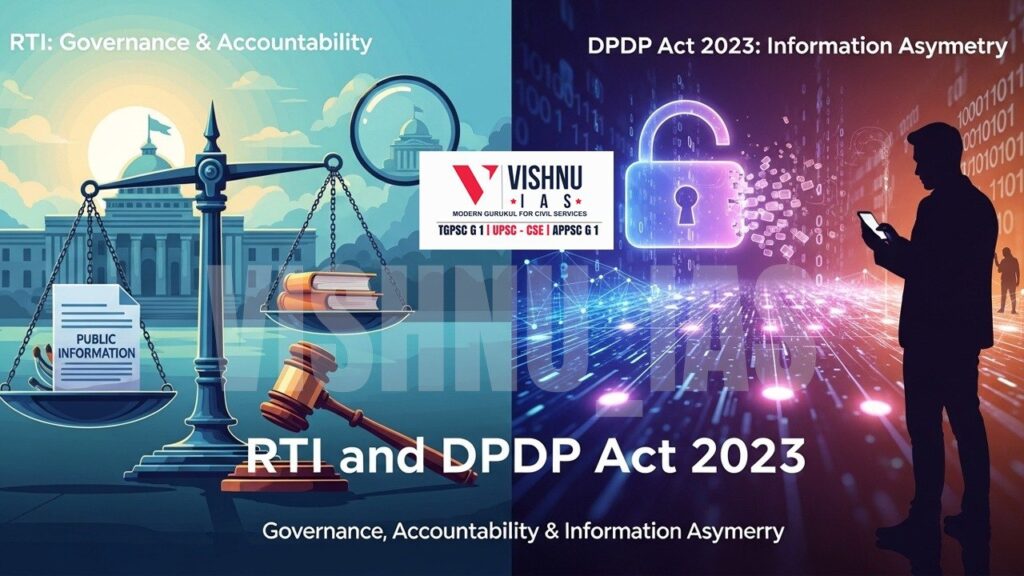
RTI Act and DPDP Act 2023: Has Information Asymmetry in Governance Returned?
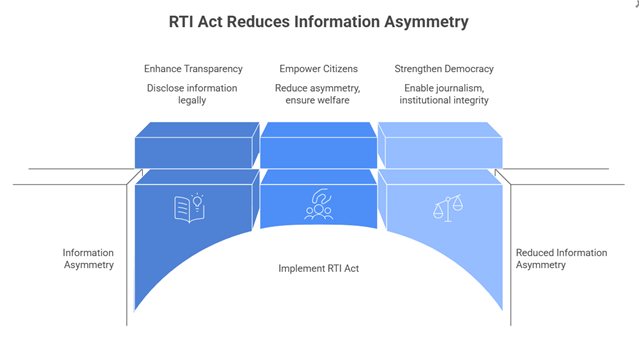
RTI Act and DPDP Act 2023 are at the center of India’s contemporary debate on transparency versus privacy. The Right to Information (RTI) Act, 2005 is a landmark legislation that operationalises the citizen’s fundamental right to know, which flows from Article 19(1)(a) of the Constitution guaranteeing freedom of speech and expression. Information asymmetry arises when the State possesses significantly more information than citizens, limiting democratic accountability and informed participation.
The RTI Act has played a transformative role in bridging this gap: since its enactment, over 6 million RTI applications are filed annually, making India’s transparency framework among the largest globally. The Second Administrative Reforms Commission (ARC) described RTI as the “master key to good governance,” and studies have shown its extensive use by ordinary citizens, especially in rural areas, to secure welfare entitlements, exposing corruption and enhancing administrative accountability.
However, the Digital Personal Data Protection (DPDP) Act, 2023, particularly its amendment to Section 8(1)(j) of RTI, has triggered concerns about whether it may reverse some of these gains by expanding restrictions on access to information.
I. Role of the RTI Act in Reducing Information Asymmetry
1. Enhancing Transparency and Accountability in Governance
- The RTI Act created a legal obligation on public authorities to disclose information, thereby weakening the culture of secrecy rooted in the colonial-era Official Secrets Act, 1923, and strengthening democratic oversight.
- Example: Commonwealth Games Scam (2010) – RTI applications exposed procurement irregularities and inflated contracts, contributing to investigations by the Central Bureau of Investigation and Comptroller and Auditor General, demonstrating RTI’s role in uncovering corruption in large public projects.
- Government initiatives like proactive disclosure under Section 4 of RTI, including publishing budgets, procurement details, and administrative decisions online, have reduced dependence on intermediaries and empowered citizens directly.
2. Empowering Citizens, Especially Marginalized and Vulnerable Groups
- RTI has reduced information asymmetry between citizens and local authorities, particularly benefiting those dependent on welfare schemes such as MGNREGA, Public Distribution System (PDS), and PM Awas Yojana, ensuring proper implementation and grievance redressal.
- Case Study: Mazdoor Kisan Shakti Sangathan (MKSS), Rajasthan – RTI was used to access wage records, exposing fake entries and ensuring rightful wage payments to rural labourers, demonstrating its importance in promoting social justice.
- Studies by civil society organizations have found that over 50% of RTI applicants belong to economically weaker sections, highlighting its accessibility and role in inclusive governance.
3. Strengthening Democratic Participation, Investigative Journalism, and Institutional Integrity
- RTI has enabled journalists and civil society organizations to access official records, enabling investigative reporting and promoting public debate on governance issues.
- Example: Disclosure of electoral candidate criminal records and assets through RTI and court rulings enhanced transparency in elections, strengthening democratic accountability.
- Institutions such as the Comptroller and Auditor General (CAG), Central Vigilance Commission (CVC), and Lokpal rely on transparency norms aligned with RTI principles to monitor governance and prevent corruption.
II. Provisions of the DPDP Act, 2023 and their Implications for Transparency
1. Expansion of Privacy Protection and Restriction on Disclosure
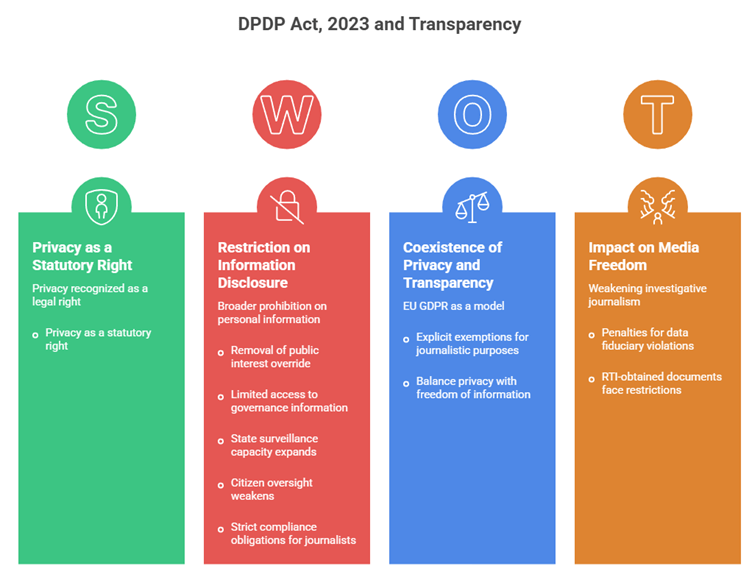
- The DPDP Act recognizes privacy as a statutory right, in line with the landmark judgment of Justice K.S. Puttaswamy vs Union of India, which declared privacy a fundamental right under Article 21.
- The amendment to Section 8(1)(j) of RTI removes the “public interest override,” replacing it with a broader prohibition on disclosure of personal information.
- This may limit access to governance-related information such as asset declarations of public officials, audit records, procurement details, and public expenditure records, which often involve personal identifiers but are critical for accountability.
2. Creation of a “Legitimate Uses” Asymmetry Favoring State Power
- Section 7 of the DPDP Act allows the government to process personal data without consent under certain circumstances, such as delivery of public services and law enforcement.
- Citizens may face restrictions in accessing similar personal data through RTI, potentially creating imbalance where State surveillance capacity expands while citizen oversight weakens.
- Government initiatives like Digital India, Aadhaar integration, and data-driven welfare systems increase State access to personal data, making transparency safeguards essential.
3. Impact on Media Freedom and Public Interest Disclosures
- The DPDP Act introduces strict compliance obligations for entities handling personal data, with penalties up to ₹250 crore for violations.
- Exposés on irregularities in public procurement and financial mismanagement often rely on RTI documents containing personal identifiers, which may now face restrictions.
- International comparison: The European Union’s GDPR includes exemptions for journalistic purposes, demonstrating that privacy protection and transparency can coexist.
III. Does the DPDP Act Reinstate Information Asymmetry? A Balanced Assessment
1. Arguments Suggesting Reinstatement of Asymmetry
- Removal of the public interest override reduces discretion of Public Information Officers to release information where accountability outweighs privacy concerns.
- Disclosure of public servants’ performance, corruption investigations, and procurement irregularities may now face denial.
- This could weaken RTI’s role in addressing principal-agent problems, reducing accountability.
2. Arguments Supporting Privacy Protection
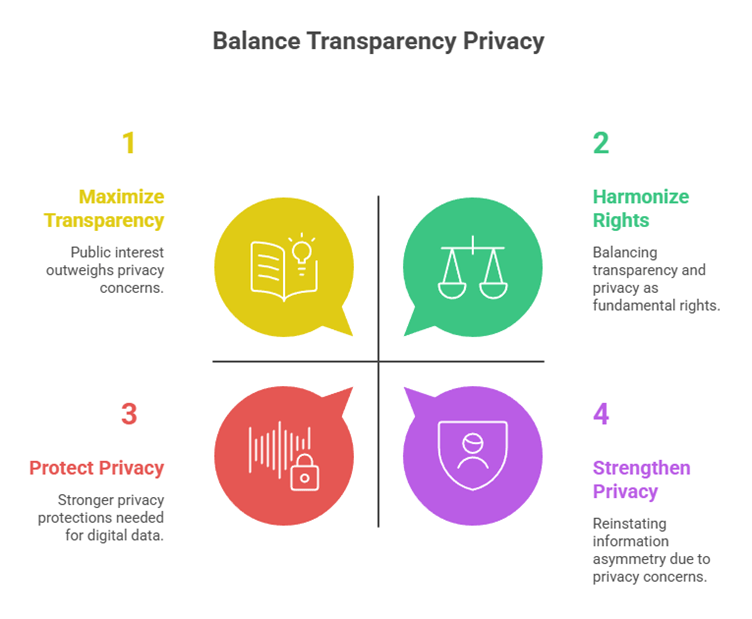
- The digital economy has significantly increased personal data collection, requiring stronger safeguards.
- The Digital Personal Data Protection Board aims to regulate processing and protect informational autonomy.
- Balancing transparency with privacy aligns with constitutional principles, as both are recognized fundamental rights.
3. Role of Judiciary and Institutional Mechanisms
- The referral to a Constitution Bench reflects the need to clarify the scope of “personal information.”
- Case: Central Public Information Officer vs Subhash Chandra Agarwal (2019) – The Court held personal information can be disclosed if it serves larger public interest.
- Strengthening proactive disclosure, anonymization, and public interest tests can reconcile both rights.
Conclusion
The RTI Act and DPDP Act 2023 together shape the evolving relationship between transparency and privacy in India. The RTI Act significantly reduced information asymmetry by empowering citizens, strengthening accountability, and enhancing democratic participation.
While the DPDP Act, 2023 strengthens privacy protections in line with constitutional guarantees and digital realities, its amendment to RTI raises concerns about restricting access to accountability-related information.
A balanced approach that preserves public interest safeguards, clarifies definitions, and harmonizes privacy with transparency is essential for sustaining democratic accountability and citizen trust.
Recap: