Multi-Domain Deterrence (MDD) in Indo-Pacific: Grey-Zone Warfare & Asymmetric Threats Explained
Multi-Domain Deterrence (MDD) refers to the integration of capabilities across land, air, sea, space, cyber, and electromagnetic domains to create a credible deterrent posture that can impose unacceptable costs on an adversary across multiple fronts simultaneously. In an era where the nature of conflict is shifting toward grey-zone warfare—characterised by coercion below the threshold of war—and asymmetric threats, MDD provides a flexible and layered framework of deterrence. This is particularly relevant in the Indo-Pacific, where rapid militarisation, technological competition, and contested sovereignty have intensified strategic rivalries.
Introduction
- Multi-Domain Deterrence (MDD) integrates capabilities across multiple domains to ensure strategic superiority.
- It addresses modern warfare challenges like grey-zone conflicts and asymmetric threats.
- The Indo-Pacific region is witnessing increasing defence spending, network-centric warfare, and C4ISR advancements.
1. Conceptual Foundations of Multi-Domain Deterrence (MDD)
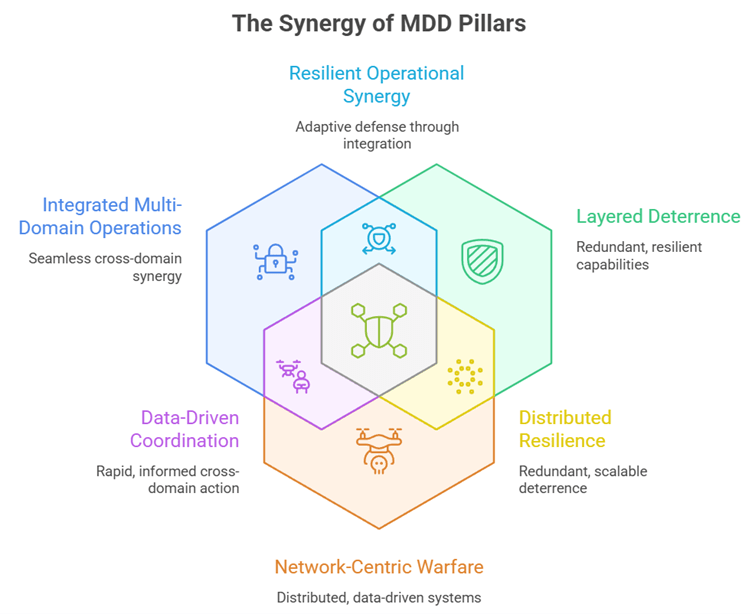
a) Integrated Multi-Domain Operations and Convergence
- MDD is rooted in Multi-Domain Operations (MDO), enabling seamless coordination across domains.
- Integration of C4ISR systems enhances decision-making speed and precision.
- Example: Use of satellites, drones, and AI-enabled analytics in modern warfare.
b) Layered Deterrence through Enabling Capabilities
- Focus on ISR, cyber capabilities, electronic warfare, and deep-strike systems.
- Ensures redundancy and resilience across operational layers.
- Example: Integration of missiles, drones, and air power for composite strike capabilities.
c) Shift from Platform-Centric to Network-Centric Warfare
- Moves from heavy platforms to networked, data-driven systems.
- Emphasises scalable and cost-effective technologies like drones.
- Example: Increasing role of unmanned and swarm drone systems.
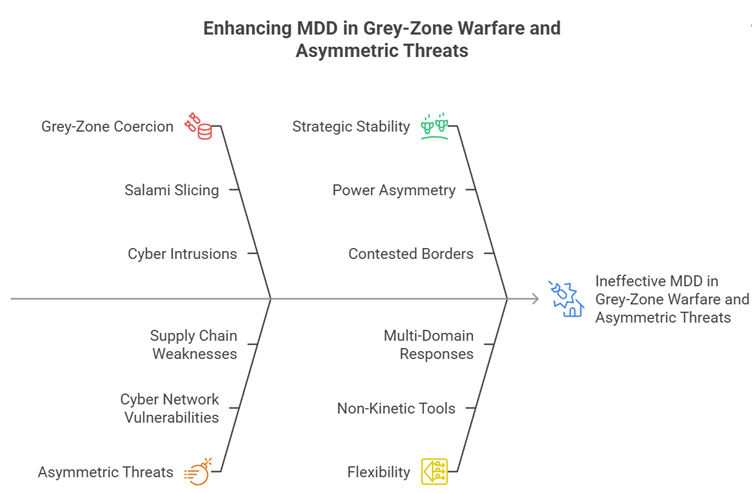
2. Relevance of MDD in Grey-Zone Warfare and Asymmetric Threats
a) Addressing Grey-Zone Coercion and Hybrid Tactics
- Includes tactics like cyber intrusions, disinformation, and maritime militia.
- MDD enables cross-domain responses without escalation.
- Case Study: South China Sea militarisation and artificial island-building.
b) Countering Asymmetric Threats through Flexibility
- Targets vulnerabilities in cyber, supply chains, and space domains.
- Allows non-kinetic responses like cyber and electronic warfare.
- Example: Cyberattacks on critical infrastructure.
c) Enhancing Strategic Stability in the Indo-Pacific
- Addresses power asymmetry and maritime disputes.
- Maintains deterrence without full-scale war escalation.
- Case Study: Joint military exercises and interoperability initiatives.
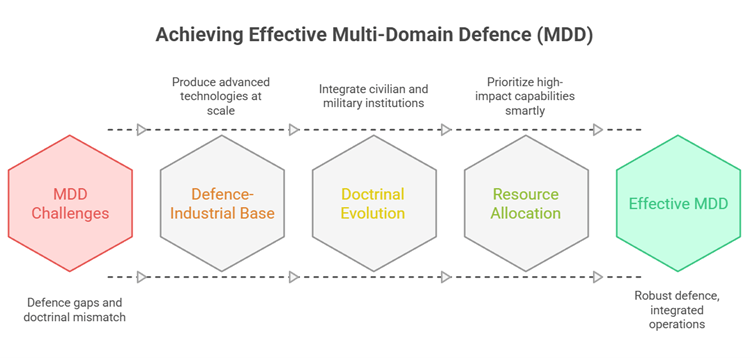
3. Challenges and Strategic Imperatives for Effective MDD
a) Defence-Industrial and Technological Constraints
- Requires advanced manufacturing and technological capabilities.
- Gaps in drones, missiles, and ISR systems affect deterrence.
- Example: Push for indigenous defence manufacturing initiatives.
b) Doctrinal Evolution and Institutional Coordination
- Mismatch between technological advancements and military doctrines.
- Requires jointness and civil-military integration.
- Case Study: Theatre command reforms.
c) Resource Allocation and Strategic Prioritisation
- Focus on high-impact capabilities like cyber and C4ISR.
- Encourages private sector participation and innovation.
- Example: Growth of defence startups in AI and drone sectors.
Conclusion
Multi-Domain Deterrence represents a paradigm shift in modern strategic thinking, moving from single-domain dominance to integrated and layered deterrence systems. In the Indo-Pacific, where grey-zone warfare and asymmetric threats are increasingly prevalent, MDD provides a flexible and scalable framework for maintaining security without escalation. Strengthening defence-industrial capacity, enhancing doctrinal innovation, and investing in advanced technologies will be crucial for sustaining effective deterrence in the future.
Recap: