Impact of Unregulated Digital Environment on Adolescent Mental Wellbeing: Safeguarding India’s Demographic Dividend
Impact of Unregulated Digital Environment on Adolescent Mental Wellbeing has emerged as a critical concern in the context of India’s demographic dividend. India’s demographic dividend—with nearly 65% of its population below 35 years and over 250 million adolescents—represents a historic opportunity for economic growth and social transformation. However, this dividend is sustainable only if the young population is physically and mentally healthy.
Recent national-level surveys indicate that nearly 7–10% of adolescents live with diagnosable mental health conditions, while behavioural disorders such as ADHD affect 5–7% of school-going children. At the same time, India has over 800 million internet users, with inexpensive data and smartphone penetration reshaping childhood experiences. In this evolving ecosystem, an unregulated digital environment—marked by unrestricted screen exposure, algorithm-driven content, cyberbullying, and addictive design—has emerged as a significant determinant of adolescent mental wellbeing, necessitating a multidimensional response that moves beyond punitive restrictions.
I. Impact of an Unregulated Digital Environment on Adolescent Mental Wellbeing
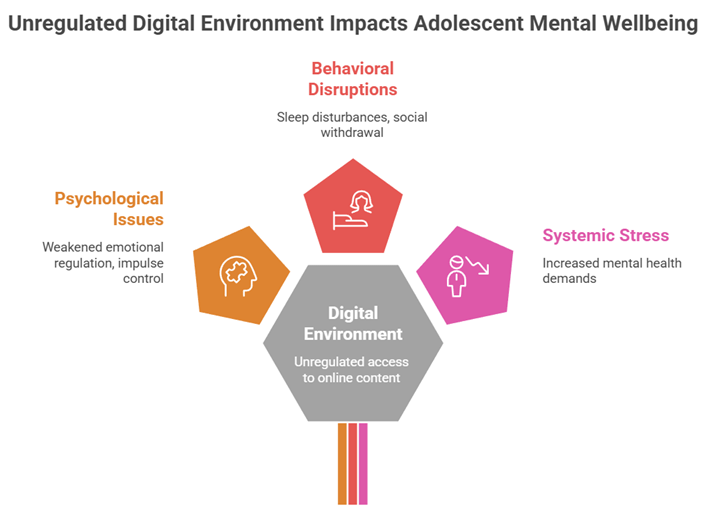
1. Psychological and Neurodevelopmental Consequences
- Excessive screen exposure during critical neuroplastic phases displaces face-to-face interaction, weakening emotional regulation, impulse control, and social cognition, especially in children below 15 years.
- Comorbidity patterns are rising—ADHD coexisting with anxiety, depression linked with compulsive gaming or social media overuse—making early detection complex and often delayed.
- Example: Increased reporting of Internet Gaming Disorder-like symptoms in metropolitan child guidance clinics illustrates how digital overuse aggravates underlying vulnerabilities rather than creating them in isolation.
2. Behavioural and Social Disruptions
- Unregulated digital access has led to sleep disturbances, irritability, social withdrawal, and reduced academic concentration.
- Cyberbullying, online harassment, body-image pressures, and exposure to self-harm content amplify stress and depressive symptoms.
- Case Study: Episodes of adolescent self-harm linked to social media challenges highlight the contagion effect of digital trends.
3. Structural and Systemic Stress Amplifiers
- The COVID-19 pandemic normalised prolonged screen time for education and recreation.
- India faces a shortage of trained child mental health professionals, with fewer than 10,000 psychiatrists for 1.4 billion people.
- Example: Tele-MANAS expanded outreach, yet awareness and digital literacy gaps remain in rural areas.
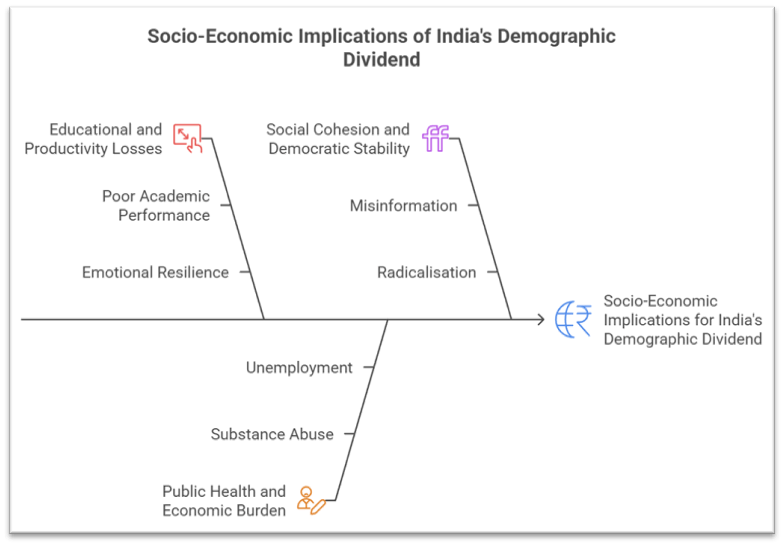
II. Socio-Economic Implications for India’s Demographic Dividend
1. Educational and Productivity Losses
- Mental distress correlates with poor academic performance and school dropouts, weakening human capital formation.
- Exam-centric cultures intensify anxiety disorders during adolescence.
- Example: Schools integrating socio-emotional learning show improved concentration and reduced behavioural incidents.
2. Public Health and Economic Burden
- Untreated adolescent mental health issues persist into adulthood, reducing labour productivity.
- Early-onset depression leads to long-term economic costs.
- Case Study: Community-based interventions under the National Mental Health Programme reduced crisis admissions.
3. Social Cohesion and Democratic Stability
- Exposure to misinformation and polarising content affects adolescents’ identity formation.
- Weak emotional foundations increase susceptibility to radicalisation.
- Example: Age-verification debates in several States reflect a public health-oriented approach.
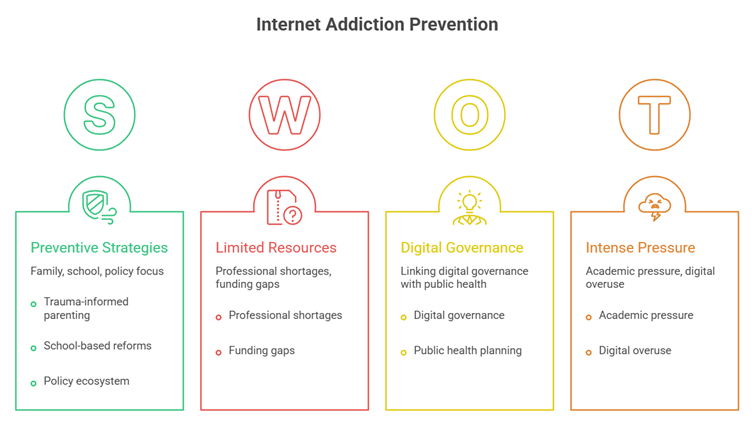
III. Measures Beyond Punitive Controls to Address Internet Addiction
1. Family and Community-Centred Preventive Strategies
- Trauma-informed parenting practices and structured screen boundaries serve as primary buffers.
- Parent support groups reduce stigma and encourage early help-seeking.
- Case Study: Kerala’s community-led adolescent groups improved coping skills and reduced screen dependency.
2. School-Based Institutional Reforms
- Integration of socio-emotional learning and digital literacy into curricula ensures sustained impact.
- Routine mental health screening under Ayushman Bharat’s Health and Wellness Centres can facilitate early identification.
- Example: Schools with full-time counsellors report lower exam-related anxiety and digital misuse.
3. Policy and Regulatory Ecosystem Strengthening
- Balanced digital usage guidelines and awareness campaigns are preferable to blanket bans.
- Expanding tele-psychiatry and the District Mental Health Programme can bridge professional shortages.
- Example: Economic Survey 2025–26 recommended linking digital governance with public health planning.
Conclusion
India’s demographic dividend can transform into either a demographic burden or a demographic advantage depending on how effectively adolescent mental wellbeing is safeguarded. With nearly one in ten adolescents facing mental health challenges and internet penetration expanding rapidly, the risks of an unregulated digital environment are significant.
However, preventive and participatory approaches—strengthening family awareness, embedding socio-emotional learning in schools, expanding mental health infrastructure, and fostering responsible digital ecosystems—are more sustainable than punitive restrictions. Securing adolescent mental wellbeing is essential to ensure that India’s demographic dividend translates into resilience, productivity, and long-term national development.
Recap: