Great Nicobar Infrastructure Project: Implications on Tribal Rights and Ecological Jurisprudence in India
Introduction
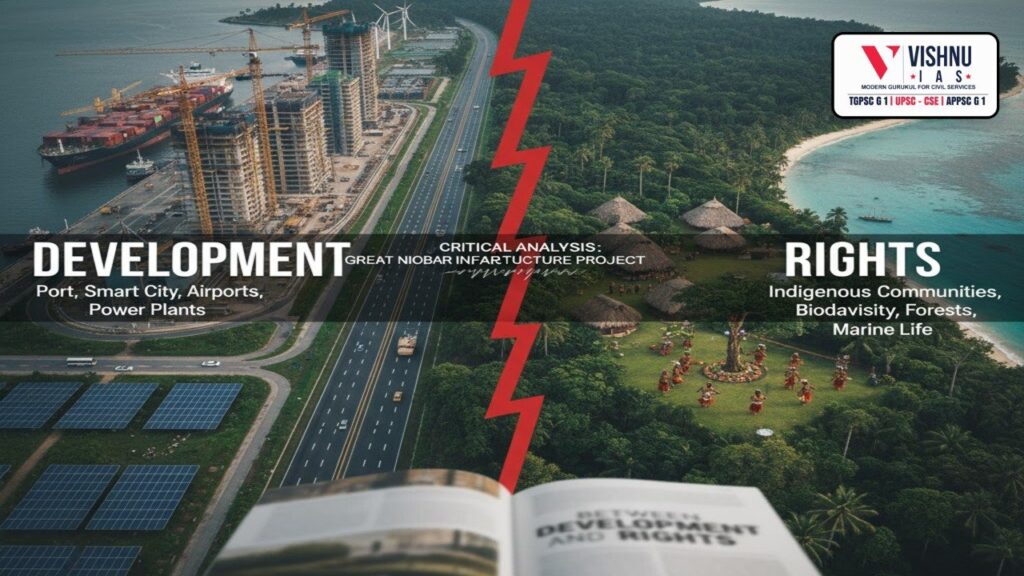
The proposed Great Nicobar infrastructure project—encompassing a transshipment port (at Galathea Bay), airport, power plant, and township across tens of thousands of hectares—represents one of India’s most ambitious island-scale development initiatives. The scale is staggering: approximately 130.75 km² of forest land is to be diverted, and 8.19 lakh trees are proposed for removal with compensatory afforestation planned elsewhere.
From an ecological standpoint, Great Nicobar is extremely significant: about 85% of the island lies within the Great Nicobar Biosphere Reserve, which includes Campbell Bay and Galathea National Parks, and the surrounding buffer and transition zones. It harbours endemic flora and fauna, mangroves, coral reefs, and forms a critical carbon sink and climate regulator in the Bay of Bengal region.
Legally and socially, the project directly intersects with tribal rights, especially of the Nicobarese and Shompen communities, and raises questions about India’s evolving ecological jurisprudence—whether legal doctrines like the Forest Rights Act, public trust, and rights of nature can safeguard nonhuman nature and tribal habitats in mega-projects.
Implications on Tribal Rights
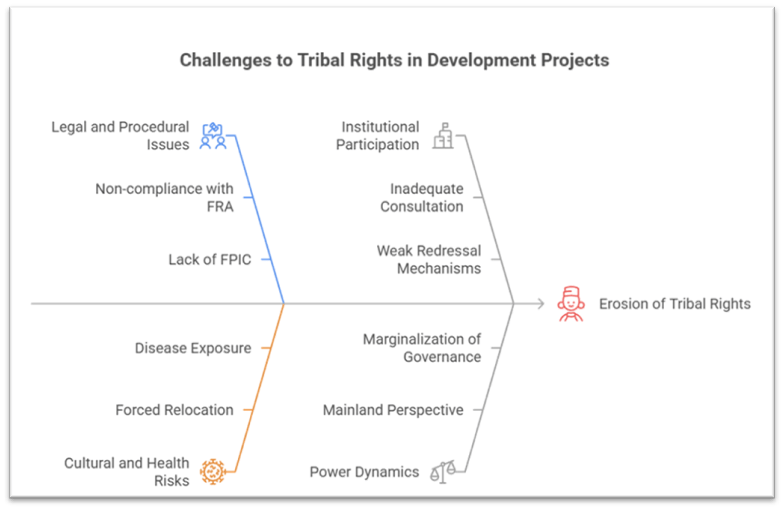
- Rights under the Forest Rights Act, 2006 (FRA): FRA mandates pre-diversion settlement of forest dwellers’ rights. In the Great Nicobar case, concerns remain about genuine compliance and Gram Sabha consent, especially considering the Niyamgiri precedent emphasizing Free, Prior and Informed Consent (FPIC).
- Risks to cultural integrity & survival: Influx of outsiders may lead to displacement, exposure to diseases, and disruption of ecological linkages critical to tribal survival.
- Institutional participation and voice: Reports suggest lack of consultation with statutory bodies like the National Commission for Scheduled Tribes and weak grievance mechanisms.
- Asymmetry of power and “development imperialism”: Centralized planning overlooks island-specific ecology, marginalizing indigenous governance systems.
Ecological Jurisprudence: Legal Doctrines & Their Efficacy
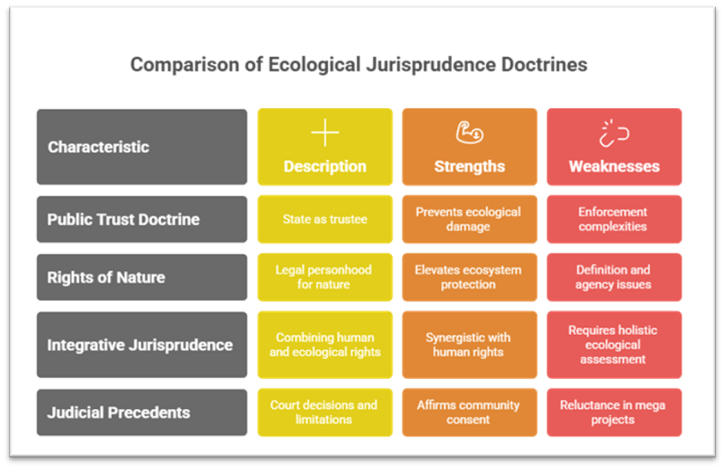
- Public Trust Doctrine: The state acts as trustee of natural resources, but enforcement is limited in classified or strategic projects.
- Rights of Nature: Courts have explored granting legal personhood to natural entities, though practical implementation remains unclear.
- Integrative jurisprudence: Combining biocultural rights with FRA and environmental law can synergize human and ecological protections.
- Judicial precedents: The Vedanta/Niyamgiri and Wildlife First cases highlight judicial tensions between development, conservation, and rights.
Trade-offs, Strengths & Weaknesses
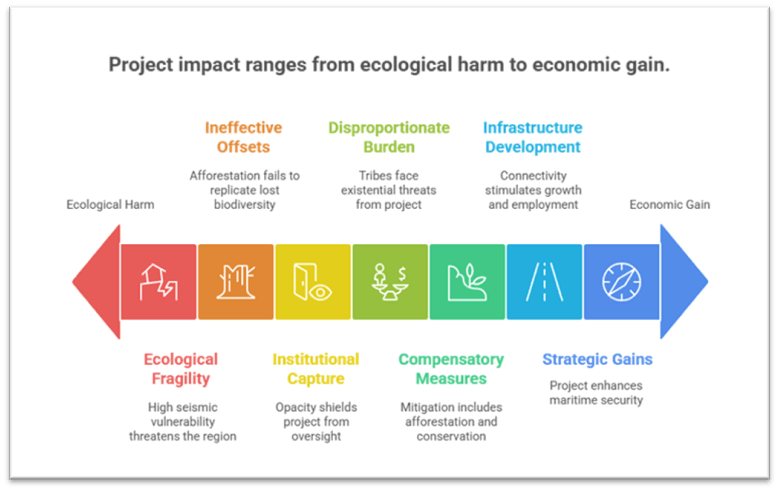
- Strengths: Strategic and economic gains, improved connectivity, compensatory afforestation, and regional development potential.
- Weaknesses: Ecological fragility, ineffective offsets, lack of transparency, and disproportionate impact on vulnerable tribal populations.
- Interrelation of concepts: True ecological jurisprudence integrates tribal and environmental rights, ensuring balanced legal stewardship.
Conclusion:
The Great Nicobar mega-project epitomizes the tension between India’s developmental ambition and its constitutional obligations to tribals, environment, and sustainable futures. A course correction is essential—ensuring rights settlement, participatory monitoring, and recognition of the biosphere’s legal personhood. Empowering local governance, ecological guardianship, and low-impact development models could make this project a turning point in Indian ecological jurisprudence.
Recap: