Great Nicobar Case: Balancing National Security Imperatives and Indigenous Rights
Introduction:
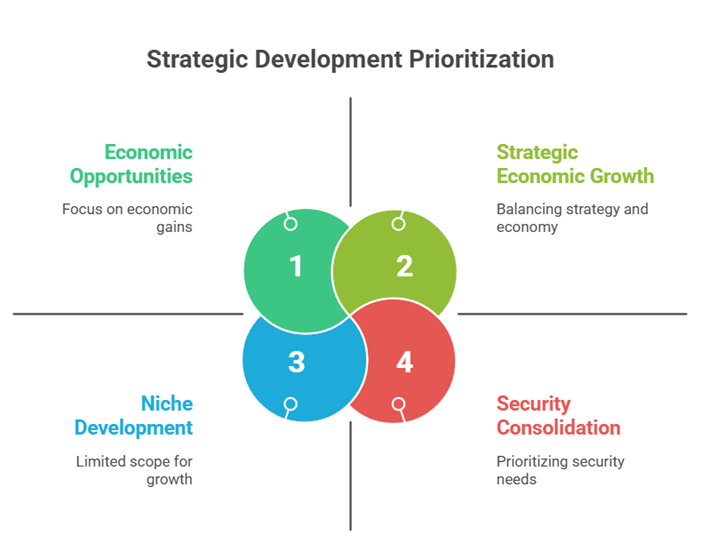
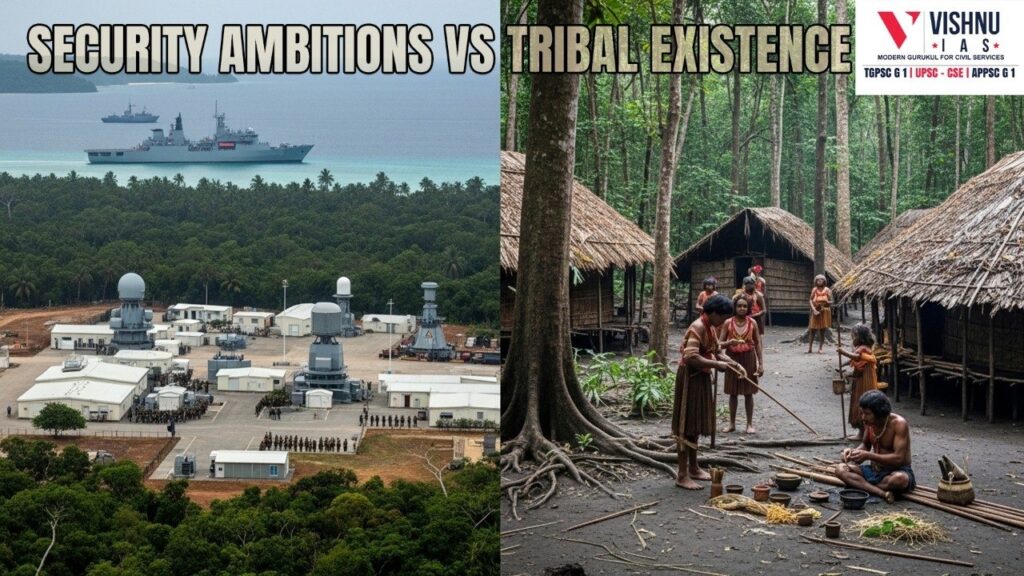
The Great Nicobar case highlights the tension between national security imperatives and indigenous rights, representing a classic governance dilemma where strategic development goals intersect with constitutional protections for vulnerable communities. The proposed mega-infrastructure project in Great Nicobar Island—including a transshipment port, international airport, power plant, and township—illustrates this conflict. While the project is projected to transform India’s maritime presence near the Strait of Malacca, affecting nearly 40% of global trade routes, it simultaneously impacts ecologically fragile zones and Particularly Vulnerable Tribal Groups (PVTGs) like the Shompen. This reflects broader concerns raised in development debates, where economic growth and sovereignty objectives often compete with equity, environmental justice, and cultural survival. :contentReference[oaicite:0]{index=0}
1. Strategic and National Security Imperatives Driving Development
Geostrategic Significance and Maritime Dominance
- The island’s proximity to key global shipping lanes enhances India’s Indo-Pacific strategy, strengthening surveillance and logistics capabilities in a region witnessing increasing geopolitical competition.
- Example: Development of ports under Sagarmala Programme reflects India's attempt to boost maritime infrastructure for both economic and strategic purposes.
Infrastructure-Led Economic Growth and Integration
- The project envisions a transshipment hub to reduce dependence on foreign ports like Colombo and Singapore, potentially saving billions in logistics costs annually.
- Case Study: The development of Jawaharlal Nehru Port Trust (JNPT) as a major container hub shows how port-led development can boost trade and regional economies.
Security-Driven Settlement and Territorial Assertion
- Historical settlement of ex-servicemen in the island demonstrates the use of civilian populations as strategic buffers in sensitive border areas.
- Government policies in border regions, including Vibrant Villages Programme, emphasize habitation as a tool of territorial consolidation.
2. Challenges to Indigenous Rights and Socio-Cultural Survival
Displacement and Livelihood Insecurity
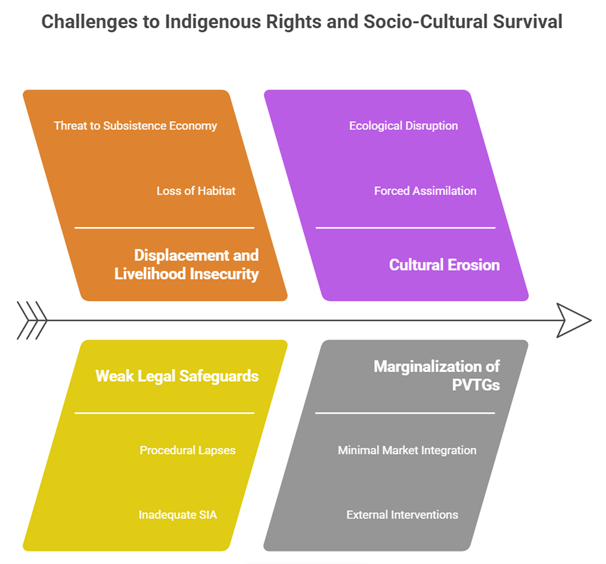
- Indigenous communities dependent on forest and marine ecosystems face loss of habitat, threatening their subsistence economy and traditional knowledge systems.
- Case Study: The displacement of tribal communities in Narmada Valley projects highlighted long-term livelihood disruptions despite compensation.
Weak Implementation of Legal Safeguards
- Provisions under the Forest Rights Act (FRA), 2006 and RFCTLARR Act, 2013 mandate free, prior, informed consent and fair compensation, but procedural lapses and inadequate Social Impact Assessments (SIA) undermine these safeguards.
- Reports of undervalued compensation and lack of meaningful consultation indicate institutional deficiencies.
Cultural Erosion and Marginalization of PVTGs
- Communities like the Shompen, with minimal integration into the market economy, risk cultural extinction due to forced assimilation and ecological disruption.
- Example: The experience of the Jarawa tribe in the Andaman Islands shows how external interventions can lead to cultural dilution and health vulnerabilities.
3. Contradictions in Governance, Representation, and Development Paradigm
Intra-Community Conflicts and Unequal Power Dynamics
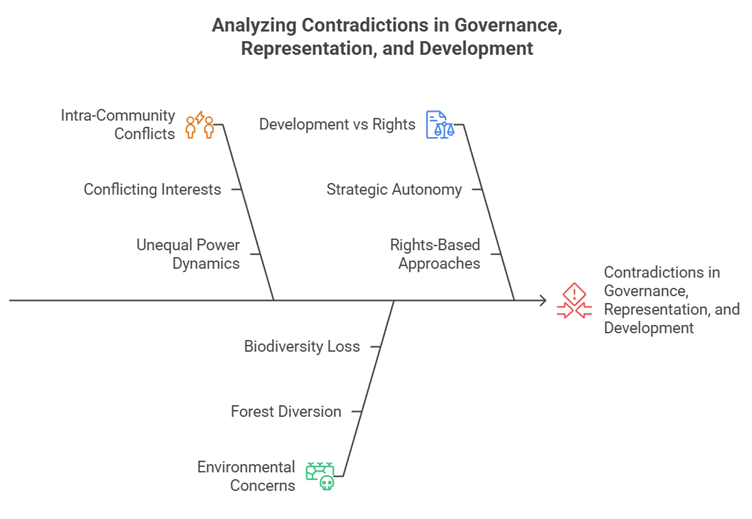
- Settler communities demand fair compensation while simultaneously supporting policies that alienate tribal lands, highlighting conflicting interests among local stakeholders.
- This reflects asymmetric political representation, where tribal voices remain underrepresented.
Environmental Concerns and Irreversible Ecological Damage
- The project involves diversion of pristine tropical forests, threatening biodiversity hotspots and endemic species.
- Case Study: The impact of large-scale deforestation in projects like Hasdeo Arand coal mining demonstrates long-term ecological costs of development.
Development vs Rights Debate in Policy Framework
- The prioritization of strategic autonomy and economic growth often sidelines rights-based approaches, reducing local communities to “stakeholders” rather than rights holders.
- Example: Debates around projects like POSCO in Odisha illustrate how large investments can face resistance due to land and livelihood concerns.
Conclusion
The Great Nicobar case underscores the need for a balanced development paradigm that harmonizes national security objectives with social justice and environmental sustainability. A way forward lies in ensuring robust implementation of legal safeguards, participatory governance involving indigenous communities, and adoption of sustainable infrastructure models. Strengthening institutional accountability, improving compensation frameworks aligned with market realities, and recognizing community-centric development as integral to national security can transform such conflicts into opportunities for inclusive growth.
Recap: