Blogs

Find the best resources and blogs written by our fine content writers. You can find this useful to crack UPSC. We had fabricated our blog part in a way which is comprehensive and elaborate.

China’s control over rare earths and global supply chains poses a major challenge to India’s strategic autonomy and self-reliance goals. Learn how India can reduce this dependency.

How China’s Rare Earth Dominance Threatens India’s Strategic Autonomy

How China’s Rare Earth Dominance Threatens India’s Strategic Autonomy Strategic autonomy refers to a nation’s ability to pursue its national interests and make sovereign decisions without being overly dependent on external powers for critical technologies, resources, or policy directions. For a country like India, aspiring to emerge as a major global manufacturing hub under initiatives […]

How China’s Rare Earth Dominance Threatens India’s Strategic Autonomy Read More »
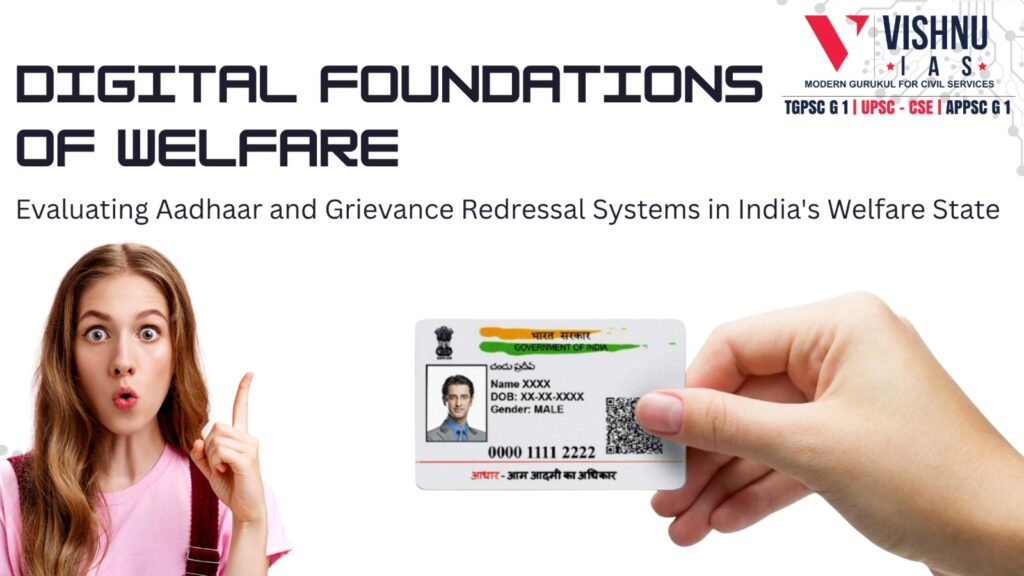
Explore how digital technologies like Aadhaar, DBT, and centralized grievance redressal systems are reshaping India's welfare state architecture. Learn from recent examples and expert analysis.

How Digital Technologies Are Transforming India’s Welfare State: Aadhaar, DBT & CPGRAMS

How Digital Technologies Are Transforming India’s Welfare State: Aadhaar, DBT & CPGRAMS Digital Technologies in India’s Welfare State have fundamentally reshaped governance structures over the past decade. Innovations such as Aadhaar, Direct Benefit Transfer (DBT), and centralized grievance redressal systems are improving transparency and efficiency while raising critical questions about accountability and inclusion. Introduction: India’s

How Digital Technologies Are Transforming India’s Welfare State: Aadhaar, DBT & CPGRAMS Read More »

India's rapid EV and renewable energy growth is fueling a battery waste crisis. Without robust battery recycling in India, this green transition risks severe environmental and economic fallout. Explore solutions and policy gaps.

Battery Recycling in India: The Missing Link in EV and Renewable Energy Boom

Battery Recycling in India: The Missing Link in EV and Renewable Energy Boom India’s push for EVs and renewable energy, though commendable, risks exacerbating the battery waste crisis without strong recycling norms. Introduction: India’s climate commitments, including the Net Zero target by 2070 and Nationally Determined Contributions (NDCs) under the Paris Agreement, have catalysed the

Battery Recycling in India: The Missing Link in EV and Renewable Energy Boom Read More »

Explore how India's Right to Repair framework promotes a circular economy and sustainability by reducing e-waste, empowering informal sectors, and encouraging responsible consumption.

Right to Repair in India: A Key to Circular Economy and Sustainability

Introduction: Right to Repair refers to the legal right of consumers to repair and modify the products they own, especially electronics and appliances, by providing access to parts, manuals, and diagnostics. It is globally recognized as a crucial pillar in achieving a circular economy, which emphasizes reuse, repair, and resource efficiency over linear “take-make-dispose” production

Right to Repair in India: A Key to Circular Economy and Sustainability Read More »

Mangrove conservation in India is vital for coastal resilience and sustainable development. Learn how policy reforms, community participation, and green finance can transform mangrove ecosystems into natural infrastructure for climate and economic security.

Mangrove Conservation in India: A Key to Coastal Resilience and Sustainable Development

Mangrove Conservation in India: A Key to Coastal Resilience and Sustainable Development Context: Mangrove conservation in India is a cornerstone of coastal resilience, yet these intertidal forests—uniquely adapted to saline, waterlogged soils—are under threat. Found along tropical and subtropical coastlines, mangroves stabilize shorelines, sequester carbon, underpin fisheries, and supply timber and honey. Despite their critical

Mangrove Conservation in India: A Key to Coastal Resilience and Sustainable Development Read More »

India must prioritise digital sovereignty and industrialisation in foreign trade to safeguard data, boost innovation, and secure economic autonomy.

Why India Needs a Digital Sovereignty and Industrialisation Policy for Foreign Trade

Why Digital Sovereignty in India’s Foreign Trade Needs a Strong Digital Industrialisation Policy Introduction: In the rapidly evolving digital era, data and digital ecosystems have become the new frontiers of global trade, shaping power relations and economic capabilities across nations. Digital sovereignty in India’s foreign trade refers to the nation’s ability to control, regulate, and

Why India Needs a Digital Sovereignty and Industrialisation Policy for Foreign Trade Read More »

Explore how the NISAR mission, a collaboration between ISRO and NASA, revolutionizes Earth observation through advanced radar technology and strategic Indo-US space cooperation. Learn about its scientific, technological, and diplomatic impact.

NISAR Mission: Enhancing Earth Observation through Indo-US Space Cooperation

NISAR Mission: Enhancing Earth Observation through Indo-US Space Cooperation Context: The NISAR mission (NASA-ISRO Synthetic Aperture Radar), launched on July 30 from Sriharikota, marks a decade of Indo-US space cooperation. Weighing 2.8 tonnes and armed with L-band and S-band radars, NISAR can detect surface deformations of a few centimetres through clouds and vegetation, ushering in

NISAR Mission: Enhancing Earth Observation through Indo-US Space Cooperation Read More »

India’s Legal Aid Framework plays a pivotal role in ensuring access to justice in India. This article critically evaluates the performance, challenges, and reforms needed to improve legal aid delivery under the Legal Services Authorities Act, 1987.

Enhancing Access to Justice in India: Evaluating the Legal Aid Framework for Inclusive Governance

Enhancing Access to Justice in India: Evaluating the Legal Aid Framework for Inclusive Governance Context: The India’s Legal Aid Framework, as defined under the Legal Services Authorities Act, 1987, promises free legal services to around 80% of the population. However, in 2023–24, only 15.50 lakh individuals availed the service. Gaps in outreach, funding, and accountability

Enhancing Access to Justice in India: Evaluating the Legal Aid Framework for Inclusive Governance Read More »

Explore the ethical and legal challenges of digital vigilantism in India, driven by lateral surveillance and algorithmic amplification. Understand its impact on privacy, mental health, and due process.

Digital Vigilantism and Lateral Surveillance: Ethical and Legal Challenges in the Indian Context

Digital Vigilantism and Lateral Surveillance: Ethical and Legal Challenges in the Indian Context Introduction: In the digital era, surveillance is no longer the sole domain of states and corporations; it is now practiced horizontally by individuals upon one another, a phenomenon termed lateral surveillance. Within this context, digital vigilantism—defined as the act of individuals or

Digital Vigilantism and Lateral Surveillance: Ethical and Legal Challenges in the Indian Context Read More »

Child trafficking in Bihar remains a major human rights crisis, driven by poverty, porous borders, and weak enforcement. Learn about the causes, current challenges, and effective policy solutions to combat this issue.

Child Trafficking in Bihar: Causes, Challenges & Effective Policy Measures

Child Trafficking in Bihar: Causes, Challenges & Effective Policy Measures (GS Paper II – Governance, Social Justice and Social Welfare) Context: Child trafficking in Bihar is one of the gravest violations of human rights, inflicting physical, psychological and economic harm on its victims. In Bihar, this crime has surged, with thousands of girls coerced into

Child Trafficking in Bihar: Causes, Challenges & Effective Policy Measures Read More »

Scroll to Top