Vishnu IAS Academy

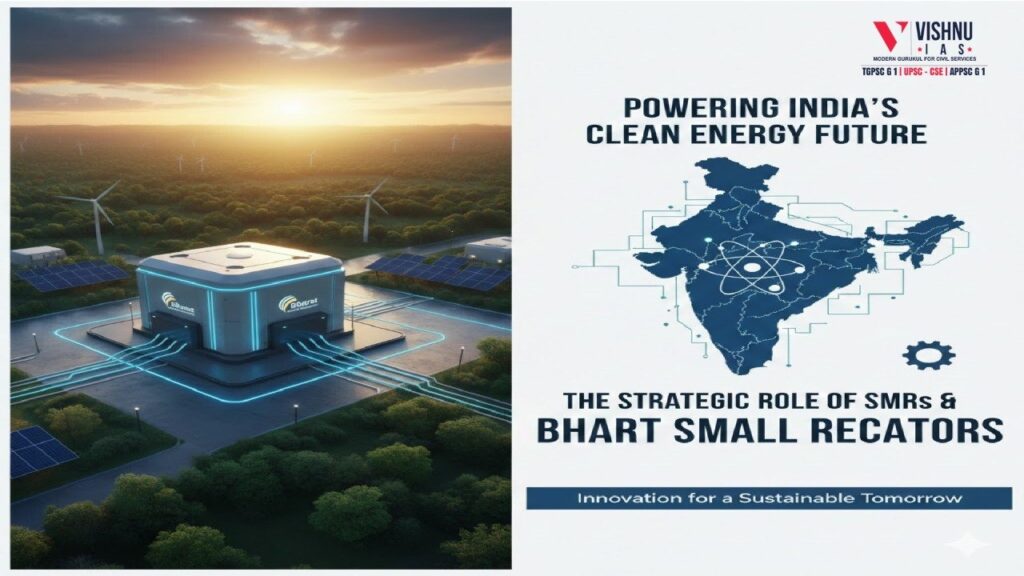
Small Modular Reactors in India and Bharat Small Reactors are reshaping India’s clean energy transition through decentralised, low-carbon nuclear power and new legislation.

Small Modular Reactors (SMRs) and Bharat Small Reactors (BSRs): Strategic Role in India’s Clean Energy Transition

Small Modular Reactors (SMRs) and Bharat Small Reactors (BSRs): Strategic Role in India’s Clean Energy Transition Small Modular Reactors in India are emerging as a critical pillar of the country’s clean energy transition, offering reliable, low-carbon baseload power while enabling decentralised and regionally balanced development. Introduction Human development has historically moved in lockstep with rising […]
Small Modular Reactors (SMRs) and Bharat Small Reactors (BSRs): Strategic Role in India’s Clean Energy Transition Read More »

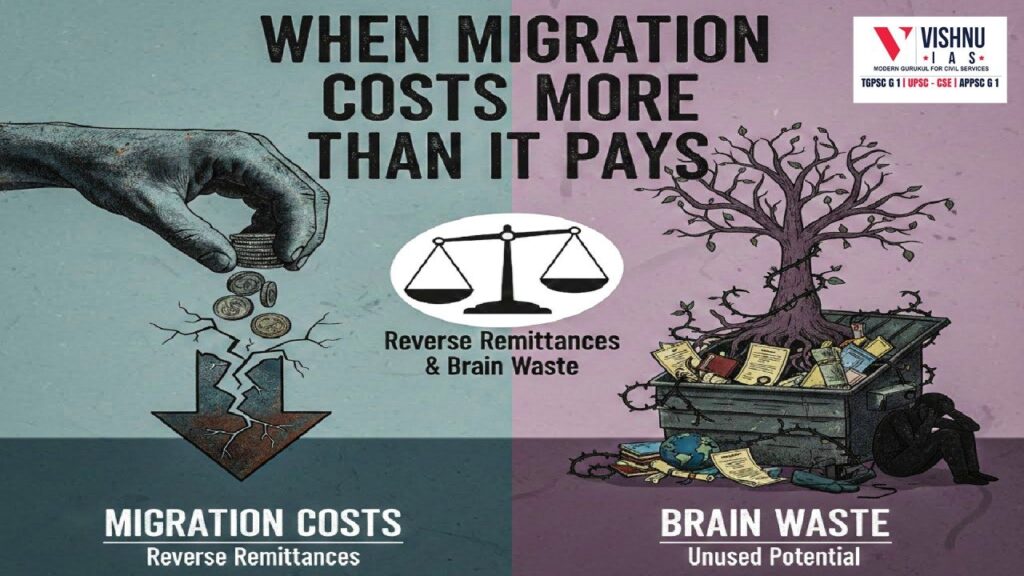
Reverse remittances and brain waste in Indian student migration are reshaping the idea of migration as national wealth creation. This blog examines how self-financed overseas education challenges traditional remittance-led development narratives.

Reverse Remittances and Brain Waste in Indian Student Migration: Rethinking Migration as National Wealth Creation

Reverse Remittances and Brain Waste in Indian Student Migration: Rethinking Migration as National Wealth Creation Reverse remittances and brain waste in Indian student migration have emerged as defining features of India’s contemporary mobility landscape, challenging the long-held assumption that migration automatically contributes to national wealth creation. Introduction Student migration from India has undergone a structural

Reverse Remittances and Brain Waste in Indian Student Migration: Rethinking Migration as National Wealth Creation Read More »

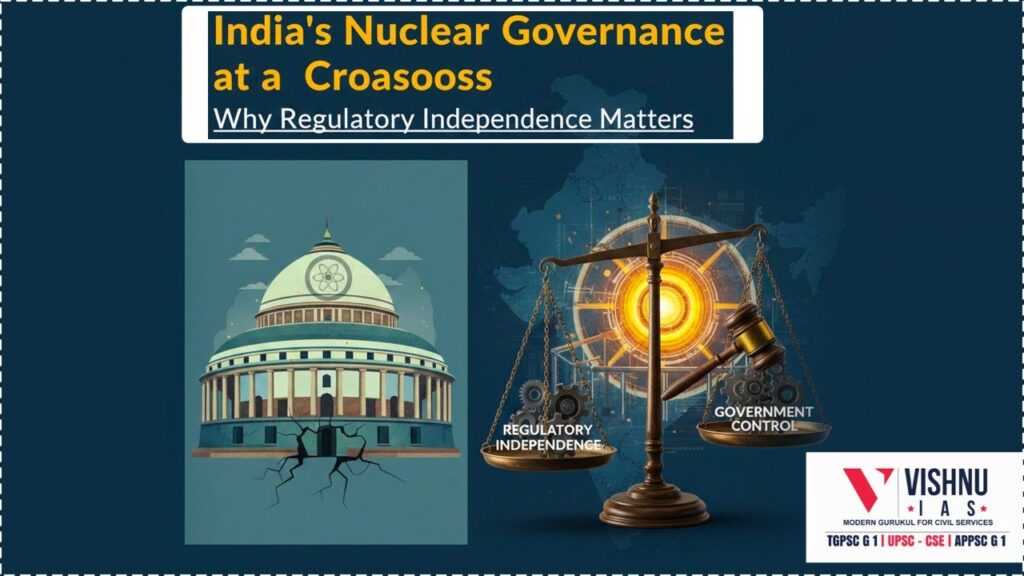
India’s nuclear governance needs regulatory independence to build public trust and investor confidence as the country targets 100 GW nuclear capacity by 2047. Explore why autonomous regulation is critical for safety, investment, and global credibility.

India’s Nuclear Governance Needs Regulatory Independence to Build Public Trust and Investor Confidence

India’s Nuclear Governance Needs Regulatory Independence to Build Public Trust and Investor Confidence India’s Nuclear Governance Needs Regulatory Independence to Build Public Trust and Investor Confidence India’s nuclear governance regulatory independence has emerged as a critical prerequisite for scaling nuclear power safely and sustainably. Nuclear governance refers to the institutional, legal and regulatory framework that

India’s Nuclear Governance Needs Regulatory Independence to Build Public Trust and Investor Confidence Read More »

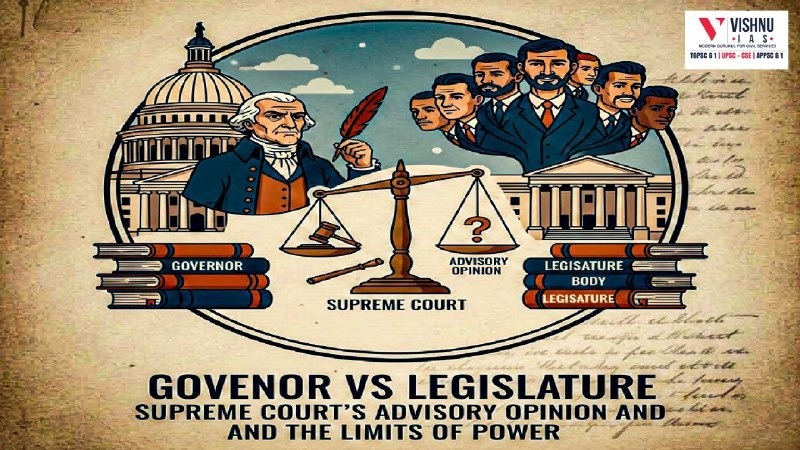
Checks and balances vs legislative supremacy has emerged as a core constitutional debate after the Supreme Court’s advisory opinion on gubernatorial powers. This blog analyses the tension between democratic mandate, executive discretion, and judicial oversight in India’s federal structure.

Checks and Balances vs Legislative Supremacy: Supreme Court Advisory Opinion on Gubernatorial Powers

Checks and Balances vs Legislative Supremacy: Supreme Court Advisory Opinion on Gubernatorial Powers Checks and balances vs legislative supremacy has emerged as a defining constitutional debate in India following the Supreme Court’s advisory opinion on gubernatorial powers. The issue raises fundamental questions about democratic mandate, executive discretion, and judicial intervention within India’s federal framework. Introduction

Checks and Balances vs Legislative Supremacy: Supreme Court Advisory Opinion on Gubernatorial Powers Read More »

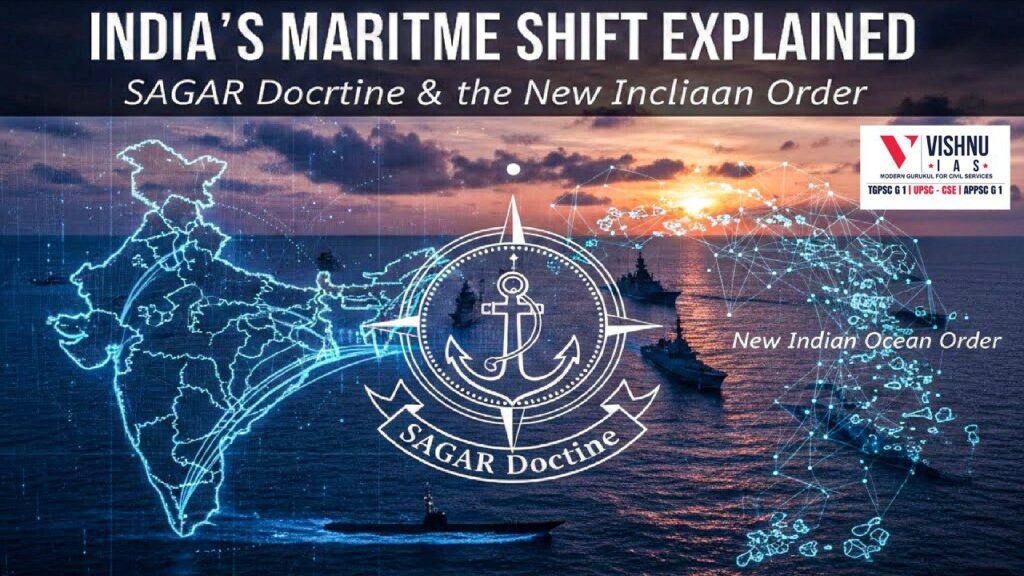
Explore how India’s maritime strategy is shifting towards security through sustainability in the Indian Ocean, with the SAGAR Doctrine anchoring cooperative and climate-resilient security.

Security through Sustainability in the Indian Ocean: Evaluating India’s Maritime Shift and the SAGAR Doctrine

Security through Sustainability in the Indian Ocean: Evaluating India’s Maritime Shift and the SAGAR Doctrine Security through sustainability in the Indian Ocean represents a fundamental reorientation of India’s maritime strategy. India’s maritime approach is undergoing a calibrated transition from a narrow focus on naval power, sea-lane control and balance of forces towards “security through sustainability”,

Security through Sustainability in the Indian Ocean: Evaluating India’s Maritime Shift and the SAGAR Doctrine Read More »

Explore how India’s shift towards security through sustainability is reshaping maritime strategy in the Indian Ocean. Learn how the SAGAR doctrine integrates environmental protection, resilience, and cooperative security.

Security Through Sustainability: How the SAGAR Doctrine Anchors India’s Maritime Strategy in the Indian Ocean

Security Through Sustainability: How the SAGAR Doctrine Anchors India’s Maritime Strategy in the Indian Ocean Security through sustainability marks a significant evolution in India’s maritime thinking, moving beyond traditional notions of naval dominance and sea-lane control to a holistic framework that views the ocean as an ecological, economic, and social system. This shift is particularly

Security Through Sustainability: How the SAGAR Doctrine Anchors India’s Maritime Strategy in the Indian Ocean Read More »

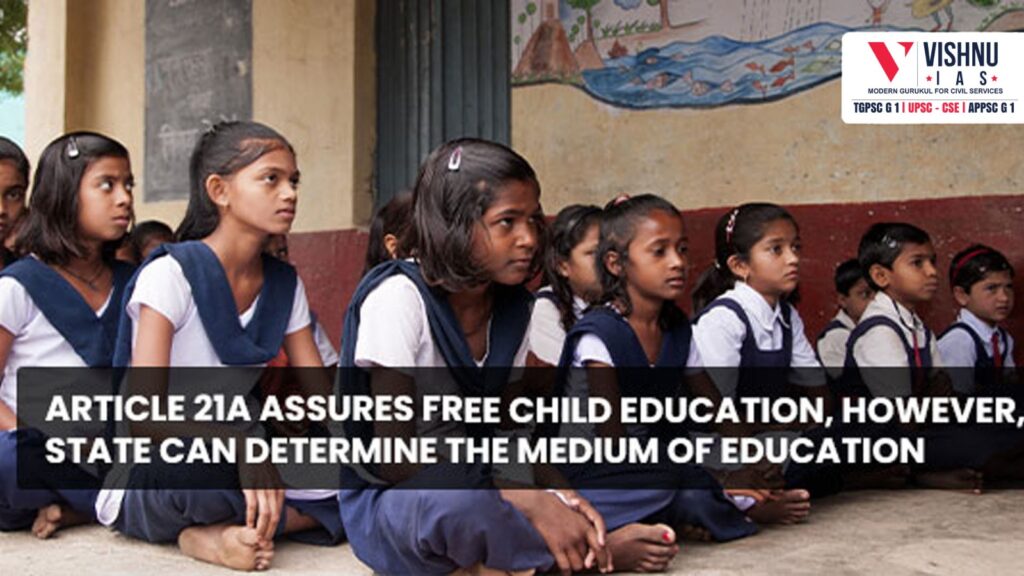
Rising household expenditure on education is limiting access to free and universal schooling guaranteed under Article 21A, widening inequality and increasing dependence on private schools and coaching.

Rising Household Expenditure on Education: A Threat to Article 21A and Universal Schooling in India

• The Right to Free and Compulsory Education under Article 21A, inserted through the 86th Constitutional Amendment (2002), mandates the State to ensure free elementary education for children aged 6 to 14 years. Subsequent policy expansions, especially the National Education Policy (2020), broaden this vision to cover ages 3 to 18 years, aiming for universalisation

Rising Household Expenditure on Education: A Threat to Article 21A and Universal Schooling in India Read More »

The absence of timelines in the anti-defection law under the Tenth Schedule has weakened legislative integrity and enabled political manipulation. This article critically analyses how delays by Speakers undermine democratic stability, constitutional morality, and the spirit of the anti-defection mechanism.

How the Absence of Timelines in the Anti-Defection Law Weakens Democracy: A Critical Analysis of the Tenth Schedule

How the Absence of Timelines in the Anti-Defection Law Weakens Democracy: A Critical Analysis of the Tenth Schedule Introduction The absence of timelines in the anti-defection law under the Tenth Schedule, inserted through the 52nd Constitutional Amendment Act (1985), seeks to curb political defections that undermine democratic stability. However, the Constitution does not prescribe any

How the Absence of Timelines in the Anti-Defection Law Weakens Democracy: A Critical Analysis of the Tenth Schedule Read More »

Explore how Public–Private Partnerships in Indian Healthcare and rising commercialisation may dismantle India’s weakened public health system, increasing inequality and undermining the constitutional right to health.

How Public–Private Partnerships in Indian Healthcare Threaten Public Health & the Right to Health

How Public–Private Partnerships in Indian Healthcare Threaten Public Health & the Right to Health Public–Private Partnerships in Indian Healthcare have expanded rapidly in recent years, raising critical concerns about accessibility, affordability, and the weakening of public health systems. A robust public health system is central to the realization of health as a fundamental human right,

How Public–Private Partnerships in Indian Healthcare Threaten Public Health & the Right to Health Read More »

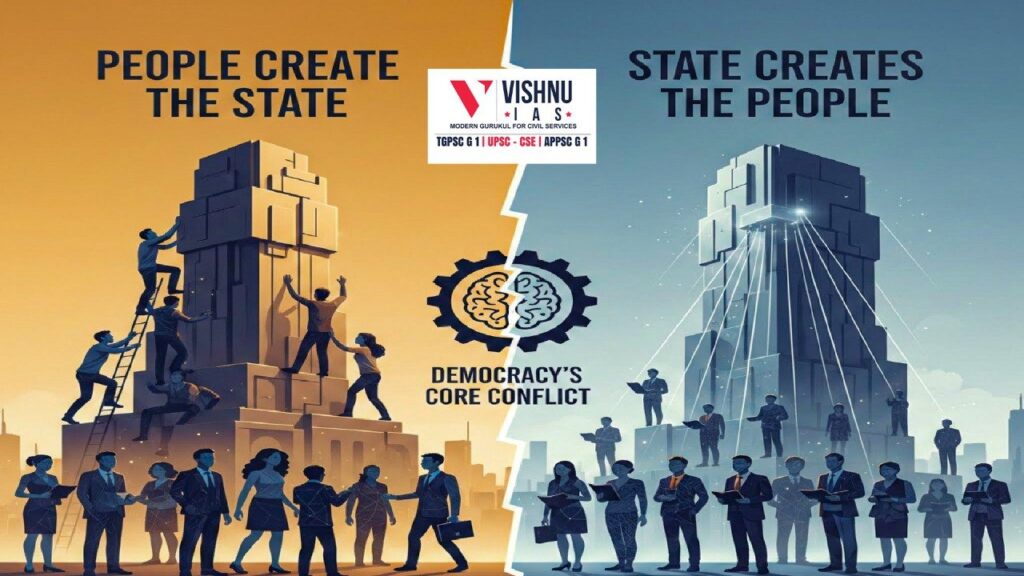
Explore the paradox of democracy in India, where the state decides who ‘the people’ are, through the lens of the Election Commission’s Special Intensive Revision (SIR) of electoral rolls.

Paradox of Democracy in India: Election Commission’s SIR and the Battle Over ‘The People

Paradox of Democracy in India: Election Commission’s SIR and the Battle Over ‘The People’ Introduction The paradox of democracy in India becomes evident when the state, which is a creation of the people, acquires the power to decide who truly belongs to ‘the people’. The legitimacy of a modern democratic state rests on the principle

Paradox of Democracy in India: Election Commission’s SIR and the Battle Over ‘The People Read More »

Scroll to Top