Vishnu IAS Academy

India must prioritise digital sovereignty and industrialisation in foreign trade to safeguard data, boost innovation, and secure economic autonomy.

Why India Needs a Digital Sovereignty and Industrialisation Policy for Foreign Trade

Why Digital Sovereignty in India’s Foreign Trade Needs a Strong Digital Industrialisation Policy Introduction: In the rapidly evolving digital era, data and digital ecosystems have become the new frontiers of global trade, shaping power relations and economic capabilities across nations. Digital sovereignty in India’s foreign trade refers to the nation’s ability to control, regulate, and […]

Why India Needs a Digital Sovereignty and Industrialisation Policy for Foreign Trade Read More »
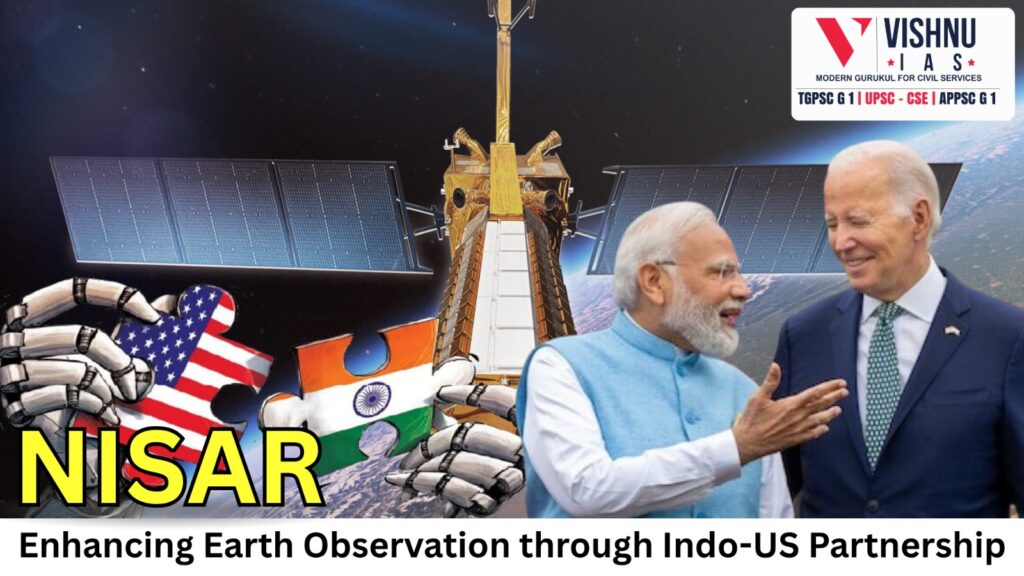
Explore how the NISAR mission, a collaboration between ISRO and NASA, revolutionizes Earth observation through advanced radar technology and strategic Indo-US space cooperation. Learn about its scientific, technological, and diplomatic impact.

NISAR Mission: Enhancing Earth Observation through Indo-US Space Cooperation

NISAR Mission: Enhancing Earth Observation through Indo-US Space Cooperation Context: The NISAR mission (NASA-ISRO Synthetic Aperture Radar), launched on July 30 from Sriharikota, marks a decade of Indo-US space cooperation. Weighing 2.8 tonnes and armed with L-band and S-band radars, NISAR can detect surface deformations of a few centimetres through clouds and vegetation, ushering in

NISAR Mission: Enhancing Earth Observation through Indo-US Space Cooperation Read More »

India’s Legal Aid Framework plays a pivotal role in ensuring access to justice in India. This article critically evaluates the performance, challenges, and reforms needed to improve legal aid delivery under the Legal Services Authorities Act, 1987.

Enhancing Access to Justice in India: Evaluating the Legal Aid Framework for Inclusive Governance

Enhancing Access to Justice in India: Evaluating the Legal Aid Framework for Inclusive Governance Context: The India’s Legal Aid Framework, as defined under the Legal Services Authorities Act, 1987, promises free legal services to around 80% of the population. However, in 2023–24, only 15.50 lakh individuals availed the service. Gaps in outreach, funding, and accountability

Enhancing Access to Justice in India: Evaluating the Legal Aid Framework for Inclusive Governance Read More »

Explore the ethical and legal challenges of digital vigilantism in India, driven by lateral surveillance and algorithmic amplification. Understand its impact on privacy, mental health, and due process.

Digital Vigilantism and Lateral Surveillance: Ethical and Legal Challenges in the Indian Context

Digital Vigilantism and Lateral Surveillance: Ethical and Legal Challenges in the Indian Context Introduction: In the digital era, surveillance is no longer the sole domain of states and corporations; it is now practiced horizontally by individuals upon one another, a phenomenon termed lateral surveillance. Within this context, digital vigilantism—defined as the act of individuals or

Digital Vigilantism and Lateral Surveillance: Ethical and Legal Challenges in the Indian Context Read More »

Child trafficking in Bihar remains a major human rights crisis, driven by poverty, porous borders, and weak enforcement. Learn about the causes, current challenges, and effective policy solutions to combat this issue.

Child Trafficking in Bihar: Causes, Challenges & Effective Policy Measures

Child Trafficking in Bihar: Causes, Challenges & Effective Policy Measures (GS Paper II – Governance, Social Justice and Social Welfare) Context: Child trafficking in Bihar is one of the gravest violations of human rights, inflicting physical, psychological and economic harm on its victims. In Bihar, this crime has surged, with thousands of girls coerced into

Child Trafficking in Bihar: Causes, Challenges & Effective Policy Measures Read More »

The rise of contractualization in India's formal manufacturing sector has doubled in two decades, impacting labour productivity and worker welfare. This analysis explores its causes, challenges, and policy implications within India's economic framework.

Contractualization in India’s Formal Manufacturing Sector: Implications for Labour Productivity and Worker Welfare

Contractualization in India’s Formal Manufacturing Sector: Implications for Labour Productivity and Worker Welfare Introduction: Contractualization refers to the increasing reliance on temporary or contract-based workers, often hired through third-party contractors, in place of permanent workers within the formal sector. In recent decades, India’s formal manufacturing sector has witnessed a significant surge in the use of

Contractualization in India’s Formal Manufacturing Sector: Implications for Labour Productivity and Worker Welfare Read More »

Explore the scope of medical activities for AYUSH practitioners in India, focusing on their legal rights, clinical boundaries, and the ongoing AYUSH vs Allopathy debate under Indian health regulations.

Scope of Medical Activities for AYUSH Practitioners in India: Legal and Policy Insights

Scope of Medical Activities for AYUSH Practitioners in India: Legal and Policy Insights GS Paper II – Governance and Social Sector (Health Policy and Regulation) Context: The debate over the scope of medical activities for AYUSH practitioners—particularly regarding their right to use the title “doctor” and prescribe modern medicines—has intensified in India. This growing controversy

Scope of Medical Activities for AYUSH Practitioners in India: Legal and Policy Insights Read More »

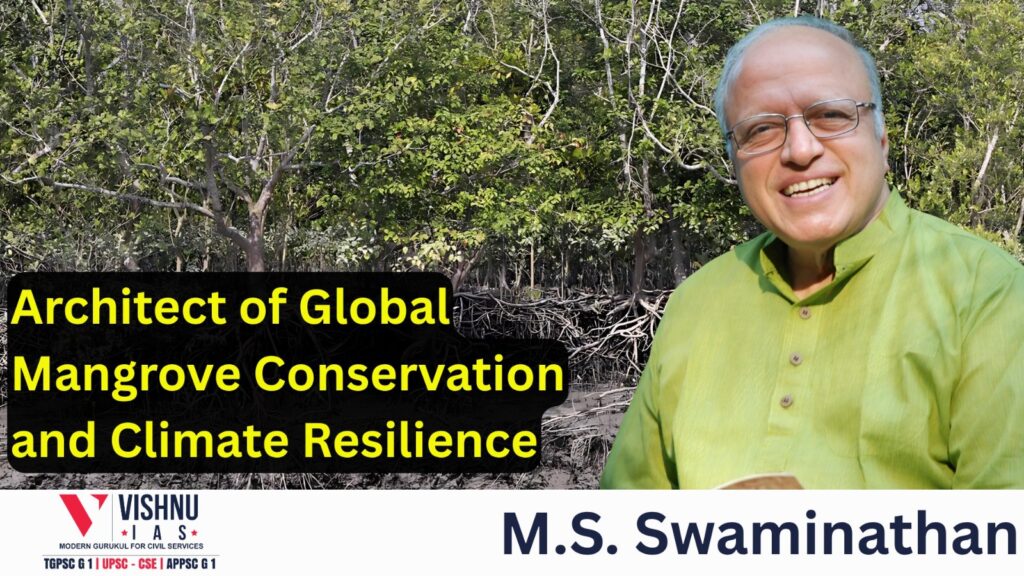
M.S. Swaminathan championed global mangrove conservation, transforming them into vital tools for climate resilience and biodiversity protection. Discover his legacy in shoreline sustainability.

M.S. Swaminathan’s Vision for Mangrove Conservation and Climate Resilience

M.S. Swaminathan’s Vision for Mangrove Conservation and Climate Resilience M.S. Swaminathan played a pivotal role in placing mangrove conservation at the heart of global climate resilience strategies. Until the late 1980s, mangroves were valued mostly by coastal communities for local uses. But Swaminathan’s visionary leadership reshaped their identity into powerful ecological buffers for biodiversity, disaster

M.S. Swaminathan’s Vision for Mangrove Conservation and Climate Resilience Read More »

Explore how Buddhism and spiritual soft power have become strategic tools in the India-China Himalayan rivalry. Understand the religious geopolitics shaping regional stability and diplomacy.

Faith as a Strategic Frontier in the India-China Rivalry over the Himalayas

Faith as a Strategic Frontier in the India-China Rivalry over the Himalayas In the 21st century, geopolitical competition between India and China has expanded beyond traditional military and economic domains into more subtle instruments of soft power—with faith and spiritual influence emerging as pivotal tools. Nowhere is this more evident than in the India-China Himalayan

Faith as a Strategic Frontier in the India-China Rivalry over the Himalayas Read More »

The UK-India Free Trade Agreement (FTA) is set to transform India’s Global Capability Centres (GCCs) by boosting innovation, investment, and talent mobility. Explore how this landmark deal reshapes digital trade, job creation, and R&D partnerships.

How the UK-India Free Trade Agreement is Reshaping India’s Global Capability Centres Ecosystem

How the UK-India Free Trade Agreement is Reshaping India’s Global Capability Centres Ecosystem The UK-India Free Trade Agreement (FTA), under negotiation since January 2022, is poised to become a milestone in bilateral economic relations between two of the world’s most prominent service-driven economies. According to the UK’s Department for Business and Trade, bilateral trade stood

How the UK-India Free Trade Agreement is Reshaping India’s Global Capability Centres Ecosystem Read More »

Scroll to Top