

Tribal Property Rights are central to the discussion below — this post analyses the role of customary laws in governing property rights among tribals in Scheduled Areas and highlights the need for reform.
Introduction
- Customary laws are unwritten rules evolved over generations, reflecting the traditions and cultural practices of communities. In the context of tribals in Scheduled Areas, these laws govern key aspects of social life such as marriage, succession, adoption, and property rights.
- According to the Agriculture Census 2015–16, only 16.7% of Scheduled Tribe (ST) women possess land, compared to 83.3% ST men, highlighting the gendered inequities rooted in customary practices.
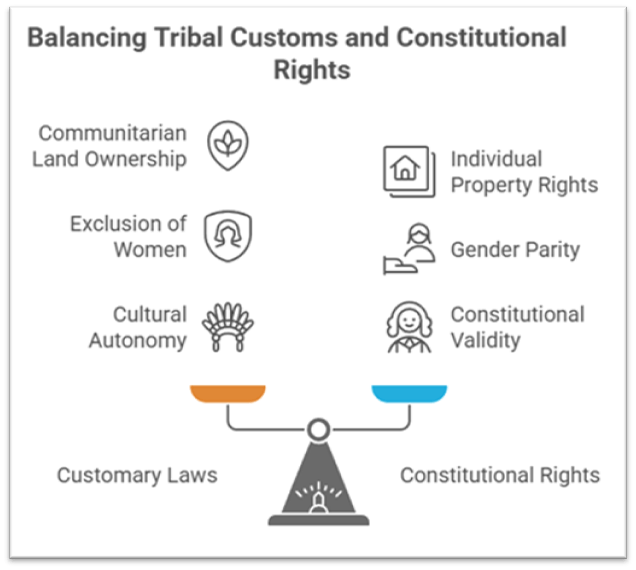
- While customary laws are constitutionally recognized under the Fifth and Sixth Schedules, their application often clashes with constitutional guarantees of equality (Article 14) and gender justice (Articles 15 and 21). This makes the issue of property rights among tribals a critical question of balancing tradition with modern legal standards.
Body
I. Customary Laws and Their Influence on Property Rights
Historical and Communitarian Nature
- Tribal land systems are often based on communitarian ownership, where land is held collectively by clans or villages rather than individuals.
- The rationale has been to preserve land from alienation, particularly to non-tribals, ensuring community survival.
- Example: In many Gond and Santhal tribes, land alienation laws prohibit transfer to outsiders.
Exclusion of Women in Inheritance
- Most customary practices in Fifth Schedule States like Jharkhand, Odisha, and Chhattisgarh deny women rights in ancestral property.
- While women significantly contribute to agriculture, the denial is justified on grounds such as preventing land transfer outside the tribe through exogamous marriages.
- Example: Ram Charan vs Sukhram (2025, SC) recognized that exclusion of daughters from property violates fundamental equality.
Judicial Balancing of Customs and Rights
- Courts have historically been cautious in interfering with tribal customs, citing possible disruption.
- Example: Madhu Kishwar vs State of Bihar (1996, SC) upheld tribal customs denying women inheritance to avoid “chaos”.
- However, more recent rulings such as Prabha Minz vs Martha Ekka (2022, Jharkhand HC) and Kamala Neti vs Special Land Acquisition Officer (2022, SC) have favoured gender parity.
Constitutional Recognition vs Equality Concerns
- The Fifth Schedule grants autonomy to Scheduled Areas to follow their customs.
- However, Article 13 subjects all laws, including customs, to the test of constitutional validity.
- Thus, the contradiction lies in protecting cultural autonomy while upholding fundamental rights of equality.
II. Merits and Limitations of Customary Laws
Merits of Customary Governance
- Ensures cultural preservation and protects tribal distinct identity.
- Provides social security through communitarian ownership models, preventing excessive land concentration.
- Example: In Khasi and Garo tribes of Meghalaya, matriliny provides women a stronger status compared to patriarchal Hindu or Muslim inheritance laws.
Limitations of Customary Practices
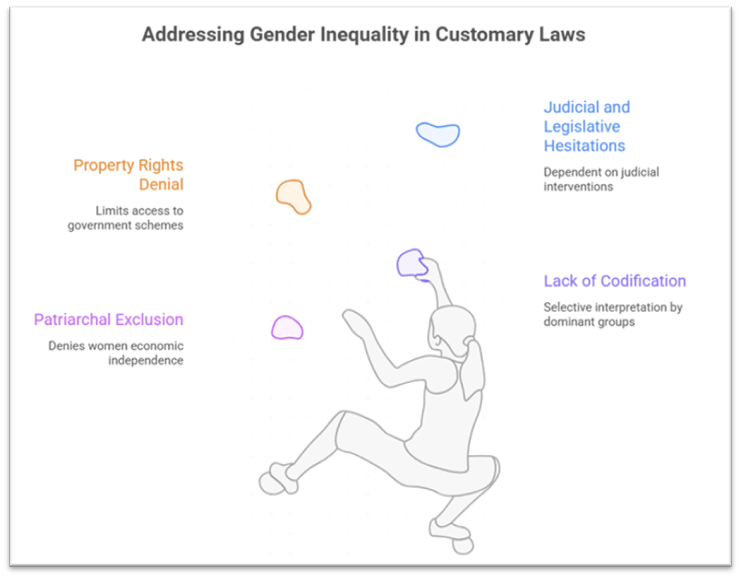
- Often reinforce patriarchal exclusion, denying women’s economic independence.
- Lack of codification leads to ambiguity, enabling selective interpretation by dominant groups within tribes.
- Example: Despite women’s central role in farming, only one-sixth of ST women hold land titles.
Impact on Development and Governance
- Denial of property rights restricts women’s access to institutional credit, subsidies, and government schemes linked to landownership.
- Limits poverty alleviation efforts and contributes to intergenerational inequality.
- Example: Under PM-KISAN, land ownership is a prerequisite, excluding many tribal women.
Judicial and Legislative Hesitations
- Courts have oscillated between respecting customs and enforcing equality.
- Legislatures have been slow to codify tribal succession laws due to political sensitivities.
- This vacuum has left tribal women dependent on judicial interventions rather than systematic reform.
III. The Case for Reform
Codification of Tribal Succession Laws
- Absence of statutory clarity makes customary laws prone to misuse.
- A Tribal Succession Act, aligned with constitutional principles, could balance cultural autonomy and gender justice.
- Example: Codification for Hindus (1956, amended 2005) and Christians provides a precedent for legal clarity.
Harmonization with Constitutional Values
- Customs must pass tests of antiquity, continuity, reasonableness, and conformity with public policy.
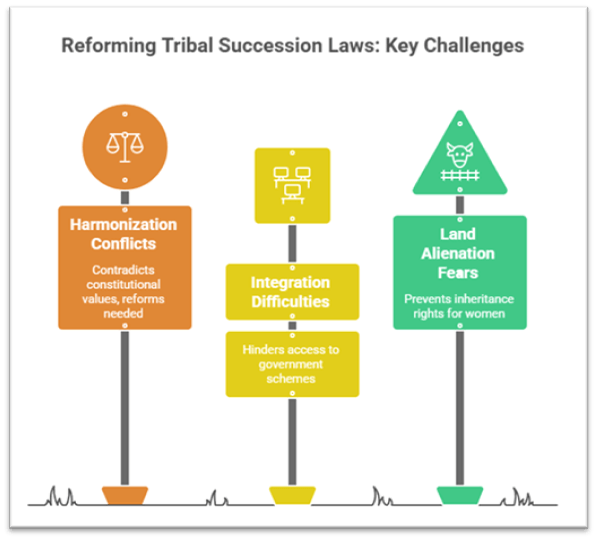
- Where they contradict Articles 14, 15, and 21, reforms become necessary.
- Example: The SC ruling in Ram Charan vs Sukhram (2025) illustrates judicial push for harmonization.
Integration with Government Initiatives
- Linking women’s property rights with schemes like Digital India Land Records Modernization Programme (DILRMP) can improve access.
- Forest Rights Act, 2006, already recognizes joint titles for forest dwellers, showing a pathway for inclusive rights.
- Promoting SHGs under DAY-NRLM with property-linked entitlements can empower tribal women economically.
Addressing Fears of Land Alienation
- Safeguards like restricted transfer clauses can prevent alienation of tribal land to outsiders while still granting women inheritance rights.
- Example: Chhotanagpur Tenancy Act (CNT), Jharkhand restricts sale to non-tribals, a principle that can coexist with gender-equal inheritance.
- Strengthening Gram Sabha oversight can ensure community control while not undermining women’s rights.
Conclusion:
- Customary laws in Scheduled Areas reflect the tension between community preservation and individual rights, particularly in the domain of property inheritance. While these laws protect tribal identity and guard against land alienation, they also perpetuate structural gender injustice by excluding women from inheritance. Judicial interventions in recent years indicate a gradual shift toward harmonizing customs with constitutional guarantees.
- The way forward lies in a balanced reform approach: codifying tribal succession laws, ensuring gender parity, and embedding safeguards against alienation. Empowering women with property rights can significantly enhance their economic agency and social dignity, contributing to the overall goal of inclusive tribal development.
- With women forming nearly half of the tribal population and contributing disproportionately to agriculture, ensuring their equal inheritance is not just a matter of justice but also a catalyst for sustainable growth in tribal regions.
I. Customary Laws and Their Influence on Property Rights
Historical and Communitarian Nature
- Tribal land systems are often based on communitarian ownership, where land is held collectively by clans or villages rather than individuals.
- The rationale has been to preserve land from alienation, particularly to non-tribals, ensuring community survival.
- Example: In many Gond and Santhal tribes, land alienation laws prohibit transfer to outsiders.
Exclusion of Women in Inheritance
- Most customary practices in Fifth Schedule States like Jharkhand, Odisha, and Chhattisgarh deny women rights in ancestral property.
- While women significantly contribute to agriculture, the denial is justified on grounds such as preventing land transfer outside the tribe through exogamous marriages.
- Example: Ram Charan vs Sukhram (2025, SC) recognized that exclusion of daughters from property violates fundamental equality.
Judicial Balancing of Customs and Rights
- Courts have historically been cautious in interfering with tribal customs, citing possible disruption.
- Example: Madhu Kishwar vs State of Bihar (1996, SC) upheld tribal customs denying women inheritance to avoid “chaos”.
- However, more recent rulings such as Prabha Minz vs Martha Ekka (2022, Jharkhand HC) and Kamala Neti vs Special Land Acquisition Officer (2022, SC) have favoured gender parity.
Constitutional Recognition vs Equality Concerns
- The Fifth Schedule grants autonomy to Scheduled Areas to follow their customs.
- However, Article 13 subjects all laws, including customs, to the test of constitutional validity.
- Thus, the contradiction lies in protecting cultural autonomy while upholding fundamental rights of equality.
II. Merits and Limitations of Customary Laws
Merits of Customary Governance
- Ensures cultural preservation and protects tribal distinct identity.
- Provides social security through communitarian ownership models, preventing excessive land concentration.
- Example: In Khasi and Garo tribes of Meghalaya, matriliny provides women a stronger status compared to patriarchal Hindu or Muslim inheritance laws.
Limitations of Customary Practices
- Often reinforce patriarchal exclusion, denying women’s economic independence.
- Lack of codification leads to ambiguity, enabling selective interpretation by dominant groups within tribes.
- Example: Despite women’s central role in farming, only one-sixth of ST women hold land titles.
Impact on Development and Governance
- Denial of property rights restricts women’s access to institutional credit, subsidies, and government schemes linked to landownership.
- Limits poverty alleviation efforts and contributes to intergenerational inequality.
- Example: Under PM-KISAN, land ownership is a prerequisite, excluding many tribal women.
Judicial and Legislative Hesitations
- Courts have oscillated between respecting customs and enforcing equality.
- Legislatures have been slow to codify tribal succession laws due to political sensitivities.
- This vacuum has left tribal women dependent on judicial interventions rather than systematic reform.
III. The Case for Reform
Codification of Tribal Succession Laws
- Absence of statutory clarity makes customary laws prone to misuse.
- A Tribal Succession Act, aligned with constitutional principles, could balance cultural autonomy and gender justice.
- Example: Codification for Hindus (1956, amended 2005) and Christians provides a precedent for legal clarity.
Harmonization with Constitutional Values
- Customs must pass tests of antiquity, continuity, reasonableness, and conformity with public policy.
- Where they contradict Articles 14, 15, and 21, reforms become necessary.
- Example: The SC ruling in Ram Charan vs Sukhram (2025) illustrates judicial push for harmonization.
Integration with Government Initiatives
- Linking women’s property rights with schemes like Digital India Land Records Modernization Programme (DILRMP) can improve access.
- Forest Rights Act, 2006, already recognizes joint titles for forest dwellers, showing a pathway for inclusive rights.
- Promoting SHGs under DAY-NRLM with property-linked entitlements can empower tribal women economically.
Addressing Fears of Land Alienation
- Safeguards like restricted transfer clauses can prevent alienation of tribal land to outsiders while still granting women inheritance rights.
- Example: Chhotanagpur Tenancy Act (CNT), Jharkhand restricts sale to non-tribals, a principle that can coexist with gender-equal inheritance.
- Strengthening Gram Sabha oversight can ensure community control while not undermining women’s rights.
Conclusion:
- Customary laws in Scheduled Areas reflect the tension between community preservation and individual rights, particularly in the domain of property inheritance. While these laws protect tribal identity and guard against land alienation, they also perpetuate structural gender injustice by excluding women from inheritance. Judicial interventions in recent years indicate a gradual shift toward harmonizing customs with constitutional guarantees.
- The way forward lies in a balanced reform approach: codifying tribal succession laws, ensuring gender parity, and embedding safeguards against alienation. Empowering women with property rights can significantly enhance their economic agency and social dignity, contributing to the overall goal of inclusive tribal development.
- With women forming nearly half of the tribal population and contributing disproportionately to agriculture, ensuring their equal inheritance is not just a matter of justice but also a catalyst for sustainable growth in tribal regions.
Recap: