
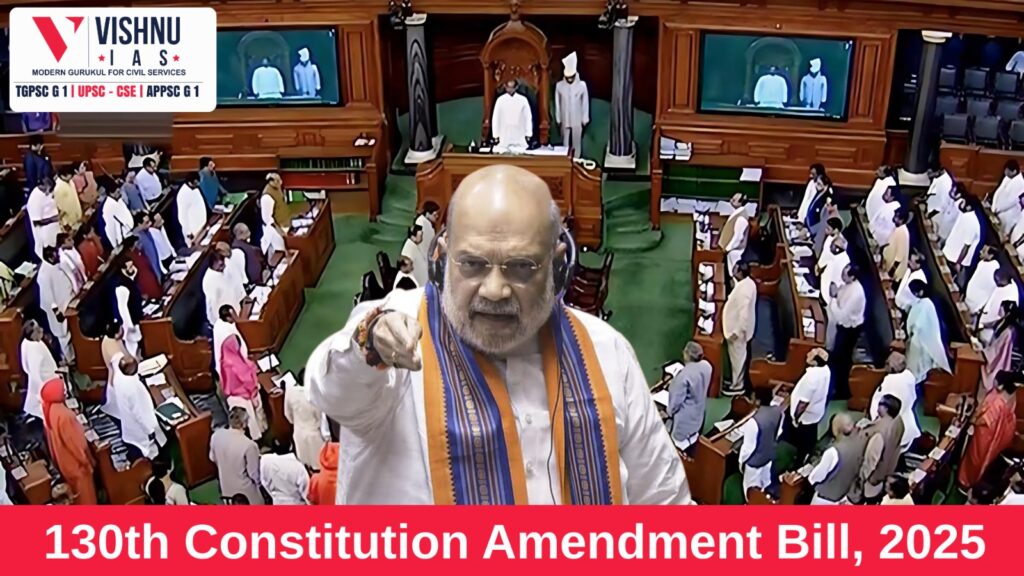
Power, Integrity and Democracy: Analysing the Constitution (One Hundred and Thirtieth Amendment) Bill 2025
Introduction
The Constitution (One Hundred and Thirtieth Amendment) Bill 2025 mandates resignation or automatic removal of Ministers, including the Prime Minister, if they remain in custody for over 30 consecutive days in cases punishable with five years or more of imprisonment. While such a reform promises ethical cleansing of politics, it raises concerns of fairness, due process, and stability in governance. With nearly 46% of MPs elected in 2024 having declared criminal cases (ADR & NEW Report, 2024), the urgency of addressing criminalisation in politics is undeniable. However, reforms must balance integrity, constitutional morality, and democratic safeguards.
The Rationale for Integrity in Democracy
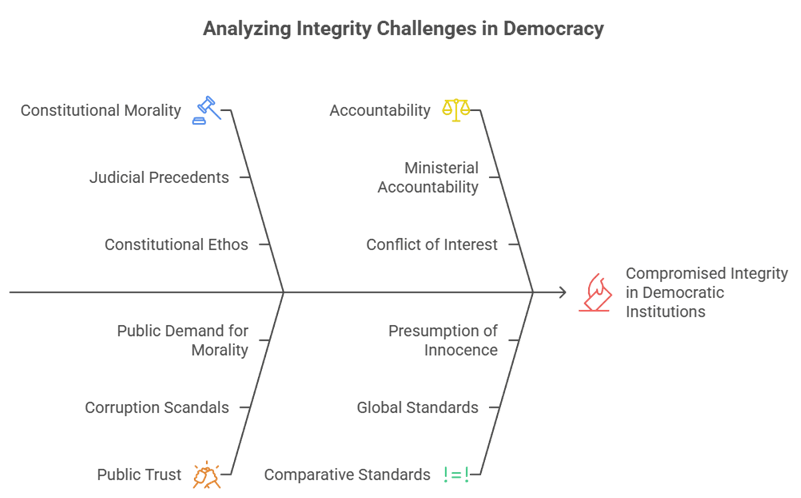
- Constitutional Morality and Governance: The Supreme Court in S.R. Bommai vs Union of India (1994) highlighted integrity as intrinsic to constitutional morality. Similarly, Manoj Narula vs Union of India (2014) stressed that individuals with serious criminal charges should not occupy ministerial positions.
- Public Trust and Accountability: Corruption scandals such as the 2G Spectrum and Coal Block cases illustrate how compromised integrity erodes faith in institutions. A 2023 Lokniti-CSDS survey revealed over 70% of citizens believe politicians accused of crimes should not continue in office.
- Comparative Democratic Standards: The UK’s Nolan Principles and Singapore’s CPIB highlight the importance of integrity. India must adapt such models while respecting Article 21’s presumption of innocence.
Pitfalls and Constitutional Quandaries
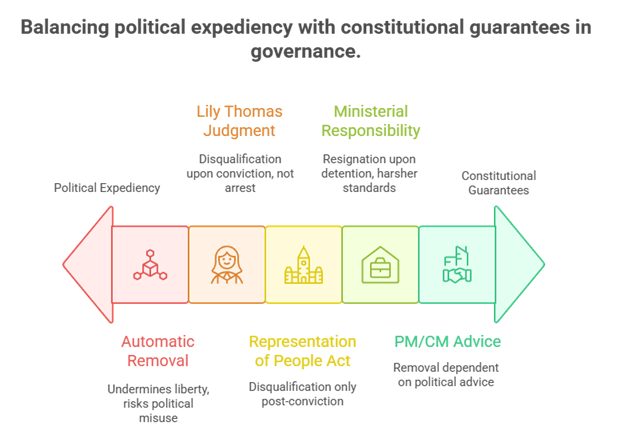
- Presumption of Innocence vs Expediency: Automatic removal upon custody undermines Article 21. The Lily Thomas vs Union of India (2013) judgment clarified disqualification operates only upon conviction.
- Inconsistency Between Legislators and Ministers: Legislators face disqualification post-conviction, but Ministers under the Bill face harsher standards. This asymmetry may discourage competent leadership.
- Risk of Politicisation: The provision may be misused in coalition politics, destabilising governance with cycles of resignation and reinstatement.
Towards a Balanced Reform Framework
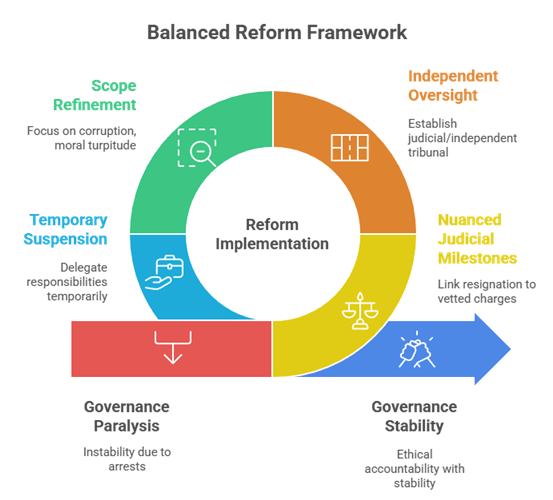
- Nuanced Judicial Triggers: Linking resignation to stages like framing of charges instead of arrest can prevent misuse.
- Independent Oversight: A tribunal or judicial mechanism could ensure impartial application, aligning with ARC recommendations.
- Scope Refinement: Restricting disqualification to offences involving corruption, moral turpitude, or crimes against women and children ensures focus on serious misconduct.
- Balancing Integrity with Stability: Temporary suspension instead of outright removal could prevent governance paralysis.
Conclusion
The statement underscores a paradox: unchecked power without integrity corrodes democracy, but enforcing integrity without fairness risks injustice. The 130th Constitutional Amendment Bill 2025, while noble in intent, risks instability if not recalibrated. India’s democracy requires reforms that elevate moral standards while preserving safeguards. As ADR’s 2024 data shows, criminalisation in politics has risen by 55% in the last 15 years, making reform urgent. However, accountability must be tied to judicially scrutinised stages, independent oversight, and focus on serious crimes.
Ultimately, power must be exercised with integrity, and integrity must be grounded in fairness. Only then can reforms strengthen, rather than undermine, the Republic.
Recap: