The Police and Custodial Violence in India: Constitutional Role vs Coercion
Introduction
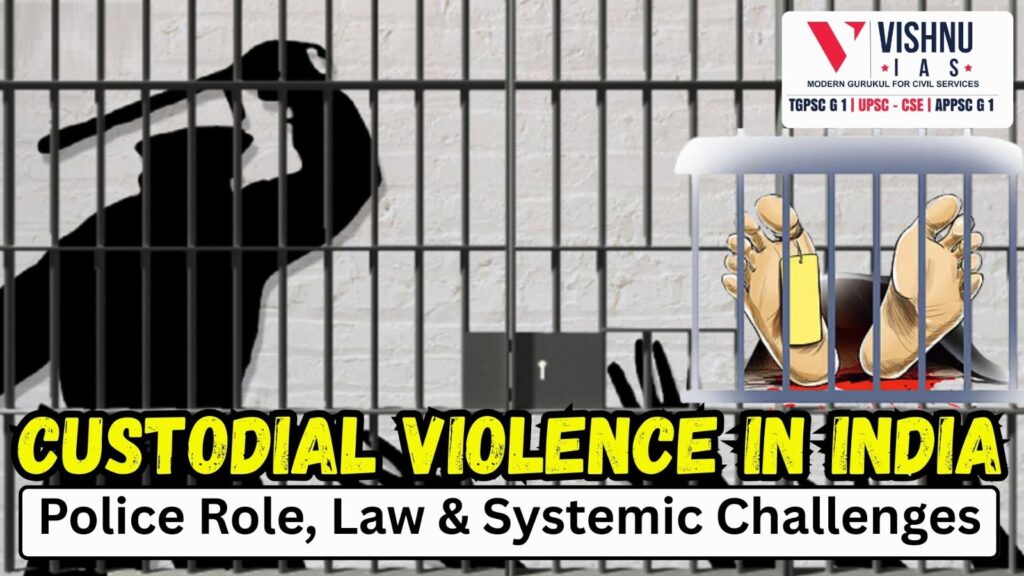
The Indian Constitution, under Articles 21 and 22, guarantees the right to life, dignity, and procedural safeguards against arbitrary detention. In this framework, the police are envisioned as constitutional functionaries bound by law, not as instruments of coercion. Yet, custodial violence in India remains a stark reality. According to the National Human Rights Commission (NHRC) Report 2023, over 175 deaths in police custody and nearly 1,900 deaths in judicial custody were reported in a single year. The India Justice Report 2022 highlights systemic weaknesses in accountability and training that fuel this problem.
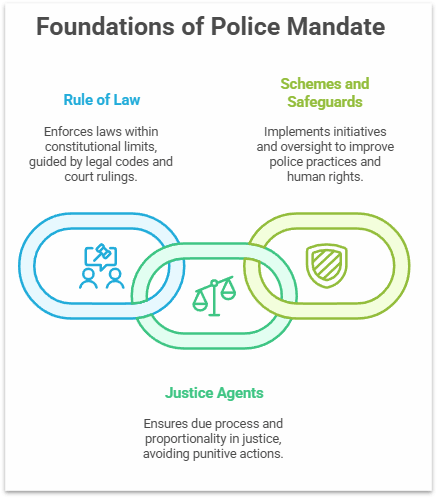
Constitutional and Legal Mandate of the Police
- Bound by Rule of Law – Police enforce laws under CrPC and IPC, acting within constitutional limits. Supreme Court in D.K. Basu vs State of West Bengal (1997) gave guidelines to prevent custodial violence.
- Agents of Justice, not Punishment – Under Articles 20(2) and 21, punishment can only follow due process. The practice of “teaching lessons” violates constitutional morality.
- Schemes and Safeguards – Initiatives like Police Modernisation Scheme (2021–26) and NHRC monitoring act as checks against custodial excesses.
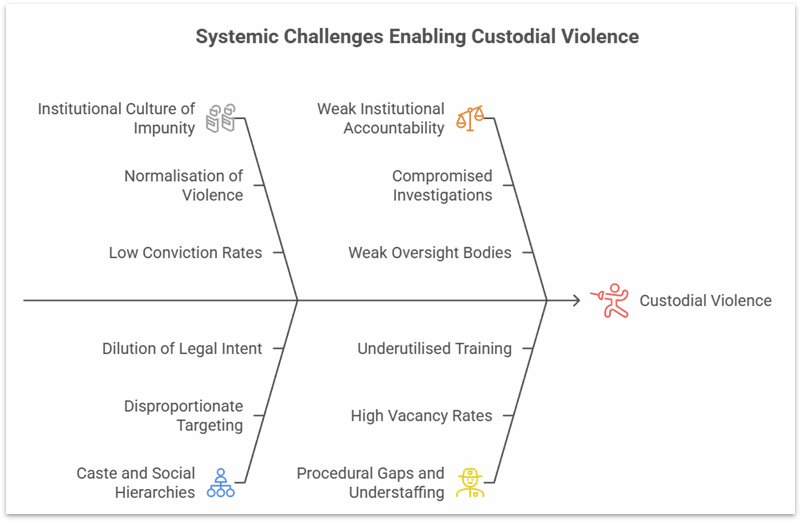
Systemic Challenges Enabling Custodial Violence
- Culture of Impunity – Very low conviction rates (NCRB 2021: only 4 convicted out of 90+ cases).
- Caste and Social Hierarchies – Disproportionate violence against Dalits, Adivasis, and the poor.
- Weak Accountability – Police Complaints Authorities (PCAs) remain poorly implemented.
- Procedural Gaps – 20–25% vacancies in forces, lack of training fosters coercion.
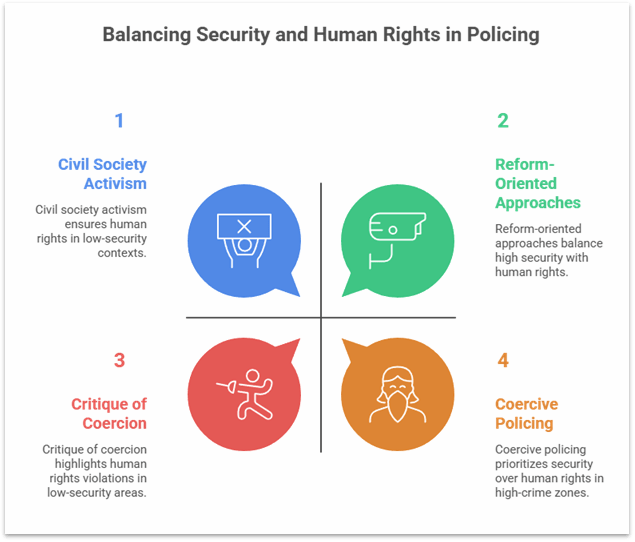
Balancing Security Needs and Human Rights
While coercive policing is often defended as a deterrent in high-crime areas, it undermines due process and violates India’s obligations under the UN Convention Against Torture (UNCAT). Supreme Court rulings such as Raghubir Singh vs State of Haryana (1980) explicitly condemned custodial torture as worse than terrorism.
Reform-Oriented Approaches
- Independent accountability mechanisms and judicial inquiries.
- CCTV surveillance in police stations (Supreme Court directive, 2020).
- Civil society activism and PUCL litigation shaping custodial safeguards.
Conclusion
The police, as constitutional functionaries, must act under law and not as coercive agents of discipline. Operational realities may push towards extra-legal actions, but legitimising coercion erodes the rule of law. With custodial violence disproportionately affecting marginalised groups, reforms are urgent. Implementing Prakash Singh reforms, ensuring application of the SC/ST Act, and strengthening independent investigations are crucial steps. According to the Global Rule of Law Index 2023, India ranks 79 out of 142 countries, underlining the urgency of bridging this gap.
Recap: